



FromIsmail Omipidan,Abuja
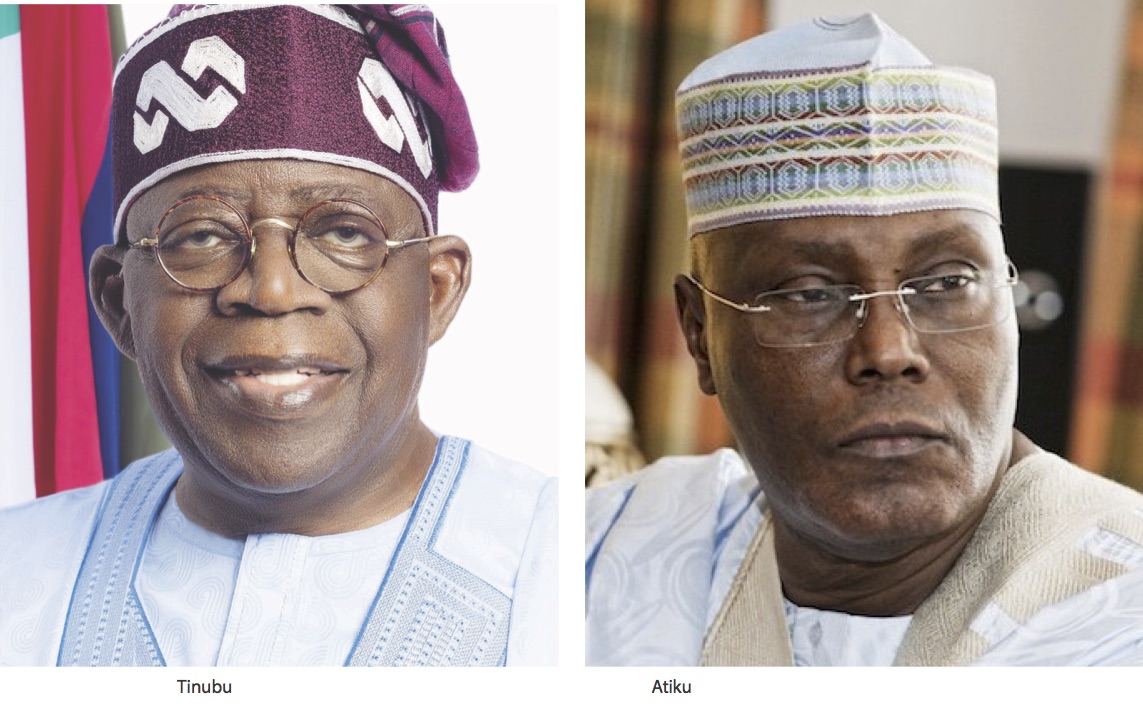
OnWednesday, April 15, 2026, former Vice President Atiku Abubakar and 2023 presidential candidate of the Peoples Democratic Party (PDP), formally gave what could pass for a hint of what to expect from the forthcoming African Democratic Congress (ADC) presidential primary when he said that he commands more votes in the North than the other political figures in the region.
Atiku is expected to slug it out with other aspirants from both the North and South. Prominent among those likely to compete with former Vice President Atiku are: the 2023 Labour Party (LP) presidential candidate, Mr. Peter Obi, and former Rivers State Governor, Rotimi Amaechi.
Atiku, while featuring on a popular national television said: “Can you tell me, among the current leaders in the North, who has more votes than I have?”
“I mean, you are talking about figures like Tambuwal, you are talking about figures like Kwankwaso, and others, and el-Rufai, and also the emerging political figures.
“None of them has got that northern bloc vote as much as I have got,” Atiku added.
Although he acknowledged Kwankwaso’s influence in Kano, he was, however, quick to add that the voting base in the state is now divided.
“Well, the absence of it may affect, but even in his own case, you can see how Kano is now split between himself and his former governor. So there is even a split in that,” Atiku declared.
With Atiku’s latest postulation, it appears the party may be looking forward to producing a candidate from the North to slug it out with the likely candidate of the ruling All Progressives Congress (APC), incumbent President Bola Ahmed Tinubu.
Atiku is 80 already. He will be 81 by next year when he would be seeking the mandate of Nigerians, if his party, the ADC, decides to give him the presidential ticket. And he will go down in history as the country’s oldest presidential candidate.
If he runs, it will be the fourth time Atiku will be on the ballot for the presidential contest. The first time, Daily Sun recalls, was in 2007. But he was only cleared to run barely 48 hours to the contest. His performance was abysmal. Since then, he made two other unsuccessful bids to be on the ballot, until his emergence as candidate in 2019 and 2023, respectively.
Before the PDP’s primary that produced former President Goodluck Jonathan as the party’s presidential candidate ahead of the 2011 contest, he had emerged as the North’s consensus candidate. But he was beaten by Jonathan at the primary.
Again, in the buildup to the 2015 presidential election, he contested against the late President Muhammadu Buhari, and Buhari, with the support of Tinubu, carried the day.
But in the buildup to 2019, he secured the ticket ahead of Tambuwal and the rest. And at the presidential election, he slugged it out with a fellow Muslim, a fellow Fulani man from the North, Buhari. Buhari was APC’s presidential candidate. Buhari defeated him. In 2023 again, he ran against the incumbent, a Yoruba and a Muslim from South-West. Again, he was defeated.
If he gets the ticket, considering that he ran in the past with an Igboman from the South-East and South-South, respectively, on three different occasions, 2007 (Ben Obi), 2019 (Peter Obi) and 2023 (Ifeanyi Okowa), he is most likely to want to try a Yoruba running mate this time. But the feelers Daily Sun is getting is that Obi as running mate, could be a game changer.
Other News
Daily Sun’s investigations reveal that the 2027 presidential election will be about religion, ethnicity, character, personal integrity and antecedents of the candidates, as character and personal integrity alone may not be enough to win the support of the electorate in 2027. Analysts opined that religion and ethnicity will play a decisive role in the election.
In the buildup to the 2015 election, one of APC’s major backers was former President Olusegun Obasanjo. He single-handedly de-marketed former President Jonathan in the international community. He contributed to undermining the fortunes of the PDP.
Today, he is yet to say anything to President Tinubu, with less than a year to another round of elections, like he did to Jonathan before the contest in 2015 and the late Buhari, before the 2019 contest, that they should not run. Jonathan defied him, he lost. But Buhari defied him and won. Although he did not support Tinubu in 2023, the opposition was not as ferocious as the ones he mounted against Jonathan and Buhari, respectively.
Should Atiku settle for a South-West person as his running mate, the race will become tight for the APC. But if the APC maintains its current ticket, and with its inroads in the South-South, South-East, and North-Central, the ADC would have to work extra hard to dislodge the APC. For now, the South, and even some Nigerians in the North believe that the presidency should remain in the South till 2031.
Like every party in power, the APC, which made history in Nigeria in 2015 as the first opposition party to dislodge a ruling party, would no doubt be desirous of retaining power beyond 2027.
But the opposition, too, on the platform of the ADC, appears to be making frantic efforts to return to power in 2027.
In most parts of Nigeria, politics is like war. And in prosecuting it, religion and ethnicity play a major role. But in the North, once the leadership gives one their word, one can take it to the bank. This was why they were able to deliver a southern presidential candidate and a Christian twice ahead of their own in 2003 and 2011, respectively, before delivering a Muslim in 2015, 2019 and another southern Muslim in 2023.
With the three-horse race in 2023, where Tinubu managed a win after losing his home state of Lagos, what will 2027 look like, if Atiku picks the ADC ticket and Peter Obi decides to run the race on a different platform? It seems only time will tell. What is, however, certain is that, unlike in 2015, where the major opposition parties fused into one to confront the then ruling PDP, Tinubu appears to be expanding the APC’s base ahead of the presidential election.
How APC made it in 2015: Historical perspectives
Less than a year after Jonathan emerged as the President in 2011, politicians began re-aligning ahead of the 2015 polls. The major opposition parties in the country at the time all came together, two clear years before the presidential election, to form the APC, with a view to forming a formidable front to battle with the PDP.
With the emergence of the APC then, cumulatively, the opposition party’s states rose to 11; one each in the South-East and South-South; five in the South-West, one each in the North-West and North-Central, and two in the North-East. But shortly before the elections, the tally increased to 16, as five other governors from the PDP joined the opposition APC.
APC went into the polls with South-West and North-West as its strongholds, thus making the presidency a done deal for it, even before the contest. And it ended PDP’s 16-year hold on Nigeria. It also became the first win for the opposition in the country’s entire political history.
To make it possible, all the South-West states, but one, were delivered to the APC. The party also won in all the seven states in the North-West, with Kano posting the highest figures of about two million votes. APC also made a surprise inroad into the Christian-dominated states of Benue and Plateau in the North-Central.
In the South-East, the late Buhari scored 198,248 votes, Jonathan polled 2,464,906. In the South-South, Buhari had 418,590 votes, Jonathan had 4,714,725 votes. In the South-West, Buhari had 2,433,193 votes, Jonathan scored 1,821,416. In the North-Central, Buhari polled 2,411,013 votes, Jonathan recorded 1,715,818 votes. In the North-East, Buhari polled 2,848,678 votes, Jonathan had 796,580 votes and in the North-West, which was Buhari’s base, where he enjoyed cult-like following, he polled 7,115,199 votes, and Jonathan managed to poll 1,339,709 votes.




0 comment(s)
Leave a Comment