
FromIsmail Omipidan,Abuja
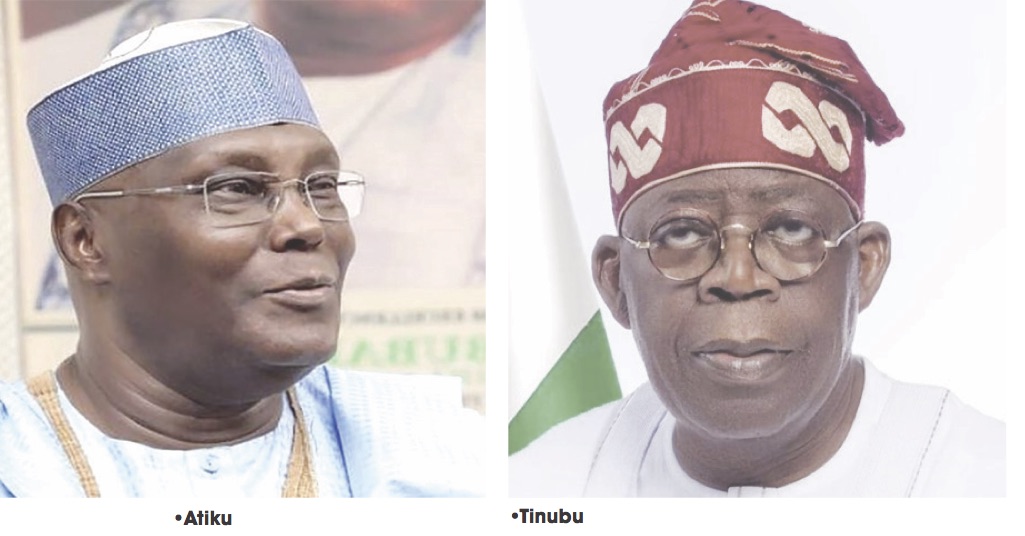
OnMonday, November 24, 2025, former Vice President Atiku Abubakar and 2023 presidential candidate of the Peoples Democratic Party (PDP), formally began what could pass for the commencement of his fourth presidential journey, since 1999 by collecting his African Democratic Congress (ADC) card at the Jada 1 Ward of Jada Local Government Area, in Adamawa State.
His action did not come to many Nigerians as a surprise, as they have been expecting the news since Wednesday, July 16, 2025, when he formally resigned from the opposition PDP.
This is the third time the former vice president would be resigning from the PDP. Apart from the July resignation, he had resigned in the build up to the 2007 presidential election to join the defunct Action Congress (AC), and in the build up to the 2015 presidential election, to join the All Progressives Congress (APC).
Announcing his resignation in July through his media aide, Paul Ibe, Atiku said “ I am writing to formally resign my membership from the People’s Democratic Party (PDP) with immediate effect.
“I would like to take this opportunity to express my profound gratitude for the opportunities I have been given by the party. Serving two full terms as Vice President of Nigeria and being a presidential candidate twice has been one of the most significant chapters of my life. As a founding father of this esteemed party, it is indeed heartbreaking for me to make this decision.
“However, I find it necessary to part ways due to the current trajectory the party has taken, which I believe diverges from the foundational principles we stood for. It is with a heavy heart that I resign, recognising the irreconcilable differences that have emerged.
“I wish the party and its leadership all the best in the future. Thank you once again for the opportunities and support,” his resignation letter reads.
Although he did not make his next destination known in the letter at the time, speculations were however rife that he was heading to the African Democratic Congress (ADC).
Before his resignation, he had teamed up with the 2023 presidential candidate of Labour Party (LP), Peter Obi, former Minister of Transportation, Rotimi Amaechi, ex-Kaduna State governor, Mallam Nasir El-Rufai, and former Senate President, Senator David Mark among others to form a coalition on the platform of the ADC, with the sole intention to dislodge President Bola Ahmed Tinubu and the APC from power in 2027.
And by two days ago, he picked the ADC card, thereby ending months of speculations.
In a statement from his Media Office in Adamawa, Atiku noted that the collection of the ADC card, followed his formal registration, by Sen. Sadiq Yar’Adua, the National Secretary of the ADC Registration and Mobilisation Committee, in Adamawa State.
He added that “Now I have picked my membership card of the ADC. Now, the real opposition has begun. We will work in concert with other leaders of the opposition and Nigerians to chase the APC out of government,” Atiku said.
This is even as he called on his supporters and all those in support of the move to reclaim and rebuild Nigeria to take a cue from him and register with the ADC.
Speaking on the occasion, the Adamawa State ADC Chairman, Hon. Shehu Yohanna who joined Sen. Yar’Adua to perform the registration, noted that Atiku’s registration signals the unveiling of statewide registration of members into the party in all the local governments and wards of the state.
He called on Nigerians, especially the youths and women to take advantage of the opportunity to join the party across the nation.
While re- echoing Atiku’s charge to Nigerians, Sen. Yar’Adua equally urged Nigerians to ensure they register to vote.
Among the prominent members of the Adamawa Coalition, that witnessed the occasion were former Adamawa State Governor, Senator Bindow Jibrilla, APC 2023 Adamawa Governorship candidate, Senator Aishatu Binani, Senator Ahmed Hassan Barata, Sen. Aziz Nyako, and Sen. Ishaku Abbo among others.
Atiku is 79 already. He will be 80 by next year when he would be seeking for the party’s presidential ticket. And if he gets it and runs for the presidential election, he will be 81 by 2027, when he would be seeking votes from Nigerians to be elected the president.
If he runs, it will be the fourth time Atiku will be on the ballot for the presidential contest. The first time, Daily Sun recalls, was in 2007. But he was only cleared to run barely 48 hours to the contest. His performance was abysmal. Since then, he had made two other unsuccessful bids to be on the ballot, until his emergence as candidate in 2019 and 2023 respectively.
In 2019, he slugged it out with a fellow Muslim, a fellow Fulani man from the north, the late former president Muhammadu Buhari. Buhari was APC’s presidential candidate. Buhari defeated him. In 2023 again, he ran against the incumbent, a Yoruba and a Muslim from the South-West. Again, he was defeated.
If he gets the ticket, considering that he had ran in the past with an Igbo man from the South-East and South-South respectively on three different occasions – 2007 (Ben Obi), 2019 (Peter Obi) and 2023 (Ifeanyi Okowa), he is most likely to want to try a Yoruba running mate this time around. But for the strong resentment for a Muslim-Muslim ticket within their cycle, there are some of the chieftains of the coalition who believe that a Muslim-Muslim ticket for them could as well be a game changer.
Daily Sun investigations reveal that the 2027 presidential election will be about religion, ethnicity, character, personal integrity and antecedents of the candidates, as character and personal integrity alone may not be enough to win the support of the electorate in 2027. Analysts opined that religion and ethnicity will play a decisive role in the election.
In the build up to the 2015 elections, one of APC’s major backers was former president, Olusegun Obasanjo. He single-handedly de-marketed former president, Goodluck Jonathan in the international community. He contributed to undermining the fortunes of the PDP.
Today, he is yet to say anything to President Bola Ahmed Tinubu, two clear years to another round of elections, like he did to Jonathan before the contest in 2015 and the late Buhari, before the 2019 contest that they should not to run. Jonathan defied him, he lost. But Buhari defied him and won. Although, he did not support Tinubu in 2023, the opposition was not as ferocious as the ones against Jonathan and Buhari respectively.
Should Atiku settle for a South-West person as his running mate, the race will become tight for the APC. But if the APC maintains its current ticket, and with its inroad in the South-South, with Rivers states most likely to fall soon, the party will still enjoy the support and backing of most states in the south, as the south still believes that the presidency should remain in the region till 2031.
Like every party in power, the APC, which made history in Nigeria in 2015 as the first opposition party to dislodge a ruling party, would no doubt be desirous of retaining power beyond 2027.
But the opposition too, on the platform of the coalition and the PDP which until 2015 was in power for 16 years, beginning from 1999, appears to be making frantic efforts to return to power in 2027.
In most parts of Nigeria, politics is like war. And in prosecuting it, religion and ethnicity play a major role. But in the North, once the leadership gives one their word, one can take it to the bank. This was why they were able to deliver a southern presidential candidate and a Christian twice ahead of their own in 2003 and 2011 respectively, before delivering a Muslim and another southerner in 2023.
How APC made it in 2015: Historical Perspectives
Less than a year after Jonathan emerged as the president in 2011, politicians began re-aligning ahead of the 2015 polls. The major opposition parties in the country at the time all came together, two clear years before the polls to form the APC, with a view to forming a formidable front to battle with the PDP.
With the emergence of the APC then, cumulatively, the opposition party’s states rose to 11; one each in the South-East and South-South; five in the South-West, one each in the North-West and North-Central, and two in the North-East. But shortly before the elections, the tally increased to 16, as five other governors from the PDP joined the opposition APC.
APC went into the polls with South-West and North -West as its strongholds, thus making the presidency a done deal for it, even before the contest. And in the end, it ended PDP’s 16 years hold on Nigeria. It also became the first win for the opposition in the country’s entire political history.
To make it possible, all the South- West states, but one, were delivered to the APC. The party also won in all the seven states in the North -West, with Kano posting the highest figure of about two million votes. APC also made a surprise inroad into the Christian-dominated states of Benue and Plateau in the North -Central.
In the South-East, the late Buhari scored 198, 248 votes, Jonathan polled 2,464,906. In the South-South, Buhari had 418, 590 votes, Jonathan had 4, 714,725 votes. In South-West, Buhari had 2,433,193 votes, Jonathan scored 1, 821,416. In the North-Central, Buhari polled 2,411,013 votes, Jonathan recorded 1,715,818 votes. In the North-East, Buhari polled 2,848,678 votes, Jonathan had 796,580 votes and in the North-West, which is Buhari’s base, and where he enjoys a cult-like following, he polled 7,115,199 votes, and Jonathan managed to poll 1,339,709 votes.
Last line
With the three-horse race in 2023, where Tinubu managed a win after losing his home state of Lagos, what will 2027 look like, once Atiku picks ADC ticket and Peter Obi too decides to join the race? It seems only time will tell. What is however certain is that, unlike in 2015, Tinubu appears to be expanding the APC’s base ahead of the presidential election.





0 comment(s)
Leave a Comment