

 Follow Us on Google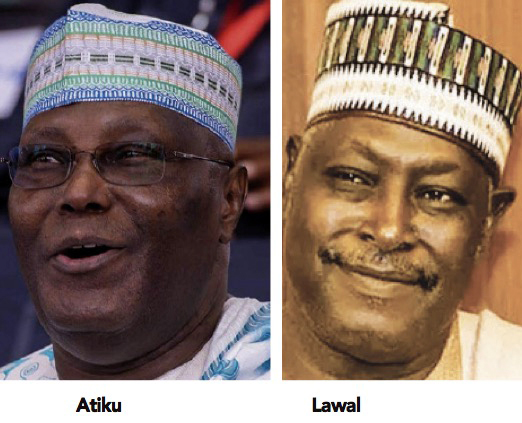

Guest columnist
By Shola Adebowale
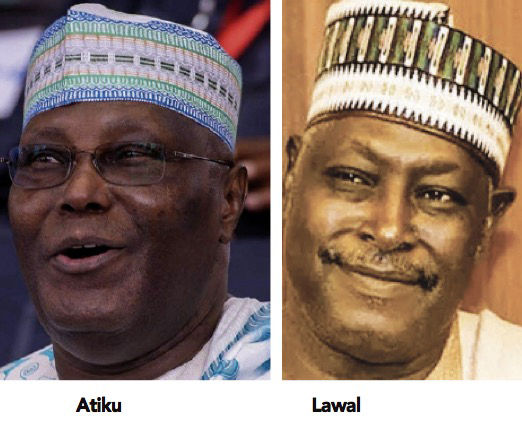
In June 2026, a resignation letter detonated inside Nigerian opposition politics. Babachir Lawal, former Secretary to the Government of the Federation and one of the North’s most prominent political voices, quit the African Democratic Congress and, on his way out, described Atiku Abubakar and his inner circle as “irredentist Fulani and religious hegemonists.” The phrase travelled faster than any campaign advertisement. It crystallised, in eight words, the deepest anxieties of the Middle Belt, the South, and significant parts of the North who have long harboured quiet doubts about what an Atiku presidency would mean for Nigeria’s religious and ethnic equilibrium. Call it the Babachir Indictment. It will not leave this election.
But the Babachir Indictment is not merely an Atiku problem. It is a symptom of a larger crisis, a country in which identity fears have almost entirely replaced policy debate as the grammar of electoral politics. And it arrives at precisely the moment when Nigeria’s 2027 presidential election is shaping up as something more consequential than another ballot. It is an existential contest between two competing philosophies of political power: Structure versus Movement.
On one side stands Structure, the entrenched machinery of governors, local government chairmen, traditional rulers, party executives, and ward level mobilisers that has determined Nigerian election outcomes for three decades. On the other stands Movement, the volatile energy of urban youth, diaspora funding, moral credibility, and social media mobilisation that came startlingly close to overturning the established order in 2023. This election will test, with some finality, which force controls Nigeria’s political soul. Does power still flow from command of 774 local governments, 36 state houses, and the patronage networks that bind them? Or has it migrated to the control of digital conversations, church pulpits, civic conscience, and the accumulated anger of first time voters who feel the economy has failed them personally?
To answer that, we must assess the four frontline contenders not through their manifestos, but through the machinery that actually decides Nigerian elections. Six parameters define that machinery. First, political durability: can they survive Nigeria’s brutal political warfare, absorb betrayals, and outlast scandals that would finish weaker careers? Second, party architecture: do they own a structure capable of moving from Abuja to ward level and delivering votes with discipline? Third, gatekeeper networks: do they command governors, traditional rulers, and local government chairmen who control resources and exercise real influence on election day? Fourth, ground level capacity: do they have loyal mobilisers who can secure polling units and protect votes when the process turns tense? Fifth, political intelligence: do they grasp the unwritten rules of ethnic bargaining, religious balancing, and patronage that actually move votes in Nigeria? Sixth, operational readiness: are they prepared financially, logistically, and narratively for this specific election, with its particular voter mood, its economic realities, and the shadow of the Babachir Indictment hanging over the entire field?
What emerges from that assessment is a four way chess game. Tinubu has the structure but is losing the consent of the governed. Atiku has the experience but carries the Babachir Indictment as dead weight. Obi has the movement but lacks the gatekeepers who control election day. Kwankwaso has Kano but has not yet proven he can export his influence beyond it. None of them has everything. Whoever wins will be the candidate who covers their critical blind spot before February 2027.
No candidate in this field has built a more formidable political architecture than Bola Ahmed Tinubu, and understanding why he remains the favourite requires understanding that he did not inherit his position, he constructed it, ward by ward, over thirty years.
His campaign, branded “Renewed Hope 2.0,” rests on a single argument: four years is insufficient to judge a structural reform agenda, and only his machinery can guarantee the stability Nigeria needs to see it through. That argument is less a policy case than a structural warning, and it is delivered with the authority of a man who has made Nigerian politics bend to his will more consistently than any other figure of his generation.
He entered national politics in 1992 as a senator for Lagos West under the Social Democratic Party during the Babangida transition. His empire crystallised between 1999 and 2007 as a two term Lagos Governor, a tenure in which he transformed internally generated revenue from 600 million naira per month to 8 billion naira per month and built what became known as the Lagos model of subnational financing, a template that state governments across the country still attempt to replicate. From 2007 to 2023, he spent sixteen years as the APC’s principal political backer, installing three successive Lagos governors and consolidating influence over five South West states. He survived EFCC investigations, bullion van controversies, a grass cutting scandal, and most tellingly, the psychological blow of losing Lagos State in the very presidential election he won in 2023. He won the presidency on his third attempt. That biography carries one consistent message: he does not lose political contests, he outlives them.
Nowhere is his advantage more decisive than in the realm of gatekeepers, and this is where the gap between Tinubu and every other candidate becomes structural rather than merely tactical. He commands twenty two APC governors who control local government funds and state electoral commissions. Traditional rulers across Yorubaland and emirate councils in North Central still defer to him. Market women leaders, transport union executives, and ward chairmen receive and follow directives from his network. His finances draw from what analysts describe as Lagos capital combined with federal access, a combination of accumulated private wealth and the patronage that flows from control of federal appointments, security votes, and FAAC allocations. When election day arrives, state legislators and council chairmen understand that their political survival is tied to delivering their constituencies. Structure, at ground level, means organised people with logistics, motorcycles, and the institutional authority to enforce political outcomes. That is why the APC structure is extraordinarily difficult for any opponent to outmanoeuvre.
His liabilities are real but concentrated. His brand polarises. Urban youth in Lagos, Abuja, and Kano associate Jagaban with the political system they want dismantled. Losing Lagos in 2023 was not merely a data point, it was a signal that economic pain can fracture even a candidate’s home base. He understands Nigerian politics comprehensively; he wrote much of the playbook himself. But the 2027 election contains a variable that no structural advantage can fully neutralise: the kitchen table. If food prices, unemployment, and purchasing power show no tangible improvement, the machinery that delivers compliant outcomes in loyal states cannot manufacture contentment among voters whose daily lives feel like a referendum on his presidency.
The Babachir Indictment does not wound Tinubu directly, but it reshapes his campaign environment in ways that serve him well. His strategists will ensure the phrase circulates in Middle Belt and Southern media without his fingerprints on it. It is among his most cost effective opposition research assets, and he spent nothing to acquire it.
Tinubu remains the favourite because structure in Nigeria is not merely an advantage, it is the architecture of electoral outcomes. But 2027 may be decided less in the coordination rooms of Abuja than in the daily economic experience of ordinary Nigerians. Structure can move votes. It cannot fabricate satisfaction.
Atiku Abubakar arrives at 2027 carrying more political experience than any other candidate in this field, and a perception problem that no amount of experience has yet dissolved, a problem that the Babachir Indictment has now given a name, a source, and a life of its own.
His campaign is framed as the Last Shot. After six presidential attempts across five political parties, this is presented as his final run. The African Democratic Congress was meant to provide a clean coalition platform, liberated from the factional warfare that destroyed his PDP campaign. Then, on June 1, 2026, Babachir Lawal resigned, and the Indictment landed.
His political biography is genuinely distinguished. He entered politics in 1989 through the Constituent Assembly and the SDP, famously declining a vice presidential slot in favour of MKO Abiola in 1993, a gesture that cemented his reputation as a party man willing to subordinate personal ambition to collective interest. He served as Vice President under Obasanjo from 1999 to 2007, running the machinery of government during a period of significant economic reform, surviving impeachment plots, and accumulating a detailed knowledge of federal bureaucracy and North-South power negotiation that remains unmatched in this field. Since 2007, he has contested the presidency across AC, PDP, APC, PDP again, and now ADC. His resilience is real. So is the fatigue.
But it is his structural position, not his biography, that reveals how exposed he is. Atiku’s political architecture is a mobile network, loyalists who have followed him between parties rather than a fixed institutional base. He is financially self sufficient as a businessman, and his Waziri Adamawa title carries genuine influence in the North East. His alliances historically spanned the North East, the Middle Belt, and parts of the South. The rupture with Nyesom Wike destroyed his PDP governor bloc. ADC has no sitting governors, which means no state level machinery to enforce his will at local government level on election day. That is not a weakness, it is a structural disqualification from the primary mechanism by which Nigerian elections are delivered on the ground. His grassroots capacity has eroded correspondingly. Wike’s departure took Port Harcourt, FCT, and Rivers mobilisers with him. ADC has no comparable field presence. In volatile states, Rivers, Benue, Kogi, he is acutely vulnerable to vote suppression from better resourced opponents.
And then there is the Babachir Indictment, which is where his campaign faces terrain that no policy platform can navigate alone. Babachir Lawal is not a peripheral figure. He was a former SGF, a Northern political heavyweight, and until June 2026, a member of Atiku’s own coalition. When he described Atiku’s inner circle as irredentist Fulani and religious hegemonists, the allegation carried weight precisely because of who was making it, not a political opponent from the South, but a Northern ally exiting through the front door. Irredentist Fulani invokes fear of a Fulani expansionist agenda in a country where herdsmen conflicts have cost thousands of lives across the Middle Belt. Religious hegemonist invokes the Islamisation anxiety that runs deep in Christian communities from Southern Kaduna to Benue to the South East. The phrase is eight words of political thermite, and it has already ignited.
The Indictment compounds a pre existing problem. Over years of campaigns, Atiku has made statements, it is the North’s turn, I am contesting the Northern slot, that were strategically calculated for his base but have been replayed relentlessly by opponents to reinforce the narrative that his ambition is rooted in regional entitlement rather than national leadership. In the Middle Belt and Christian South, this framing has been hardening for years. Babachir did not create the fear. He gave it a quotable name and a credible source.
The compounding danger is that no policy platform can neutralise a fear based narrative before election day. Voters in Benue and Plateau do not need to believe the Indictment is accurate to vote defensively against it. In the South East he is perceived as Northern elite. In the North itself, some Hausa constituencies view him as Waziri Adamawa rather than a pan Northern representative. Atiku’s camp insists it is propaganda. But elections are not won by disproving voter fear, they are won by displacing it with a more compelling alternative identity. Until he achieves a radical, credible, sustained symbolic gesture, a running mate choice, a coalition partnership, a public reckoning that gives Middle Belt and Southern voters permission to disbelieve the label, his accumulated experience, his financial resources, and his genuine understanding of governance will all be operating under a severe discount.
He will be seventy nine years old on election day. The Babachir Indictment has already demonstrated that his own coalition questions him. He has no governor bloc to deliver states when it matters most. The Last Shot may be fired into a perception wall that experience alone cannot breach.
Other News
Peter Obi represents something genuinely unusual in Nigerian presidential politics: a candidate who accumulated 6.1 million votes in 2023 without a single sitting governor, without a ward level party machine of any substance, and without the patronage networks that are supposed to be the non negotiable prerequisites of electoral viability. He lost. But in losing, he demonstrated the existence of a political constituency, urban, young, educated, morally exhausted by the status quo, that the existing parties had written off entirely. His 2027 campaign, now operating under the New Democratic Coalition with Kwankwaso as running mate, is built on a deliberate thesis: add structure to conscience, keep the moral core intact.
His political biography is one of unexpected persistence. He entered politics in 2003 under ANPP, crossed to APGA, and won the Anambra governorship only after a three year court battle. He governed from 2007 to 2014, building a reputation for fiscal restraint, zero new borrowing, consistent budget surpluses, that distinguished him sharply from the debt accumulation norms of most Nigerian state governments. He ran as Atiku’s PDP vice presidential candidate in 2019, lost, and in 2022 defected to Labour Party and built a movement from nothing to 6.1 million votes in under a year. The operational feat was underappreciated by commentators fixated on his loss. For anyone watching party building mechanics, it was remarkable.
His most significant vulnerability, however, is the one that the six parameter framework makes impossible to overlook. He has no sitting governors, and in Nigeria’s electoral architecture, that is not simply a disadvantage. It means no control over local government resources, no state electoral commission leverage, and no machinery to enforce outcomes at collation centres when the process becomes contested. NDC is new and has no elected officials at state level. His traditional ruler network in the North is thin. Market women leaders in Lagos, Kano, and Port Harcourt take instructions from whoever controls state government. The Kwankwaso partnership addresses the Muslim North gap that crippled him in 2023, but outside Kano the gatekeeper network remains structurally thin.
His grassroots capacity presents a related tension. The Obidient movement is real, large, and genuinely energised. It is also, by the frank admission of Labour Party insiders after 2023, not organised for the ground level confrontation that Nigerian elections require. Obidients are formidable at rallies, at social media mobilisation, and at generating international media narratives. They are not, by disposition or training, the hardened polling unit agents who hold position when opposition coordinators arrive with inducements or intimidation. In 2023, LP agents were displaced from polling units in Rivers, Kano, and parts of the South East, precisely the locations where the movement needed to protect its votes. Kwankwaso’s red cap mobilisers address that deficit within Kano. They do not address it in Port Harcourt, Benue, or Kaduna. Moral force and combat force are different instruments, and the Nigerian electoral ground requires both.
Of the four candidates, Obi benefits most directly from the Babachir Indictment, and his benefit requires no effort on his part. His Christian identity, his Igbo base, and his reputation for personal financial probity sit in clean contrast to the religious hegemonist narrative now attached to Atiku. The identity anxieties that the Indictment has sharpened in the Middle Belt and the South are precisely the anxieties that drove 6.1 million voters toward him in 2023. He will not weaponise the Indictment crudely, that would corrode the moral brand that is his most distinctive asset, but the narrative operates on his behalf without him lifting a finger.
His learning curve has been steep and visible. He understood economics and governance before 2023 at a level few Nigerian politicians can match. What he did not fully grasp was the depth of ethnic and religious calculation that governs Northern voting behaviour. The Kwankwaso alliance demonstrates a significant adjustment. He remains weakest on the mechanics of money politics, the LGA level inducement networks that buy ward level compliance, and on the patient cultivation of traditional ruler loyalty. Both gaps are significant. Both are bridgeable, but only through one specific mechanism: sitting governors willing to defect before the election.
That is the governor equation, and it is Obi’s entire strategic imperative between now and February 2027. Without three to four governor defections, he is the most morally compelling candidate on the field, running a campaign of genuine conscience against a system architecturally designed to resist exactly that kind of challenge. With them, he becomes the most dangerous candidate in the race, the one who combines movement energy with enough structural ballast to hold election day outcomes. Three to four governors are not a luxury for the Obi Kwankwaso ticket. They are the difference between a respectable loss and a presidency.
Kwankwaso is not running for the presidency in 2027. He is running for relevance, and for the validation that his Kano base can determine a national outcome. That distinction matters, because it defines the precise terms on which the Obi Kwankwaso partnership succeeds or collapses.
His political biography is inseparable from Kano’s. He entered the House of Representatives in 1992 under SDP, served two terms as Kano Governor from 1999 to 2003 and 2011 to 2015, built schools and hospitals at a scale that created genuine popular affection rather than merely transactional loyalty, and constructed the Kwankwasiyya movement, identifiable by its red caps, organised through motor parks, markets, and neighbourhood associations, into what is arguably the most disciplined single city political machine in Nigeria. He founded the NNPP and ran for president in 2023, finishing fourth with 1.49 million votes, approximately ninety percent of which came from Kano and the immediate North West. That concentration is simultaneously his credential and his constraint.
Inside Kano, his command is comprehensive and battle tested. The governor, local government chairmen, emirate council influencers, and market leaders in Sabongari and Dawanau all respond to him. Red cap mobilisers control motor parks, street corners, and neighbourhood networks. On election day they deploy voters, protect polling units, and contest collation centres with a discipline that few political machines in Nigeria can match. That machine delivered the Kano governorship to NNPP in 2023 against an APC incumbent with federal resources behind him. It is a genuine achievement. The question for 2027 is whether it travels.
The answer, based on current evidence, is that it travels partially, into parts of Jigawa, selectively into Katsina, but not into Kaduna, Sokoto, or Zamfara, where traditional rulers and sitting governors are outside his orbit. His influence drops sharply at Kano’s borders. As a vice presidential candidate, he brings Kano votes and Muslim North credibility to Obi’s ticket. As a standalone national operator, he remains a regional figure who speaks Kano fluently and Nigeria imperfectly.
The Babachir Indictment creates an opening that Kwankwaso must convert deliberately. It has destabilised the Muslim North’s willingness to consolidate behind Atiku. To the extent that Northern Muslim voters are searching for an alternative to both Tinubu’s incumbency and Atiku’s tainted candidacy, the Obi Kwankwaso ticket offers a vehicle. But converting that opening requires Kwankwaso to build a coalition argument that speaks to Katsina, Zamfara, and Sokoto voters in terms that resonate beyond Kano identity and Kano history. That is the task he has not yet demonstrated he can perform.
His core risk is not Obi, it is the North’s response to a Christian Muslim ticket in a political environment already sensitised by the Muslim ticket of 2023. Will Northern Muslims accept a Christian at the top of a ticket endorsed by Kwankwaso? That question will be answered in mosques, emirate councils, and the market conversations of the North West. If the answer is yes, the combination has a genuine electoral pathway. If the answer is no, Kwankwaso will have proven that even Kano has limits as a national political asset. He is not running for president. He is running for the right to be considered indispensable. Whether he earns that verdict depends entirely on what he can deliver beyond the city that made him.
Three contests are unfolding simultaneously within this election, and they will collectively determine whether Structure or Movement prevails in February 2027.
The first is the contest over identity and the Babachir Indictment. What Babachir Lawal did on June 1, 2026, was give organised form to the diffuse identity anxiety that has shaped Nigerian presidential politics since 2015. Irredentist Fulani and religious hegemonist is not merely a label for Atiku, it is a framework that every other candidate will deploy, implicitly or explicitly, to define the race on terms that favour them. Tinubu’s campaign will circulate it in the Middle Belt without attribution. Obi’s campaign will benefit from it without endorsing it. Kwankwaso must navigate it carefully, because it cuts into his own base if mishandled. Atiku has one path through it: a radical, credible, sustained symbolic act, a running mate choice, a coalition gesture, a public reckoning, that gives Middle Belt and Southern voters permission to believe the label does not fit. Policy statements will not be sufficient. The Indictment is not a policy argument. It is a fear, and only a fear displacing act can neutralise it.
The second is the governor equation. Tinubu holds twenty two. Obi and Kwankwaso hold one, in Kano. Atiku holds zero. In Nigeria’s electoral architecture, governors are not merely symbolic allies, they are the operational commanders of state level delivery. They control local government funding, state electoral commission personnel, and the security relationships that govern polling unit access on election day. Without governors, a campaign wages a ground war without armour. Obi’s single most consequential strategic act between now and the election is to convert three to four sitting governors from geographically diverse states to his platform. One in the South, one in the Middle Belt, one in the North East would fundamentally reshape the structural calculus of the entire race. Without those defections, he confronts the most structurally resourced incumbent in Nigerian political history armed primarily with volunteers and moral authority.
The third is the kitchen table election, and it is ultimately the one that sits above the other two. If Nigerians, not analysts, not diaspora commentators, not the political class, wake up in early 2027 feeling that purchasing power has recovered, that food is more affordable, that the petrol subsidy removal produced visible returns in infrastructure and services, then Tinubu’s structural advantages compound into a position that is very difficult to overcome. His machinery delivers compliant outcomes in states where governors are loyal; economic satisfaction delivers voluntary outcomes in states where they are not. But if hardship has deepened, if the naira remains punishing, if food prices continue outpacing wages, if unemployment among the youth cohort that constitutes the Obidient base shows no relief, then the kitchen table becomes Tinubu’s most dangerous opponent, and no structural advantage fully compensates for it. Nigerians cast their ballots through the filter of lived economic experience before they process identity, party, or ideology. Structure can shape outcomes at the margin. It cannot manufacture contentment that does not exist.
Tinubu owns the structure. Obi owns the movement. Atiku owns the deepest experience in the field and carries the Babachir Indictment as its permanent shadow. Kwankwaso owns Kano and must prove he owns more.
2027 will not be decided by who Nigerians admire most. It will be decided by who they fear losing least, and by which candidate, through discipline, coalition building, and the unpredictable interventions of Nigeria’s economic reality, closes the gap between what they currently have and what they need to win.
Structure and Movement have never been tested against each other at full force, in an election this high stakes, with an incumbent this polarising, and a political field this fragmented. The Babachir Indictment has already reshaped the terrain. The kitchen table will render its verdict. The governor equation will determine whether movement can survive contact with structure on election day.
The war for Nigeria’s soul is wide open. And February 2027 is closer than it appears.
• Adebowale wrote in from Woji, Port Harcourt





0 comment(s)
Leave a Comment