
•Says age not a liability when combined with competence, wisdom
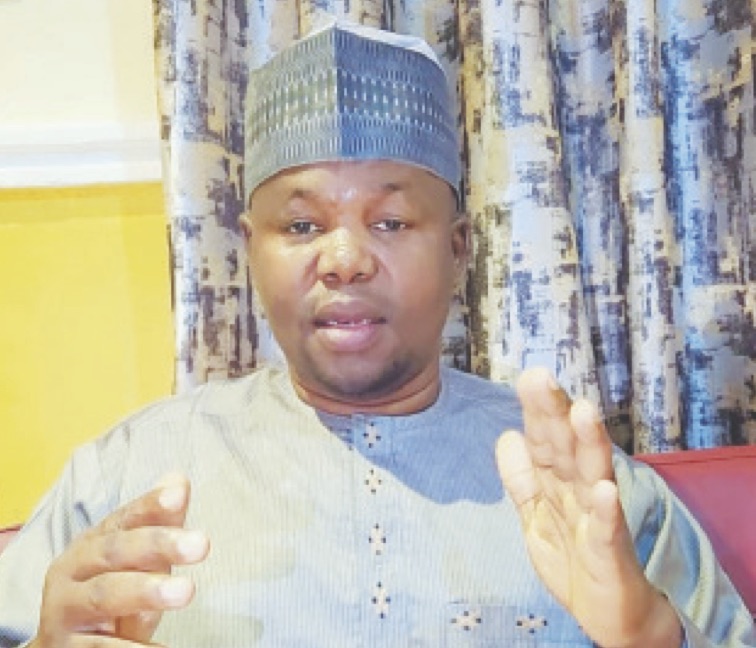
DrSani Adamu, Strategic Adviser on Support Groups to former Vice President Atiku Abubakar, says there are several support groups working to actualise the presidential ambition of his principal.
In this interview with Billy Graham Abel in Yola, he speaks on the nationwide support groups, coalition calculations, electoral reforms, and other events in Adamawa State and Nigeria. He also explains why, in his view, Atiku is the most prepared candidate for the presidency.
Your appointment as Strategic Adviser on Support Groups to Atiku Abubakar took effect on January 1. What is the scale, structure and coordination framework of these groups nationwide? How many are formally aligned with your principal?
The support groups are in their hundreds, spread across all states of the federation and the FCT. Some have existed for years, others went dormant after previous election cycles, and many new ones are emerging as political momentum builds toward 2027.
Our task now is institutional streamlining. We are harmonising them under a unified operational structure to ensure message coherence, strategic coordination, and measurable grassroots engagement. Because we are onboarding new groups while auditing and standardising existing ones, giving an exact number at this stage would be premature. Once harmonisation is completed, we will provide a definitive figure.
What matters most is not merely the number of groups, but their effectiveness, discipline and clarity of purpose.
Are these groups organically formed or centrally coordinated? And what determines official recognition?
It is a hybrid model. Some groups emerged organically from grassroots enthusiasm; others were strategically coordinated to ensure coverage in key constituencies. Regardless of origin, official recognition depends on alignment, total allegiance to the mission and objectives of Atiku Abubakar’s presidential aspiration.
We have developed unified messaging templates and generic talking points to maintain discipline nationwide. Political environments are fluid, so we continuously monitor feedback from communities and adjust messaging in line with the evolving mood of the electorate. Consistency builds credibility.
Some youth groups have urged your principal to step aside for a younger candidate. Is age becoming a liability in Nigerian politics? And is there room for structured intergenerational power-sharing?
The generational conversation is legitimate. Across Nigeria, young people are demanding inclusion and leadership opportunities. But we must distinguish between emotional momentum and sustainable governance.
Age, when combined with competence and wisdom, is not a liability. It provides institutional memory and stability. Youthful energy is vital, but energy without guidance can create governance gaps. The transition of leadership must therefore be deliberate and structured.
There is absolutely room for intergenerational power-sharing. Abrupt abdication of leadership can create instability. What Nigeria needs is a clear roadmap, mentorship, gradual transfer of responsibility, and systems that ensure continuity rather than a vacuum.
Atiku’s aspiration is about Nigeria, not about himself. Any arrangement that secures sustainable security, economic stability and national prosperity will always have his support. He has consistently empowered younger leaders throughout his career, and that philosophy remains unchanged.
What makes Atiku uniquely positioned for the presidency at this moment? How would his economic and security approach differ from the current administration? And what should Nigerians expect in his first 100 days?
Nigeria is at a crossroads. Atiku remains one of the country’s most experienced statesmen. He has operated at the highest levels of governance, built institutions, mentored leaders and participated actively in private enterprise. That combination of public and private sector exposure gives him a broad view of how economic systems function.
His philosophy on economic management centres on sincerity, prudence and experience. He believes reforms must be phased and carefully sequenced rather than abrupt and disruptive. Diversification beyond oil, disciplined fiscal management, and policies that reduce hardship while restoring investor confidence are central pillars of his thinking.
On insecurity and unemployment, the strategy would emphasise intelligence-led security coordination, private-sector-driven job creation, agricultural expansion and youth enterprise development. Restoring trust between citizens and institutions is fundamental, security is not just about force; it is about confidence in the system.
In the first 100 days, Nigerians should expect improved security coordination mechanisms, economic stabilisation measures, strengthened institutions, clearer separation of powers, and visible leadership accountability. Trust is rebuilt when leadership demonstrates consistency between word and action.
With shifting alliances across parties, how do current political realignments affect his ambition? Does party structure matter more than candidate strength? And is your camp ready for coalition politics?
Political realignments are normal within constitutional democracies. Atiku has operated across party lines before and understands coalition building. Politics is dynamic; adaptability is essential. A strong candidate and a strong party structure are mutually reinforcing. One without the other weakens electoral prospects. That is why strategic alliances are important.
His party, the (ADC), is prepared for principled coalitions aimed at unseating the ruling (APC). Collective victory and national interest must outweigh personal ambition. Coalition politics, when transparently negotiated, strengthens democracy.
Do you believe the current administration and INEC can deliver credible elections in 2027? Is the amended law a regression from the 2022 Electoral Act, and what safeguards are necessary?
We have serious concerns. Electronic transmission of results should be the standard practice. Retaining manual processes leaves room for avoidable disputes and manipulation. Where progress has already been made technologically, regression is difficult to justify.
In our view, aspects of the amended law represent selective regression, and selective regression moves a nation backward. The safeguard is clear: incorporate real-time electronic transmission explicitly into law and strengthen civil society oversight mechanisms. Transparency must not depend on administrative discretion; it should be guaranteed by legislation.
What lessons should Nigerians draw from the FCT elections, and how confident are you about 2027’s integrity? What role should citizens play?
Every election is a test case. The FCT polls should encourage vigilance. Democracy works best when citizens are proactive, not passive observers. Electoral integrity is not the responsibility of institutions alone. Citizens must engage at grassroots levels, monitor processes, and defend their votes within the confines of the law. Active civic participation strengthens democratic accountability.
Governor Ahmadu Umaru Fintiri recently defected to the APC. Does this weaken Atiku’s base in Adamawa? And what do such defections say about party loyalty?
Governor Fintiri’s move is tactical repositioning rather than ideological conversion. Controlling Government House is not synonymous with controlling voter loyalty.
Atiku is a home-grown political figure in Adamawa. His grassroots networks were built over decades through direct community engagement. That structure remains resilient.
These defections reflect a broader characteristic of Nigerian politics, limited ideological anchoring and a largely transactional environment. We see such moves as responsibility abdication rather than conviction-driven politics.
What would you say to undecided voters as 2027 approaches?
Nigerians must reflect deeply on our national trajectory, where we came from, where we are, and where we are headed. If we desire progress rather than decline, choices must be deliberate.
Leadership is like navigation. When a ship is failing, you either continue drifting or you chart a new course. The question before Nigerians is simple: do we remain with a struggling system, or do we entrust the nation to tested leadership with a clear national vision?
In my view, 2027 is not just another election cycle. It is a defining moment.






0 comment(s)
Leave a Comment