 Author: CBN warns excess liquidity, election-cycle spending threaten economic stability. Posted On: 15 hours ago
Blog Category: Academics
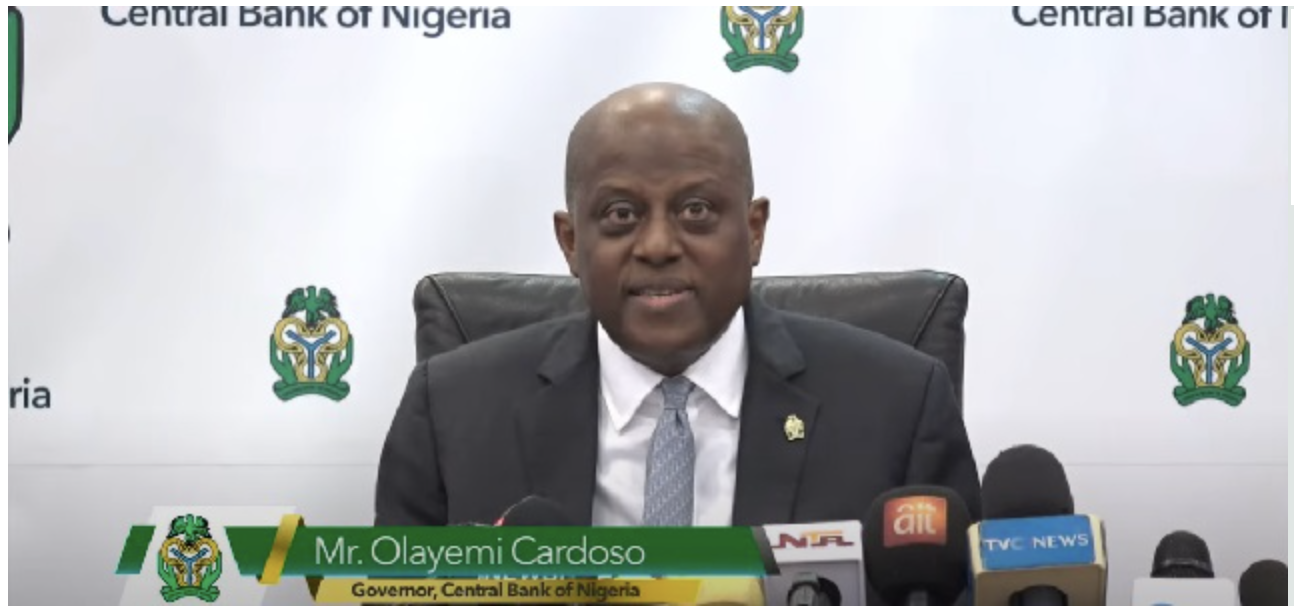
The Central Bank of Nigeria (CBN) has warned that persistent excess liquidity in the financial system and expansionary election-cycle spending could undermine Nigeria’s macroeconomic stability, despite recent policy-driven gains.
The warning was delivered by CBN Governor, Yemi Cardoso, at the National Economic Council conference held at the Presidential Villa on Tuesday, February 10, 2026.
While exchange rate conditions have improved and monetary tightening has begun to yield results, the apex bank said Nigeria’s economic recovery remains fragile and vulnerable to policy slippages.
The CBN noted that a sizeable liquidity overhang continues to weigh on the financial system, raising the risk of renewed inflationary pressures and currency instability. It also cautioned that election cycles historically inject large volumes of liquidity into the economy, often weakening monetary policy transmission and reversing reform gains.
Against this backdrop, the Bank said safeguarding price stability will require disciplined liquidity control, fiscal coordination and sustained structural reforms.
Cardoso said Nigeria’s macroeconomic environment remains exposed to deep-seated structural and policy risks that monetary tightening alone cannot resolve. He noted that although recent interventions helped stabilise markets, they also created long-term distortions that continue to complicate liquidity management.
He disclosed that intervention programmes amounting to about N10.93 trillion provided temporary economic support but contributed to structural imbalances within the financial system.
He added that restoring stability requires disciplined liquidity control, fiscal coordination and sustained structural reforms.
The CBN governor stressed that monetary policy remains a necessary but insufficient tool, noting that durable stability depends on fiscal discipline, supply-side reforms and strong institutional coordination.
The CBN governor outlined several structural constraints limiting the effectiveness of monetary policy within Nigeria’s economic environment. He explained that weak credit transmission, shallow financial markets and the size of the informal sector reduce the speed and reach of policy adjustments.
He added that policy coherence between monetary and fiscal authorities serves as a critical stability anchor, with the CBN maintaining a disciplined interest rate path while fiscal authorities strengthen debt management and public financial governance.
The apex bank identified state governments as increasingly decisive actors in Nigeria’s macroeconomic stability framework.
According to Cardoso, subnational governments now control roughly half of Federation Account revenues, giving them significant influence over liquidity conditions, inflation and growth outcomes.
Higher revenues following recent reforms have expanded the macroeconomic impact of state-level fiscal decisions.
Infrastructure investment at the subnational level can help reduce structural inflation pressures.
Sustainable borrowing frameworks are needed to limit future fiscal risks.
He emphasised that collaboration between state governments and the financial system is essential for expanding financial inclusion, improving credit access and sustaining reform momentum.
The CBN’s warning highlights the delicate balance between macroeconomic stabilisation and fiscal expansion in an election-cycle environment. With liquidity conditions still elevated, policy credibility will depend on coordinated fiscal restraint and disciplined monetary management.
Analysts say the policy stance signals the apex bank’s determination to prioritise stability even as Nigeria pursues growth, financial deepening and external sector resilience.
The CBN’s policy direction reflects a broader shift toward orthodox monetary management and stronger institutional coordination across Nigeria’s macroeconomic framework. While recent reforms have improved some stability indicators, policymakers say structural vulnerabilities remain significant.





0 comment(s)
Leave a Comment