
Blog Category: Academics
Just two weeks ago, the bets were firmly on the Naira strengthening below N1,300.
Many analysts believed the currency was finally drifting toward what they considered its fair value.
Optimism was high, and for a brief moment, the Naira appeared determined to prove its critics wrong.
Barely two weeks into March, however, most of those gains have vanished.
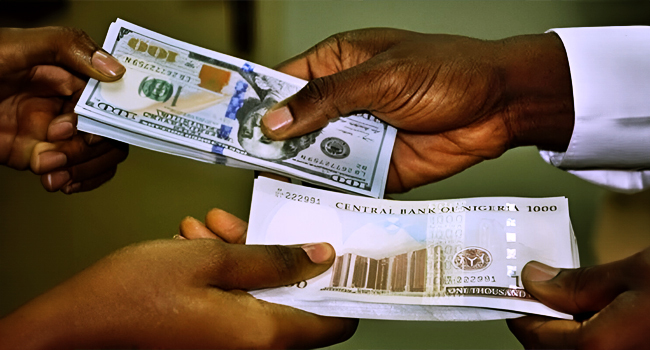
For the first time in six weeks, the exchange rate weakened beyond N1,400, closing around N1,425 in the official market.
In currency markets, optimism can fade quickly, often faster than it arrives.
For the speculators who took the contrarian view, the outcome could hardly be better.
Those who bought dollars when the Naira strengthened to about N1,337 have effectively won their wager. In financial markets, the crowd is often confident, but the contrarian is frequently correct.
The weakening also seems to have coincided with the Central Bank of Nigeria’s decision to cut interest rates by 50 basis points.
The CBN justified the move by pointing to strong reserves of about $50 billion and what it described as stability in the forex market. That outlook assumed disinflation would continue.
Yet the market appears to be reminding policymakers that stability is easier declared than maintained.
To understand the Naira’s unpredictability, one must consider a possibility that sounds counterintuitive.
The CBN may not actually want the Naira to strengthen too much at this stage.
A stronger currency may look attractive on paper, but in the current economic context, it could easily become a Greek gift.
The risk lies partly in the structure of Nigeria’s monetary strategy.
For years, the CBN has relied on relatively high interest rates to attract foreign portfolio investors.
These investors, commonly known as FPIs, bring in foreign exchange and provide liquidity to domestic financial markets.
However, the strategy works best when investors keep their money in the country for a reasonable duration.
If the Naira strengthens too quickly, investors who entered when the currency was weaker can exit early and still lock in handsome gains.
That dynamic undermines the CBN’s preference for longer-term capital inflows. A currency that strengthens too rapidly can inadvertently become an invitation to leave sooner rather than later.






0 comment(s)
Leave a Comment