
Blog Category: Academics
The Central Bank of Nigeria’s Monetary Policy Committee voted to cut the benchmark Monetary Policy Rate by 50 basis points or 0.5% to 26.5% on Tuesday, February 24th 2026.
This is the second rate cut the CBN will be considering in about a year as it continues to deploy orthodox tools to fight back inflation and retain monetary stability.
The decision of the committee was predicated on three main reasons, which we will break down in an explanatory format.
The apex bank cited the continuous drop in the pace of inflation over the last one year as one of the major reasons why they voted for a rate cut.
Explanation: The inflation rate has been falling in the last one year following the rebasing of the consumer price index. For example, inflation rate as of January 2025 was 27.61% and fell to 15.1%. Particularly, food inflation seems to have been the major driver of the drop in food prices as the government policy of opening borders crashed food prices.

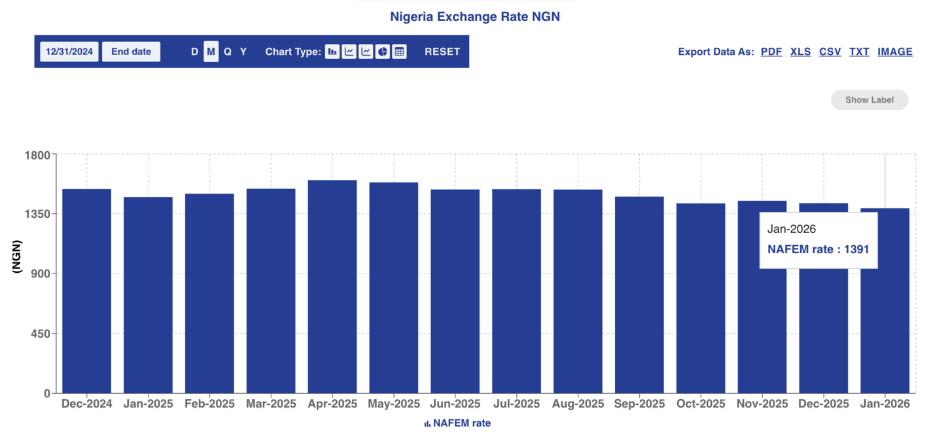
The CBN also suggest a stable exchange rate was a major driver of the drop in the inflation rate, which the data also supports. For example, the exchange rate at the end of 2025 closed positively for the first time in about 13 years, going from N1,535 in December 2024 to N1,429 in December 2025.
The CBN also cited relative stability in the prices of petroleum products in the last one year.
The momentum was further reinforced by relative stability in the prices of petroleum products and improved food supply conditions, especially staples. These outcomes have indicated that prior tightening has continued to anchor expectations.
The CBN is basically suggesting that fuel prices were stable for the most part of 2025 and into 2026, largely due to the impact of the Dangote Refinery.
Fuel is considered a significant input cost in setting prices for goods and services consumed within the country. The higher the fuel price is, the higher the inflation and vice versa, due to the fact that they are perfectly correlated.
According to data from the National Bureau of Statistics, the average rate Nigerians pay for fuel ranged between N1,048.63 as of December 2025, declining from N1,189.12 a year earlier. Also, important to note that global crude oil prices, which is a major determinant of petrol prices, also averaged $63 – $65 according to OPEC and CBN data.
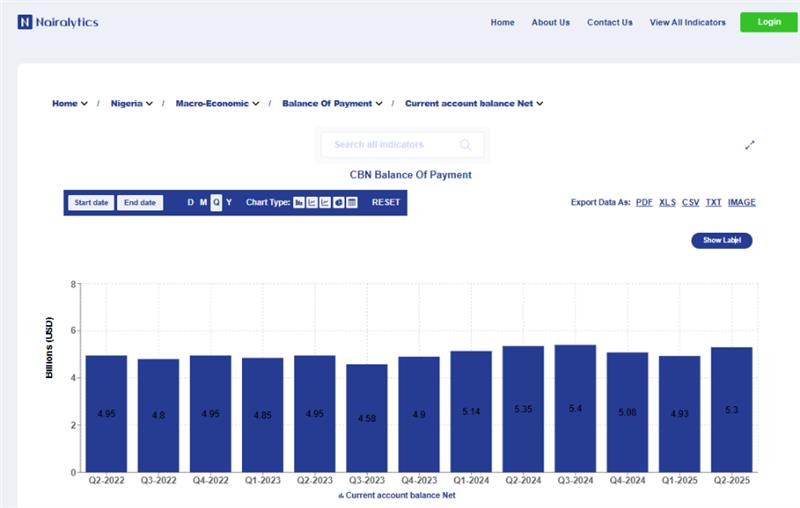
Remarkable performance of Nigeria’s external sector supported by higher export earnings and increased remittance inflows.
Nigeria’s external sector, evidenced by the robust accretion to foreign exchange reserves, is supported by higher export earnings and increased remittance inflows. This has contributed to greater stability in the foreign exchange market and bolstered investor confidence.
Nigeria has been recording a significant increase in the external reserve, rising to as high as $48 billion as of February 2026, the highest level in like 13 years. In fact, the CBN Governor mentioned that it was now above $50 billion.
It is also important to note that higher remittance inflow from diaspora transfer through IMTOs, families sending money from overseas, has boosted the availability or supply of foreign exchange and strengthened the balance of payment surplus. Workers’ remittance according to CBN data for nine-month 2025 is $15.466 billion.
External remittance also boosted the external reserve from crude oil export receipts, agricultural and manufactured goods exports. Total exports as of Sept 2025 from both crude oil and non-crude oil reached $44.060 billion, a 9.33% increase from $40.296 billion as of Sept 2024.






0 comment(s)
Leave a Comment