
Blog Category: News
Prices of food items, goods, and services have surged across markets in Nigeria’s Federal Capital Territory, as rising fuel costs linked to the Middle East crisis continue to ripple through the economy.
A market survey conducted by the News Agency of Nigeria in Abuja shows that the increase in the pump price of petroleum products has significantly raised transportation and production costs, forcing traders to adjust prices upward.
The development is placing pressure on households, with many residents reporting higher spending on food and basic services amid tightening incomes.
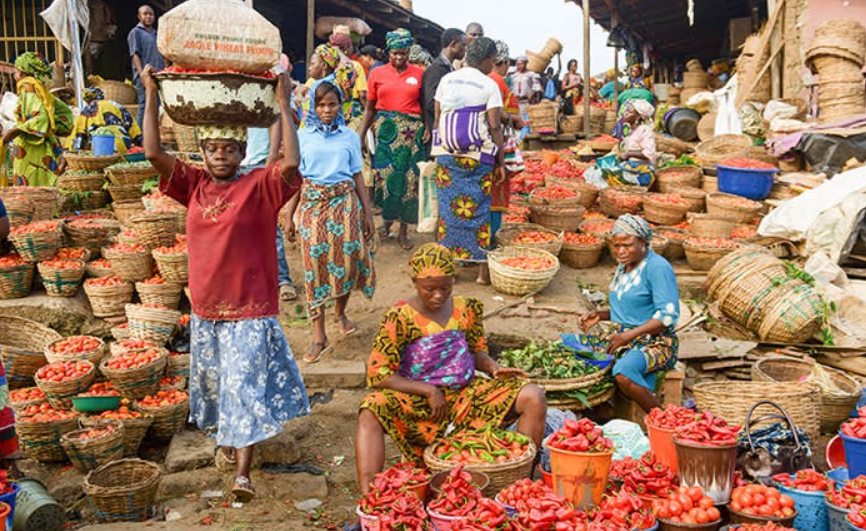
At the Orange Market along the Abuja-Keffi road, a major bulk food hub, the price of a big basket of tomatoes has jumped from between N9,000 and N10,000 in February to as high as N35,000.
In Wuse and Utako markets, traders also reported higher prices across staple food items, although Garki Modern Market showed mixed movements, with slight reductions in some items like tomatoes.
Beyond food, the rising cost of fuel and unreliable electricity supply are pushing up the prices of essential goods and services.
Producers and small business owners say they are increasingly reliant on diesel and petrol to power operations, further raising operating costs.
A sachet water distributor in Abuja said the price of a bag of water has risen from about N300 to as high as N500 due to increased diesel expenses and poor electricity supply. He noted that production has been constrained despite strong demand driven by the hot season.
Similarly, an ice block seller reported raising prices from N500 to N800 as fuel and generator costs continue to climb, warning that the situation is affecting her ability to meet customer demand.
Residents say the impact is being felt beyond food, extending to everyday services. A parent in Apo said the cost of children’s haircuts has more than doubled within weeks, reflecting the broader inflationary pressure across the economy.
A yam seller at Nyanya market said transportation costs for moving produce from Benue State to Abuja have tripled, significantly affecting retail prices.
Business operators also warned that without intervention, rising input costs could further constrain supply, deepen inflation, and weaken consumer purchasing power in the coming months.
On the back of the ongoing U.S.-Israel-Iran war, crude oil prices have surged above $100 in the global oil market, pushing the price of petrol to above N1,000 in Nigeria.
He explained that the Tinubu administration’s economic strategy is anchored on market-driven pricing for petroleum products and foreign exchange reforms introduced to eliminate distortions that had persisted for years.





0 comment(s)
Leave a Comment