 Author: INVESTIGATION: Lead In Their Blood: How Battery Recyclers Are Poisoning Nigerians. Posted On: 5 days, 17 hours ago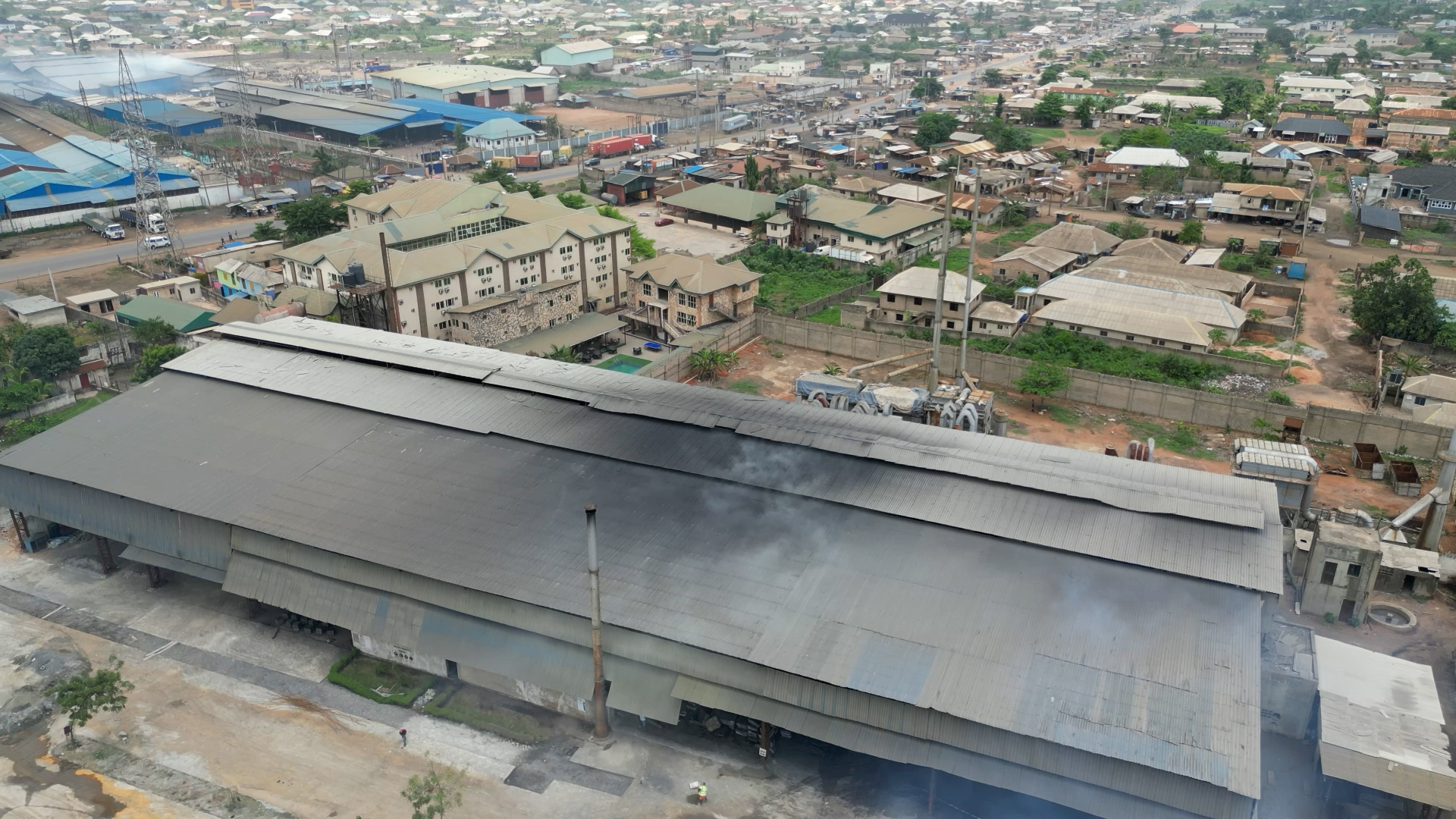
Blog Category: News
Around 10 a.m. on the sunny Friday morning of 17 September, about 30 residents of Ogijo, a sprawling industrial community in Sagamu LGA, which lies on the border of Lagos and Ogun State, gathered at the Ogijo Health Centre to collect the results of their Blood Lead Level (BLL) test. As the sun baked the skin with mild intensity, they trickled into the community health facility, some with their children in tow. Tension filled the air as the residents clustered in groups to discuss their fate in subdued voices.
Months earlier, in July, their blood samples had been drawn to check for traces of lead through BLL, which refers to the concentration of lead in a person’s blood, measured in micrograms per decilitre (image.png), to assess lead exposure and its health risks. Now, the results would reveal whether the dust and smoke emitted by lead recycling companies in the Ogijo community had poisoned them.
53-year-old Thomas Ede and his three children, all under the age of 11, were among the 70 Ogijo residents whose blood samples had been drawn for testing. Mr Ede, a single father, lives 500 metres from True Metals Nigeria Limited, one of the companies that recycle used batteries for lead export in Ogijo.
For over 15 years, Mr Ede had called the Ogijo community home, long before True Metals began operations in the community. But about a decade ago, when the company began operations, he observed as thick black smoke from the factory’s chimneys travelled through the skies and settled daily on every possible surface, rooftops, crops, clothes, and even cooking pots. Lately, he had begun to fear that the pollution from True Metals and similar factories in the area had seeped into his family members’ bodies.
A drive around Ogijo reveals the vulnerability of its environment through the smell in the air. During the day, the atmosphere feels heavy, as if every breath carries a film of dust. At night, residents say the smoke burns their throats and leaves a bitter taste that lingers till the next morning. These recycling factories, once symbols of job opportunities and communal progress, have become agents of quiet destruction, poisoning the soil, air, and people of Ogijo.
At the community health centre, lines of worry cut across Mr Ede’s face as he sat amid a small crowd, waiting to be called.
Hours later, his name was read out and his worst fears were confirmed. He and all three of his children have traces of lead in their blood. But the result that broke him was that of his eldest child, eleven-year-old Freeman, whose blood showed dangerously high lead concentration at 28.47 micrograms per decilitre, more than five times the level considered safe by the World Health Organisation (WHO).
“I am really worried,” Mr Ede told PREMIUM TIMES in an interview at his residence, a one-room apartment. “I know that a lot of damage has been done to his body because of the high level of lead in his blood.”
“He has been having some symptoms, such as frequent cases of malaria and typhoid, as well as a distended stomach. His stomach is always big, no matter how little he eats,” Mr Ede added. Doctors familiar with lead poisoning explain that “distended stomach” can occur when the liver and digestive system are under stress, a common complication among children exposed to heavy metals.
Since his wife left him due to financial difficulties, Mr Ede has been raising his three children alone. He works as a farmhand, earning just enough to keep food on the table.
Most of what he makes goes toward rent for their small, single-room apartment and toward keeping Freeman and his siblings in school. When the blood test results came back showing dangerous levels of lead, it felt like one more blow, another reminder that survival in Ogijo comes at a cost.
Lead, a toxic heavy metal, is released into the environment during informal battery recycling. When used batteries are burned or melted, they contaminate the surrounding soil, air, and water.
The resulting fine lead dust spreads through the wind and onto household surfaces. Once inhaled or ingested, especially by children, it enters the bloodstream and accumulates in organs such as the brain, liver, and kidneys.
According to the World Health Organisation (WHO), there is no safe level of lead exposure. Blood-lead levels above 5 µg/dL and soil concentrations over 400 mg/kg are considered hazardous, yet many contaminated communities exceed these limits many times over.
Worse still, studies have linked lead exposure to lower intelligence quotient, learning difficulties, and behavioural problems. A 2020 UNICEF and Pure Earth report found that children with blood lead levels as low as five micrograms per decilitre scored up to five points lower on intelligence tests than their unexposed peers, providing evidence that no amount of lead is safe.
Sadly, Freeman’s blood isn’t the only one contaminated with lead poisoning.
To understand what was happening to Freeman and dozens of other families, The Examination, a nonprofit newsroom that investigates global health threats, in partnership with PREMIUM TIMES, Joy FM, Pambazuko and Truth Reporting Post, launched an investigation and commissioned an independent scientific study to measure lead levels in the soil, as well as in the blood of workers and residents living in Ogijo community. The findings of the investigation show massive lead poisoning of humans and the environment in Ogijo.
Between April and June, environmental health researchers collected blood, nasal swabs, and soil samples to measure the scale of lead contamination. In total, 70 residents, including children, adults, and factory workers, were tested for blood lead levels (BLL).


0 comment(s)
Leave a Comment