 Author: INVESTIGATION: Poor oversight, regulatory failure expose Nigerians to slow death from battery recycling (2). Posted On: 4 days, 17 hours ago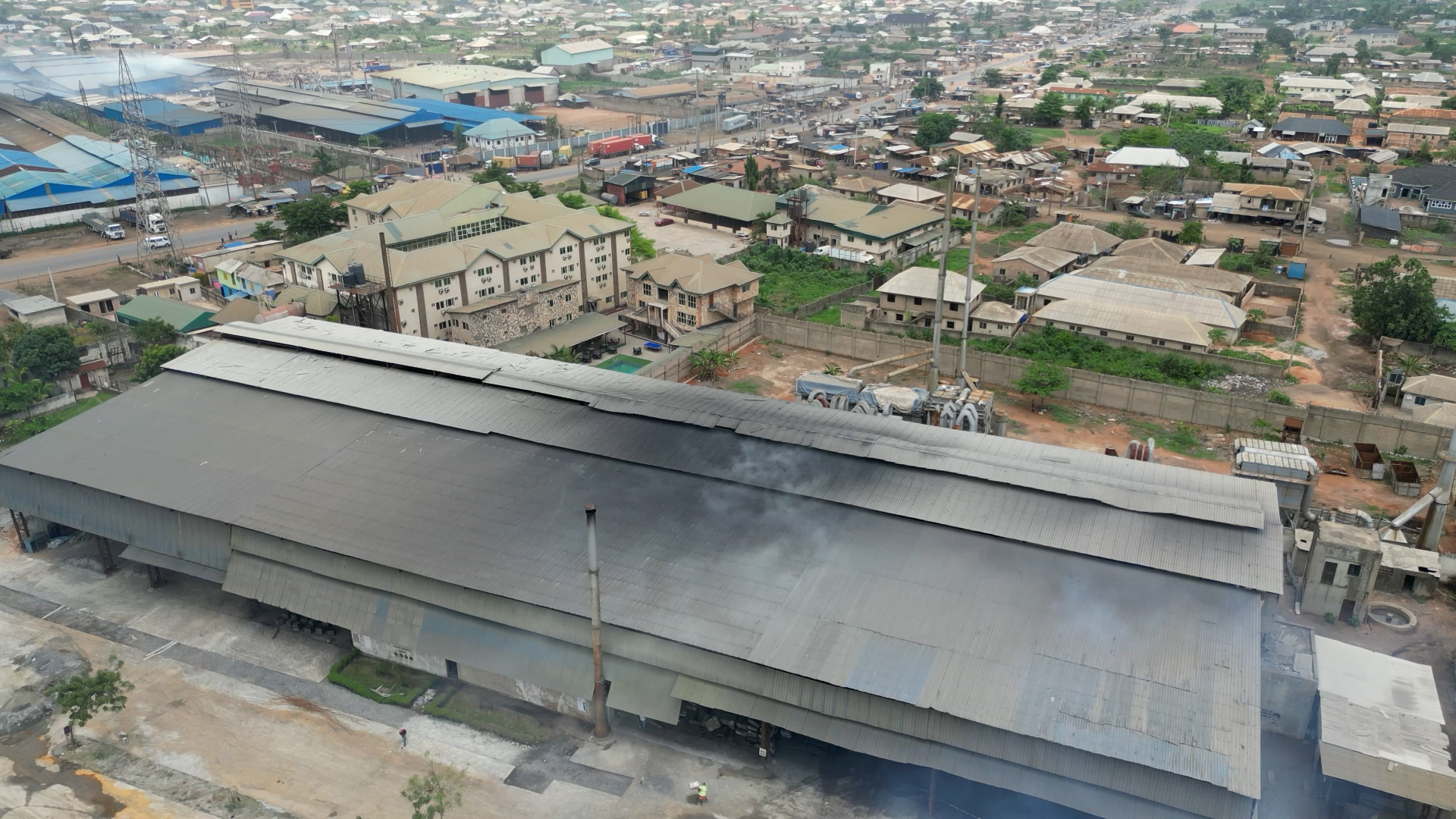
Blog Category: Academics
The lead found in the blood of residents and in the soil of Ewu Oloye, Ipetoro, and Ewu Eruku communities in Ogijo, a border town in Ogun State, pointed to a clear source: the cluster of battery-recycling factories that powers Ogijo’s small economy while slowly poisoning the people and their environment.
Residents who tested positive for lead poisoning live within 100 to 500 metres of True Metals Nigeria Limited and Everest Metal Nigeria Ltd, two of the most prominent Used Lead-Acid Batteries (ULAB) recyclers in Ogijo.
True Metal Nigeria Limited is a metal recycling facility located at Km-16, Ikorodu-Sagamu Road, Ogijo, Ogun State. According to its website, the company specialises in the export of non-ferrous metals, including lead alloys, lead ingots, and copper products.
True Metals is one of Nigeria’s leading exporters of lead products. In 2022, the company shipped recycled lead to Spain, South Korea, and India. Between 2023 and May 2025, it also exported recycled lead to the United States, according to multiple trade records reviewed by The Examination and PREMIUM TIMES.
Records show that between 2022 and 2024, several companies received recycled lead from True Metals, including Trafigura Trading LLC, C. Steinweg Baltimore Inc., Wilebat SL, Hankook Bicheol Co. Ltd., and Montorretas SA.
Further analysis of two separate trade record sources found that, from April 2023 to December 2024, True Metals Nigeria Ltd. made at least 29 shipments of recycled lead to Trafigura, destined for the United States.
According to a 2020 report by UNICEF and Pure Earth, the global demand for lead has surged in recent decades, driven largely by the rapid growth of vehicle ownership in low- and middle-income countries. Lead prices doubled between 2005 and 2019, while the number of new vehicles sold in these countries more than tripled between 2000 and 2018.
In the auto industry, recycled lead is extensively used in automotive batteries, forming the core of new batteries through a recycling system. The lead from spent batteries is recovered, refined, and returned to the supply chain to create new ones, with recycled materials making up over 80 per cent of new car batteries in the US. Experts claim that the approach conserves resources, reduces the need for mining, and makes lead-acid batteries one of the most recycled products.
While the United States and Europe recycle more than 95 per cent of their used lead-acid batteries under strict environmental controls, many low- and middle-income countries lack comparable regulations and enforcement. As a result, countless batteries are processed in informal and unregulated settings.
“These informal recycling operations are often in backyards, where unprotected workers break open batteries with hand tools and remove the lead plates that are smelted in open-air pits that spread lead-laden fumes and particulate. It is estimated that in Africa alone, more than 1.2 million tonnes of used lead-acid batteries enter the recycling economy each year, and much of that goes to informal operators,” the 2020 report stated.
 Africa alone generates an estimated 1.2 million tonnes of used lead-acid batteries each year, much of which ends up in informal recycling operations that serve as a primary source of income for many poor households.
According to United Nations data, Nigeria led Africa in recycled lead exports between 2019 and 2023. The same data show that the United States imported the largest net weight of recycled lead from Nigeria during this period. US Census records indicate that imports from Nigeria increased from under 1,000 tonnes in 2019 to 34,300 tonnes in 2020.

Source: U.S. Census Bureau, “USA Trade Online,” accessed on September 17, 2025. HS code:7801
True Metals said it aims to be “a well-organised, fully upgraded, mechanical and efficient plant that sustains development to business through class value-added products,” and by being “Eco-friendly”.
However, multiple residents and workers within the organisation told PREMIUM TIMES that the company’s promises to be eco-friendly only exist on paper, as the indiscriminate discharge of lead waste into the soil, air, and water of Ogijo falls short of international safety standards.
Workers report handling batteries with their bare hands, smashing them with axes, wearing torn gloves, and handling molten lead with minimal protection, while fumes drift freely into the air.
Video evidence obtained by PREMIUM TIMES showed that factory floors are cracked and cluttered, slag piles sit exposed to wind and rain, and rainwater and battery effluents flow untreated into the surroundings. Lead dust left out in the open spreads into nearby homes, classrooms, and gardens.




0 comment(s)
Leave a Comment