
Blog Category: Academics
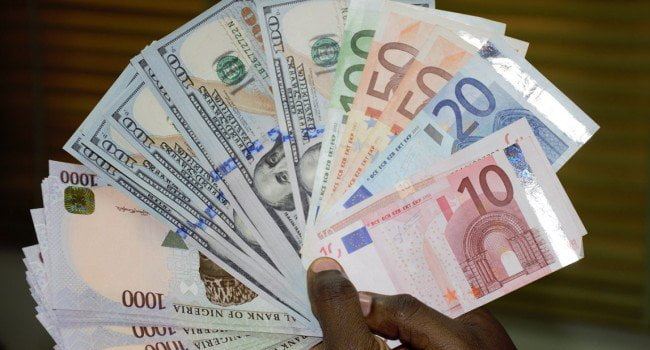
The naira extended its gains against the euro in Nigeria’s foreign exchange market on Wednesday, March 18, 2026.
The naira strengthened against the euro this week, rising from a peak of about N1,624/€1 on March 10th to the current level of N1,556/€1.
Market participants attributed the naira’s recent rally against major European currencies to high demand for naira-denominated assets.
The latest price action indicated that the EUR/NGN pair is in a short-term bearish phase, with the euro trending downward.
The pair fell by nearly 3.6% in just nine days after reaching a peak of about N1,624.8/€1 last week.
Naira bulls must defend the N1,605/€1 psychological support level or risk losing ground to N1,625/€1 (March high; a break above this level would suggest a return to euro dominance). The major support level for the Nigerian naira stands at N1,550/€1
Interest rates were recently cut by 50 basis points to 26.5% (down from 27%) by Nigeria’s Central Bank. Rate cuts typically weaken a currency, but this move was viewed as a confidence measure supported by Nigeria’s external reserves, which are projected to reach $51 billion by the end of 2026.
The naira’s “real” value has improved as Nigeria’s inflation rate has started to decrease toward the 12.4% target. Arbitrage has lessened since exchange rate windows were unified.
The CBN is effectively providing the liquidity needed to support the naira against the euro through the Foreign Portfolio Investment (FPI) via high-yield OMO bills.
The dollar’s rise against the euro accelerated after the US Federal Reserve announced that inflation is unlikely to improve soon, mainly due to the Middle East conflict.
The conflict in Iran is the main driver of this dollar resurgence. Tehran retaliated with bombings of neighboring countries after US-Israeli attacks on Iran began in late February.
The Middle East conflict triggered an oil shock, reversing previous trends, mainly because the US remains the world’s largest crude oil producer (22 million barrels per day) and is more resilient to the impact of rising oil prices.
The US Central Bank kept its benchmark policy rate between 3.5 and 3.75 percent on Wednesday for the second consecutive day as officials acknowledged the escalating economic risks connected to the Middle East conflict.
The Federal Open Market Committee decided to keep its benchmark interest rate between 3.5 and 3.75 percent by a vote of 11 to 1, The median official expects rates to drop by a quarter point in 2026 and another quarter point in 2027, which is in line with their December projections, according to a “dot plot” of rate projections.
“The implications of developments in the Middle East for the US economy are uncertain,” the Fed stated.





0 comment(s)
Leave a Comment