 Author: Petrol price shock: Marketers say they can’t raise money to buy products. Posted On: 17 hours ago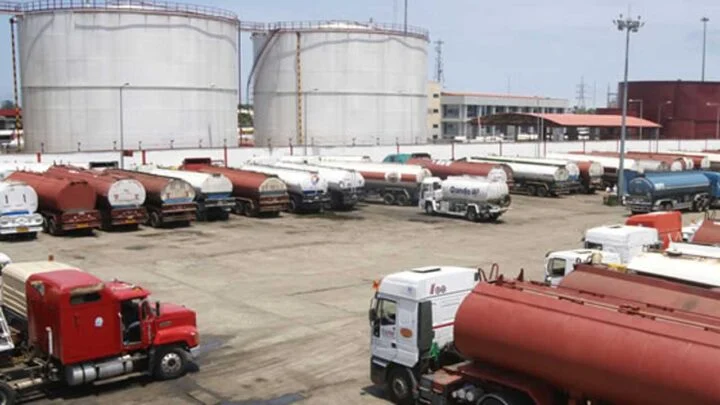
Blog Category: Academics
Oil marketers are lamenting that the recent increase in the price of petrol is negatively affecting their businesses as they are now struggling to raise enough money to buy products.
They said many of them are running out of capital to replenish their stock, and as such, some of the marketers are combining their resources to buy petroleum products.
The marketers admitted that consumption had reduced drastically due to increased price of petrol, with demand noticeably slower compared to December.
Speaking to Nairametrics in an exclusive interview, the National Publicity Secretary of the Independent Petroleum Marketers Association of Nigeria (IPMAN), Chinedu Ukadike, revealed that it now costs more to buy 40,000 or 45,000 litres of petrol.
Ukadike said, ‘’The purchasing power is high. Now, it takes so much Naira to be able to buy 45,000, 40,000 litres of petroleum product. The volume of money now has also increased.
‘’Definitely, it is impacting on our businesses. And most of the people are running out of capital. Even to make up this money now to buy products is going to be a little bit difficult. And some people are even combining. Just to make sure that the business is moving. And we are serving Nigerians better.’’
Also, lending his voice to the issue, another oil marketer, Ibrahim Gambo, said consumption has reduced as customers adjust their consumption pattern and become less discretionary with their expenses with the increase in the pump price of petrol.
He said, ‘’Yes, consumption has reduced. Demand is noticeably slower compared to December, which is usually a peak period due to festivities, travel, and increased commercial activities. With higher pump prices, consumers seem to be adjusting behaviour—less discretionary travel, more fuel conservation, and in some cases switching to alternatives like CNG where available.
‘’Commercial operators are also cutting trips to manage costs. So, volumes in January and beyond are softer than what we saw in December.’’
There have been reports that petrol prices face further pressure after the recent increase in pump price, as global crude oil prices hit the $70 per barrel mark, largely driven by the escalating geopolitical tensions with the US threat of military action against Iran.
Rising threats of US–Iran military action have led analysts to project that oil prices may remain high amid heightened geopolitical risks, US restrictions on Russian oil purchases, and sustained Chinese demand, even as markets entered the year expecting a large oversupply.
Subsequently, the state-owned oil company, the Nigerian National Petroleum Company (NNPC) Limited, has increased the pump price of petrol to N839 per litre in Abuja and N835 per litre in Lagos.
Gambo said that although the naira had strengthened against the dollar recently, it appears not enough as petrol prices are affected by other factors aside forex, like global crude oil prices, logistics expenses, security risks, interest rates, among others.
He said, ‘’While the exchange rate has shown some improvement, petrol pricing is influenced by several other factors beyond FX. First, most petrol cargoes currently in the market were imported when the exchange rate was much weaker, so marketers are still recovering higher landing costs.
‘’Second, global crude oil prices and refined product prices have remained volatile, which directly affects landing costs. Third, logistics expenses—shipping, insurance, port charges, financing costs, and inland distribution—have increased significantly. Energy costs, security risks, and interest rates also play a role. So, even with some FX stability, the overall cost structure has not reduced enough to immediately reflect in pump prices.’’
Ukadike had also earlier attributed the increase in petrol price to the spike in crude oil prices to around the $70 per barrel mark from between $50 and $60 per barrel due to geopolitical risk and possible fights.
He emphasized that in a deregulated economy, the government does not have any hand in regulating the price of petroleum products.
While providing a reason for the increase in the price of its petrol Dangote Petroleum Refinery said the adjustment reflects a return to what it described as sustainable pricing levels, as it emphasized on its commitment to market stability and uninterrupted nationwide supply of petrol.
However, on the flip side, the rising crude oil prices above Nigeria’s 2026 federal budget benchmark of $64.85 would largely bolster the country’s fiscal revenues, foreign exchange reserves, and promote exchange rate stability.





0 comment(s)
Leave a Comment