 Author: SPECIAL REPORT: Bauchi communities struggle to access healthcare as govt fiddles with funding priorities. Posted On: 6 days, 15 hours ago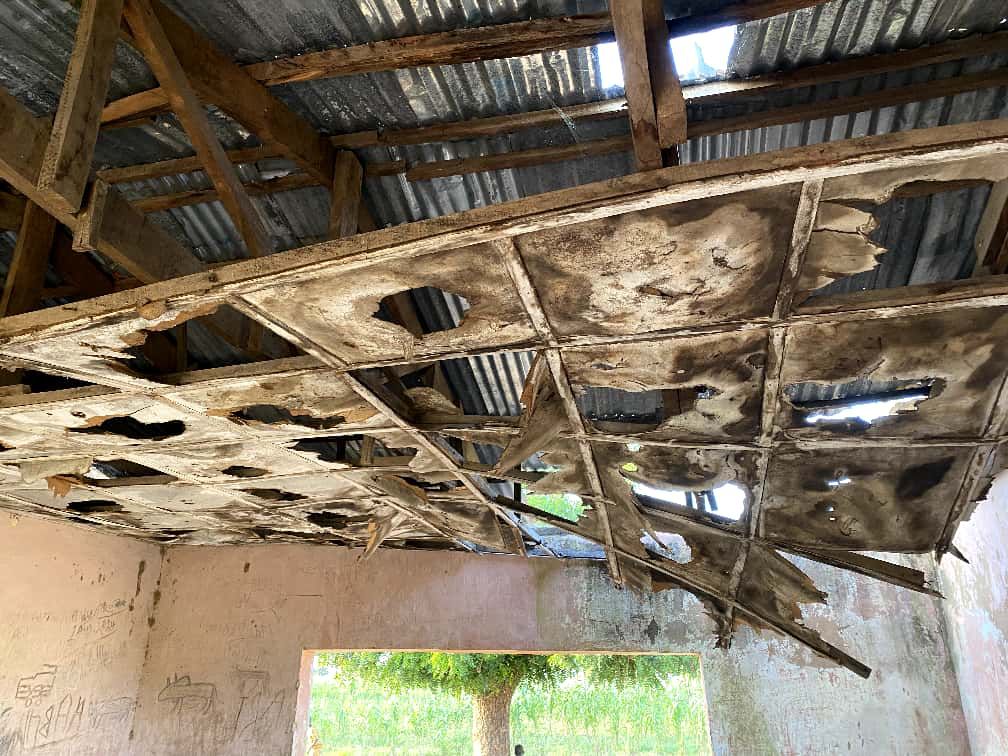
Blog Category: Academics
Hannatu Sabiu held her three-year-old grandson, Muhammad Sani, close to her chest, his limp body resting against her. The boy’s half-open eyes darted weakly around the dimly lit consultation room of a health post in Ringim, a village in Ganjuwa Local Government Area (LGA) of Bauchi State.
At intervals, Muhammad would let out a shriek, and his grandmother would rock him gently to stop him from crying, while she explained his condition to a health worker attending to them.
The child had been sick for a while, withdrawing from the playground and clutching his belly while he cried on his grandmother’s lap. He was administered paracetamol at home for days, but his condition only worsened.
“The fever was on and off,” Mrs Sabiu told PREMIUM TIMES at the health centre one Saturday in October.
That morning, he vomited all that he had eaten, even though he had barely eaten anything in days. “That’s why I brought him to the hospital,” she said.
She was offered some drugs, including an Oral Rehydration Solution (ORS) prescription, and asked to take the boy to the Primary Healthcare Centre (PHC), Kafin Madaki, also in Ganjuwa LGA.
PHC Kafin Madaki is several kilometres from Ringim, and can only be accessed via bumpy roads that worsen during the rainy season.
Lamaran Haladu, who heads the Ringim Health Post, said he suspected blood shortage in the boy’s body, prompting the referral.
However, Mr Haladu, a Community Health Extension Worker (CHEW), said the health centre doesn’t have the capacity to diagnose the boy’s ailment.
The health centre only treats minor conditions, such as fever and malaria. Other severe conditions that may require blood transfusions are usually referred to either the PHC Kafin Madaki or the General Hospital.
This is the case for many residents who visit this health centre, which serves several communities, including Kanaka, Wushi, Dati, Unguwan Madaki, Unguwan Sarki, Jauro Sani, Hardo Kundi, and Digawan Kanaki.
“Overall, our target population is almost 10,000,” said Mr Haladu. “People in Jeren Gabar, a village after Kanaka, usually can’t come here during the rainy season because they have to cross a river.”
However, the PHC Kafin Madaki, where Mrs Sabiu was referred to, was under lock that morning when PREMIUM TIMES visited on the same day. Residents said it was operational, but the officials were not around that day.
It meant Mrs Sabiu could not present her grandson for medical checks when she eventually got there.
Although no Cholera diagnosis had been made yet on Muhammad, the symptoms he presented were similar to those of Cholera, a recurring disease whose outbreak the state is currently battling. Across Bauchi, children face identical risks as preventable diseases spread through communities lacking functioning health facilities.
A few weeks prior, the state government announced 58 Cholera fatalities amid an outbreak in 14 of the state’s 20 LGAs. The government reported a total of 258 new cases, indicating a fatality rate of 22 per cent.
Cholera is a severe diarrheal disease that spreads through contaminated food and water. According to the World Health Organisation (WHO), it can kill within hours if not treated.
In the last five years, the disease killed more than 4,700 people in Nigeria, according to aggregated data from the Nigeria Centre for Disease Control and Prevention (NCDC).
Four states – Bauchi, Jigawa, Kano, and Zamfara – accounted for 53 per cent of all cases in the last five years.





0 comment(s)
Leave a Comment