
Blog Category: Academics
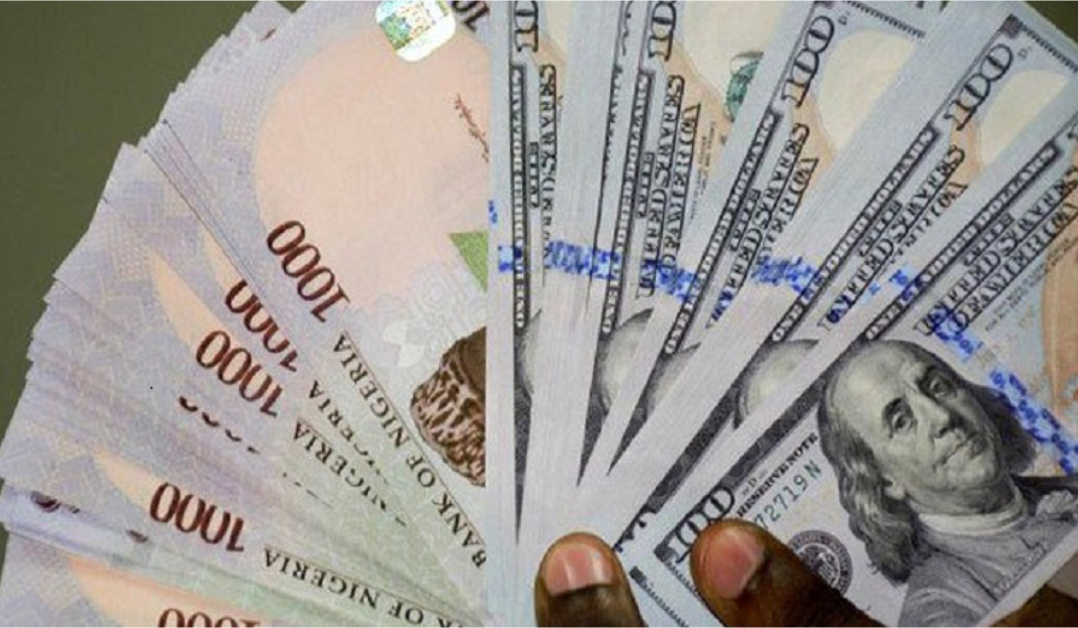
Two weeks ago, I urgently needed forex and did what most Nigerians do in that situation: I called my supplier and prepared to negotiate like a Lagos market veteran.
He quoted N1,488/$1, which felt painful compared to the N1,421 official rate I was using as a mental reference, even though that rate is mostly theoretical for retail buyers.
After a brief internal debate about principles versus reality, I paid the N1,488 and moved on with my life.
Days later, it touched N1,490, and suddenly my purchase felt like foresight rather than surrender, because the real fear was a sprint to N1,500.
Fast forward two weeks, and the parallel market is flirting with N1,420/$1. Now I am not sure whether to congratulate myself or demand a refund from the universe.
Meanwhile, analysts are confidently projecting N1,200/$1 as a reasonable target, and billionaire investor Femi Otedola has suggested the naira could even strengthen below N1,000 on the back of domestic refining and stronger exports.
For a country that has spent over a decade adjusting to depreciation headlines, this feels almost suspiciously pleasant.
Politically, a stronger naira is irresistible because it feels like vindication, signals stability, and hints at cheaper imports and softer inflation after a reform season that has stretched wallets and patience.
Economically, however, rapid appreciation deserves a raised eyebrow, especially if it is powered more by short-term capital than by factories, farms, and actual output.
Nigeria’s recent monetary reset explains why the applause should be measured.
Over the past two years, the Central Bank under Governor Olayemi Cardoso raised benchmark interest rates aggressively, tightened liquidity, and dialled back intervention practices that had blurred price signals.
Treasury bills and bonds were issued at yields above 20 per cent, restoring a high price of money and turning Nigeria into a yield hotspot. Inflation, which peaked above 30 per cent in 2024, has eased to roughly 16 per cent, exchange rate volatility has moderated, and reserves have improved.
The medicine worked, but it also made Nigeria very attractive to global investors hunting for returns.
As developed economies cooled their own rate cycles, Nigeria’s double-digit yields began to shine.
According to data cited by the National Bureau of Statistics, about $16.7 billion flowed into Nigeria in the first nine months of 2025, yet only $565 million of that was foreign direct investment, representing just 3.3 per cent.
The rest was largely portfolio investment, which is another way of saying money that packs light and travels fast.
Portfolio capital buys bonds, not factories. It attends auctions, not factory openings. As the naira appreciates, investors who entered at weaker levels now sit on tidy currency gains in addition to generous yields.
The stronger the naira becomes, the more tempting it is to take profit and head for the airport lounge. If too many decide to leave at once, dollar demand could spike, and today’s strength could become tomorrow’s scramble.
An appreciating currency driven mainly by yield-seeking flows can therefore end up chasing its own tail.
There is also the quieter export story. Nigeria’s non-oil exports stood at about $6.4 billion in 2024 and roughly $5.7 billion in the first nine months of 2025, comfortably above levels from a decade ago but still modest for an economy of this size.




0 comment(s)
Leave a Comment