
Blog Category: Academics
Three weeks ago, I noted that the Gulf conflict had delivered Nigeria a windfall with a sting.
The sting, it was argued, lay not only in rising domestic fuel prices and inflationary pressure, but in the more durable danger that a temporary fiscal gain would be consumed rather than saved.
Events since then have confirmed the first fear. They are now confirming the second.
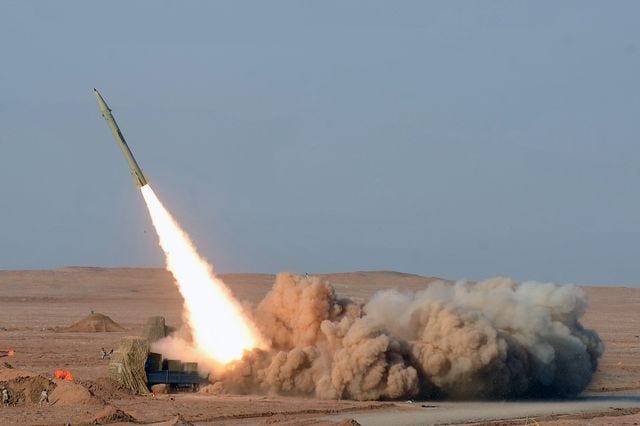
The crisis has deepened considerably. What began as a terms-of-trade shock triggered by hostilities in the Gulf has evolved into something more consequential: the near-total closure of the Strait of Hormuz, the world’s most important energy chokepoint.
The International Energy Agency (IEA) has described the disruption as the largest supply shock in the history of the global oil market, and its Executive Director has called it the greatest threat to global energy security.
Roughly 20 million barrels per day of crude oil and petroleum products passed through the Strait in 2024. Traffic has since been reduced to a trickle, with only limited passage granted to selected vessels.
Brent crude surged well above $100 per barrel in early March, gaining more than 60 per cent from pre-crisis levels, before easing briefly when negotiations with Iran appeared possible, then rising again when those talks collapsed, and Iran’s Islamic
The Revolutionary Guard Corps formally declared the Strait closed. The IEA has reported that more than 12 million barrels per day of regional production have been shut in. Oil executives at CERAWeek in Houston warned that the Strait must reopen by mid-April or supply disruptions will worsen.
Some partial de-escalation signals exist. Iran has granted limited passage to select countries and allowed humanitarian and fertiliser shipments.
Saudi Arabia is rerouting some exports through the Yanbu pipeline. But these are narrow relief valves.
The Economist Intelligence Unit cautions that even a ceasefire will not restore shipping confidence quickly, citing the Red Sea as precedent: traffic there has still not fully recovered from the Houthi disruptions of 2023.
The insurance markets and charterers will take time to return.
The International Monetary Fund’s (IMF’s) assessment, published this week, is direct: oil-exporting countries in Africa and Latin America that can get their barrels to market stand to benefit from stronger fiscal and external positions. Nigeria qualifies in principle.
The question is whether it is actually capturing the windfall and managing it wisely.
Nigeria’s 2026 budget was originally benchmarked at $64.85 per barrel with a production assumption of 1.84 million barrels per day. The National Assembly has since revised the oil benchmark to $75 per barrel in the expanded budget, an implicit acknowledgement of the windfall. With Brent remaining well above that revised benchmark through most of March and into April, the directional revenue gain is real and significant, even after accounting for production constraints and committed crude volumes.
But Nigeria is not producing 1.84 million barrels per day. Actual output has averaged closer to 1.48 million barrels per day this year, about 20 per cent below target. A significant portion of what is produced remains encumbered by pre-export financing structures: public reporting based on NNPC’s 2024 audited accounts suggests obligations exceeding N9 trillion across forward-sale and pre-export structures. The net windfall reaching the Federation Account is real but meaningfully smaller than the headline price movement suggests.
Recent fiscal decisions must be assessed with care and context. The National Assembly has raised the 2026 Appropriation Act from N58.47 trillion to N68.32 trillion.
The revised budget allocates N4.8 trillion to statutory transfers, N15.8 trillion to debt servicing, N15.4 trillion to non-debt recurrent expenditure, and N32.3 trillion to capital projects.
The largest single component of the increase, N7.71 trillion, reflects the rollover of capital obligations from 2025 that went unfunded due to revenue shortfalls.
By the National Assembly’s own account, around 70 per cent of 2025 capital projects were affected. Carrying those commitments forward is a legitimate attempt to prevent the abandonment of contracted infrastructure.





0 comment(s)
Leave a Comment