
Blog Category: News
In an era shaped by digital connectivity, nation branding no longer unfolds primarily through scripted campaigns or controlled messaging.
It now takes shape in real time, across digital platforms, through culture, creators, and lived experiences that influence perception at scale.
How a country is seen increasingly affects its ability to attract tourism, investment, talent, and strategic partnerships.
At a time when global attention is increasingly fragmented and moves faster than formal messaging cycles, the ability to translate visibility into credibility has become a strategic differentiator.
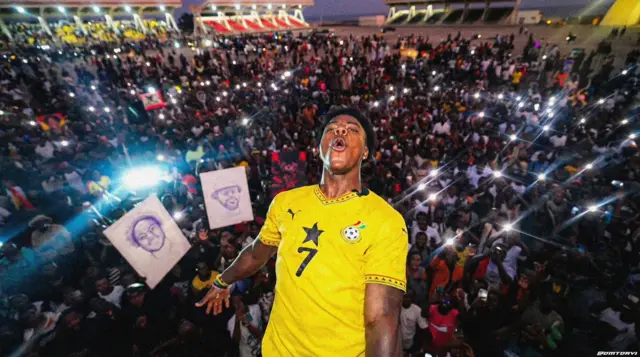
The recent African tour by IShowSpeed, a 21-year-old global creator with an audience exceeding 50 million subscribers, offers a revealing case study. His presence across multiple countries generated sustained global attention, particularly among young audiences.
That attention did not remain confined to a single platform. It cascaded across social media, mainstream news coverage, blogs, and digital commentary, creating a reach and intensity that traditional campaigns often struggle to achieve.
In a matter of days, global audiences encountered African cities, institutions, and everyday interactions not through official narratives, but through unscripted moments consumed in real time. For many viewers, these impressions were not supplemental to existing knowledge—they were foundational. In an environment where attention precedes analysis, such moments often shape whether a country is later examined more closely or quietly dismissed.
This context is particularly important given Africa’s demographic and cultural trajectory. The continent is home to the world’s youngest population and is projected to account for more than a quarter of the global population by 2050. At the same time, African music, fashion, sport, and digital culture increasingly shape global trends, especially among younger audiences.
As consumption, talent, and cultural influence continue to skew younger and more digital, Africa’s relevance to global markets, media, and investment will only intensify. How the continent is perceived in moments of mass visibility will shape how it is engaged economically, culturally, and strategically in the years ahead.
What this tour demonstrated was not the absence of institutional involvement, but the value of flexibility. Compared to the resources typically required to reach a comparable global youth audience, this exposure was highly efficient.
The differentiating factor was not spend, but preparedness. In this context, preparedness refers less to formal promotion and more to the ability to coordinate experience, facilitation, and narrative across public-facing touchpoints under conditions of real-time global attention.
The ability to recognize the opportunity, support it effectively, and integrate it into a broader national story separated contexts where narrative value was readily generated from those where translation into longer-term outcomes proved more limited.
Across the continent, responses reflected differing institutional contexts, timelines, and coordination structures. In practice, outcomes varied according to how responsibilities are distributed within national systems and how quickly actors aligned during a moment of global attention.
In some cases, governments and partners recognized that hosting a global creator was not simply a cultural moment, but a strategic opportunity to reach a massive, youth-driven global audience and to tell a national story directly, in real time, through lived experience rather than formal messaging.
Where coordination was in place, logistics were supported and experiences curated to showcase cultural heritage, history, and expressions of national identity in ways that felt authentic and intentional. In some instances, this included highlighting distinctive subcultures and lived traditions that audiences could immediately connect with.
In other settings, the speed and novelty of the moment meant that engagement unfolded more organically, shaping how much of the attention could be translated into longer-term strategic outcomes. Without an early shared reading of reach, audience profile, and narrative implications, the opportunity to shape perception and sustain value evolved unevenly.
This distinction matters. In a global environment where perception increasingly shapes economic and strategic outcomes, visibility that is not strategically integrated can expose misalignments rather than reinforcing strengths.
Nation branding is frequently misunderstood as marketing alone. In practice, it is the strategic management of how a country is understood across multiple dimensions, including credibility, cultural relevance, institutional confidence, and future potential. It operates at the intersection of culture, tourism, investment facilitation, and storytelling.
Perception often forms before engagement, shaping which countries are taken seriously enough to warrant deeper consideration. Investors, tourists, and institutional partners make initial judgments well before reviewing detailed policy frameworks, security conditions, or economic indicators.
While fundamentals such as macroeconomic stability, regulatory clarity, and market size ultimately drive decisions, perception influences whether those fundamentals are examined at all. Stories, experiences, and repeated impressions help determine who leans in, who hesitates, and who looks elsewhere.






0 comment(s)
Leave a Comment