




Ifart has always been the keeper of memory, then some histories speak louder than others, not because they are greater, but because they have been interrupted, displaced, and forced to survive away from home. Across Africa, and particularly within Nigeria, there are stories that did not fade with time. Instead, they were carried away, renamed, and reframed, only now beginning to find their voice again.
From the earliest expressions of art as living history to defining moments like FESTAC ‘77, one truth remains constant: culture is incomplete when it is separated from its roots. The conversation about art is not only about preservation; it is also about meaning, ownership, and return. What we see today in galleries and collections did not begin there. These works were created within communities, shaped by rituals, and embedded in everyday life.
It is within this context that we turn to a more focused reflection through the lens of the ancient Kingdom of Benin. This contribution, written by Onyia Melissa Chidera, examines the deeper significance of objects long described simply as “art” and challenges us to understand them as vessels of memory, authority, and spiritual continuity.
The Living Legacy of Benin Relics
By Onyia Melissa Chidera
There is a troubling habit the world has learned: the habit of calling sacred things “art.” Once something is given that name, it becomes easier to hang it on a wall, assign it a price, move it across oceans, and detach it from the hands that made it and the meaning that sustained it.
The relics of Benin were never created for display. They were created to exist within a living system of belief, authority, and continuity. Long before Africa was interpreted through foreign perspectives, Benin stood as a kingdom defined by structure, power, and remarkable creativity. Under the authority of the Oba, who was not only a political ruler but also a spiritual figure, life followed a clear rhythm guided by ritual and meaning. Nothing existed without purpose, and nothing was merely decorative.
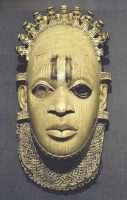
What is now widely referred to as the Benin Bronzes were, in reality, records of history cast into metal. Each plaque, carved tusk, and sculpted head preserved moments of significance, including the reigns of kings, important ceremonies, conflicts, and encounters with foreign visitors. These objects were not created to decorate spaces; they were created to document and preserve memory within the kingdom.
They were produced by highly skilled royal guilds who worked exclusively for the palace. The process required technical expertise, discipline, and a deep understanding of inherited knowledge passed down through generations. While the craftsmanship was exceptional, the true value of these works lay in their intention. They were designed to serve a purpose that extended beyond aesthetics.
In Benin society, art functioned as a means of connection. It linked the living to their ancestors, the visible world to the unseen, and the present to a past that remained active and relevant. Bronze heads placed on ancestral altars were not symbolic representations; they were regarded as embodiments of presence. Ivory tusks carried layered narratives tied to lineage and continuity. Coral beads worn by the Oba signified authority, status, and a connection to both the spiritual and physical realms.
Symbolism was deeply embedded in these works. The leopard represented strength and authority, while the mudfish symbolized the ability to exist between different realms. Every element held meaning, and each piece contributed to a broader system of cultural expression and understanding.
This system was disrupted in 1897 during the Benin Expedition of 1897. British forces entered Benin City under the pretext of retaliation, but the outcome extended far beyond military action. The city was destroyed, the palace was burned, and thousands of sacred objects were removed. These items were taken not as cultural heritage to be preserved in context, but as commodities to be distributed, sold, and displayed elsewhere.
Objects that once existed within sacred and royal spaces were scattered across continents. In foreign institutions, they were reclassified and presented primarily as artistic achievements, often without acknowledgment of their original meaning and function. While they gained recognition as significant works, they were separated from the cultural systems that gave them life.
Today, many of these objects remain in museums and collections far from their place of origin. They are carefully preserved, studied, and admired, yet the context in which they were created is often absent. However, there is a growing shift in perspective. Increasingly, there is recognition that these works were never intended to exist outside their cultural environment and that their displacement represents a broader historical imbalance. The call for their return is not based on sentiment alone, but on the need to restore cultural integrity.
At the same time, attention must also be given to what remains within the community. The traditions and knowledge systems that produced these works are under pressure. Fewer individuals are learning the craft, and fewer spaces exist where these practices are actively sustained. While global institutions celebrate the legacy of Benin, the continuity of that legacy within its place of origin faces real challenges.
Despite this, the cultural foundation has not disappeared. It continues to exist in knowledge, in practice, and in the understanding that these objects represent more than historical artifacts. They are part of an ongoing narrative.
The relics of Benin are not simply objects to be observed. They function as a language that communicates identity, authority, and continuity. They carry a history that has endured disruption but remains intact in meaning.
As discussions around future cultural gatherings continue, including reflections leading toward another FESTAC moment, the importance of this history becomes more evident. The focus is no longer limited to celebration, but extends to recognition, restoration, and continuity. Art must be understood not as something distant, but as something that remains active in shaping identity and cultural direction.
In the end, art does not merely document history. It sustains it.





0 comment(s)
Leave a Comment