
Blog Category: Academics
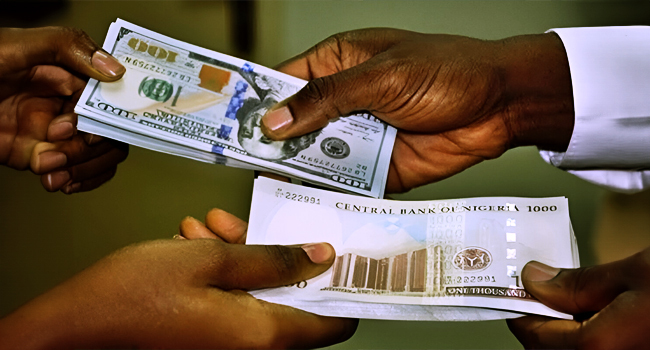
Vice-President Kashim Shettima’s claim that the naira “would have appreciated to N1,000 per dollar in weeks” if the Central Bank of Nigeria hadn’t stepped in captures a real shift: the currency is no longer in free-fall.
On 20th February 2026, the naira traded around N1,340/$ on the parallel market, up from lows beyond N1,600, and fundamentals are beginning to turn.
Both measures were painful, but they created space for a market-driven rate and gave the Central Bank of Nigeria (CBN) room to act predictably.
Vice President Shettima called the CBN’s latest intervention “generous.” The bank has kept a tight monetary stance, cleared almost all FX backlogs, and allowed licensed Bureau De Change (BDC) limited access ($150k USD weekly cap from 10th Feb 2026) to smooth liquidity.
That predictability, raising/reducing rates when needed, avoiding ad-hoc controls, has anchored expectations and helped reserves recover to over $50 billion USD gross, the highest in 13 years. Monetary policy looks disciplined.
Here’s where the story gets sticky. Fiscal dominance is when government spending and borrowing overpower the central bank’s inflation fight, a tug-of-war between the Finance Ministry and the CBN, often ending in higher inflation or instability. Nigeria is living with that tension.
The 2026 budget, titled “Budget of Consolidation, Renewed Resilience and Shared Prosperity,” is approximately N58.18–N58.47 trillion ($37.7–$41.5 billion) with a deficit of N23.85 trillion (4.28% of GDP). Debt service eats up a huge slice of revenue, and actual receipts keep falling short of projections, even as Federation revenue rose from N16.8 trillion (2023) to N31.9 trillion (2024).
Deficit finance and borrowing remain high, and most of the Sub-National spending leans toward unnecessary projects, new bus terminals, and government lodges, rather than income-generating assets.
The result: inflation eases only slowly. According to The National Bureau of Statistics, headline inflation fell to 15.10% in January 2026 (down from 15.15% in December), but food pressures persist, squeezing households. Fiscal dominance risks undermining the CBN’s credibility if unchecked.
Government rhetoric still leans on aggressive tax collection (“hunting”). What businesses need is Trade Facilitation: faster NAFDAC and Standards Organisation licensing, fewer duplicative levies (the Oyedele Presidential Fiscal Committee aims to cut 60+ taxes to under 10), and trade-policy certainty.
A hunting mindset undermines the private-sector dynamism the FX reform was meant to unleash.
Aliko Dangote’s prediction that the naira can hit N1,100/$ isn’t just talk; the refinery’s ramp-up cuts fuel imports, saves FX, and anchors the optimism Vice President Shettima voiced. It’s a reminder that entrepreneurship, not only policy, drives real value.
Dangote Refinery already produces aviation fuel (Jet A1), about 20 million litres daily plus naphtha, polypropylene (830 kt / yr now, expanding to 2.4 mt / yr), bitumen, liquefied petroleum gas, sulphur and bunker fuel, all from its 650,000-bpd plant.
The refinery intends to boost polypropylene to 2.4 million tonnes annually, add large‑scale linear alkylbenzene for detergents and base‑oil lubricants, and expand overall capacity to 1.4 million bpd, which will multiply those by‑product volumes.
These outputs feed other sectors: Jet A1 cuts airline fuel imports and costs, naphtha and polypropylene supply local plastics, textiles, packaging and pharmaceutical manufacturers, bitumen supports road construction, LPG provides clean cooking fuel, and sulphur and LAB feed fertiliser and detergent production, collectively reducing import bills, creating jobs and spurring industrial growth.
Fiscal discipline: curb borrowing, put a cap on local public borrowings and use the improved allocations for FAC to pay back down part of local previous borrowings/ bonds(these will force commercial banks interest rates to crash and stimulate private sector access to reasonably priced capital), publish project appraisals, and the Sub-nationals should to link allocations/IGR revenues to revenue-yielding investments.
Macro stability hasn’t reached kitchens. The World Bank’s October 2025 update puts 139 million Nigerians in poverty, up from 87 million in 2023, and warns that without mass-employment sectors and safety nets, reform durability and political stability are at risk.
Bottom line: The naira’s rebound reflects real reform, a credible CBN, and Nigerian entrepreneurial grit. But fiscal dominance, huge deficits, debt service, and inefficient spending remain counterweights. Without fiscal prudence, private-sector facilitation, and inclusive spending, appreciation will stay a market statistic, not a lived improvement for most Nigerians.
Hon. Dele Kelvin Oye, is the Chairman, Alliance for Economic Research and Ethics LTD/GTE (AERE), a Nigerian non-profit working to strengthen both private and public sectors through independent research, policy advocacy, regulatory support, stakeholder engagement, and promotion of transparent, ethical reforms to improve Nigeria’s ease of doing business.





0 comment(s)
Leave a Comment