

 Follow Us on Google

Last week, we began a general overview of what I consider relevant in our assessment of the presidential candidates for Nigeria’s 2027 general election.
I reasoned, among others, that a candidate’s character and people’s perception of what he is capable of and willing to do will be more important than the name of his political platform.
This week, I will continue the assessment by looking at common people’s perception of the major candidates and how far they have succeeded in marketing themselves in order to be accepted by the electorate.
President Bola Ahmed Tinubu:
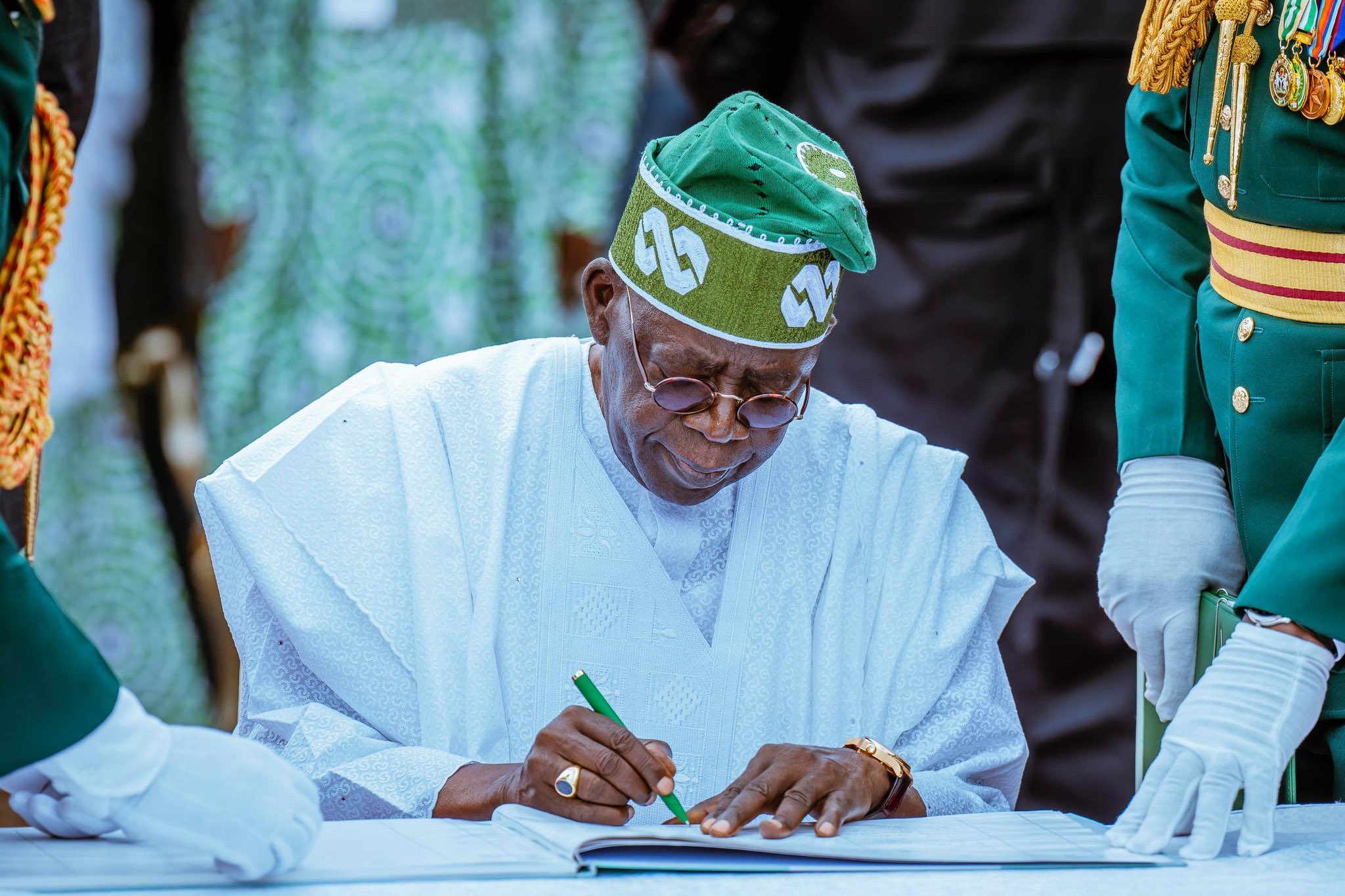
As the sitting President, most Nigerians, correctly or wrongly, blame Asiwaju Bola Ahmed Tinubu for virtually all the troubles in the land: the hunger, the financial downturn, the inflection, the daily killings, the general insecurity and the deepening disunity, among other challenges.
This is not new. Truth is, common Nigerians have always blamed their Presidents over such difficulties.
So, instead of the anger President’s men seem eager to show over that development, I think it would make more sense for them to accept the President actually owes the people that elected him into office the task of ensuring better and more secured life.
If anything happens to deny the people these basic benefits, they have every right to blame their leader, whose least or decent reaction should be to at least explain to the people why it is taking him and his government such a long time to win the battles.
Take the hunger battle, ravaging poverty and hardship, for example: It may be dismissed by conservative economists as being too simplistic, but a common citizen’s basic assessment of a Nigerian President’s tenure is primarily based on availability and affordability of food, transport, healthcare, education and other basic amenities like electricity and water. These constitute our current concepts of dividends of democracy and good governance.
So, the people’s perception largely is that Tinubu has scored quite poorly on most of these common citizens’ scales.
This being the case, except it is true that Tinubu is deliberately punishing common Nigerians for a kind of vengeance on the people or that he actually takes personal delight in seeing Nigerians suffer and die of hunger, and except he actually believes the votes of the suffering masses will not count in Nigerian 2027 election as is being alleged, one would expect that as the Election Day draws nearer Mr. President or his handlers will strive to explain better to the masses why they have to be left to starve and die in a country like Nigeria so richly blessed.
Diligent explanation of why things have to be so hard is what one should expect to hear from the campaign managers of Mr. President by now, that is, if they expect the people to vote and reelect Mr. President. But, so far, many contend that this has not been the case or, better put, this has not been satisfactorily done.
Already, the President’s men have defended that the current sufferings of common Nigerians is “a necessary sacrifice for a better tomorrow.”
Rightly or wrongly, most suffering Nigerian masses do not seem to be convinced or satisfied by this explanation.
They contend that, no matter the long-term economic development theTinubu government wants to achieve, a better or a more humane leader would have looked for better means of achieving such long-term economic development without having to callously starve and punish citizens.
On the daily killings and general insecurity in the land, Nigerian electorate understandably demand clearer explanations from Tinubu and his ruling political party, the APC.
Abductions, killings and banditry have so ravaged Nigeria under Tinubu’s watch that it looks curious if he actually intends to ask for the people’s votes without first explaining his government’s monumental failures in the fight against insecurity.
While cost of air travel today is far above what even average Nigerians can afford, travel by road is a risk no one wants to take. So, how will a common Nigerian travel from one city to another within his country?
As I speak, the number of abducted Nigerian kids, schoolchildren, women, including pregnant women, and men abducted from their schools, churches, homes and on the roads while on transit, who are still languishing as captives in the forests, are in the multiple of hundreds. This is aside from displaced villagers living in the various internally displaced person’s camps. It is disconcerting that, under these circumstances, instead of assuring Nigerians of their security before the next elections, Tinubu, through his image makers, is repeatedly shouting the new song: I must be re-elected for another four years.
If you ask me, for a serving President, this is not the right promotion or campaign strategy. No!
Mr. President’s promoters should understand that while opposition candidates may successfully campaign with emphasis mainly on their personal characters, past experiences or good intentions, an incumbent’s election campaigns should emphasize his visible and ascertainable achievements within the current tenure. This could be followed by humble, detailed and true explanations of why certain expectations have not been met yet and how the incumbent intends to achieve them, if re-elected.
This approach would have served President Tinubu better. But most common Nigerians feel he or his handlers have failed to adopt this approach, but have seemingly chosen to frontally put it to the hungry and suffering people that no one can defeat the President in an election, even if bandits continue to attack villages freely, kill, rape and dehumanize unarmed civilians, women and helpless children.
This unfortunate approach leaves the people with no choice but to conclude that President Tinubu has failed woefully in the fight against insecurity and that he actually does not know how to resolve the riddle.
This may not be totally true, but the people who have reached such conclusions reason that, as the Commander-in-Chief of Nigerian Armed Forces, Mr. President should be fully blamed if he fails to effectively secure the country, more so, if the people are not adequately and property furnished with reasons why bandits can, after dislodging villages repeatedly with ease and after abducting helpless villagers, including schoolchildren and pregnant women, be able to further attack Nigerian military, sometimes in their barracks, killing soldiers at will with no tangible consequences.
These, and many more, including why Nigerian unity appears more threatened today than before, are some of the explanations President Tinubu may need to make more humbly and more clearly to the Nigerian electorate before Election Day, in order to get the people’s votes in a free and fair election.
Other News
I posit that, if Tinubu fails to change tactics in the way he has been explaining his failures and successes, he should not blame the voters if they judge him ‘unfairly’ and vote him out in 2027.
Mr Peter Obi:
Peter Obi, as we said last week, is the candidate to watch, judging from his ability to retain the mass appeal that made him the most glamorous presidential candidate in Nigeria’s 2023 elections.
During the campaign period for the 2023 elections, Obi was the darling of most of the youths across Nigeria and among adults interested in politics of ideas.
This was mainly because of his campaign messages, consistently anchored on how to tackle hunger, poverty and suffering in Nigeria through production and prudent management of resources, strengthened by radical reduction of cost of governance and introduction of zero tolerance for corruption.
The youths and other idealistic Nigerians grabbed the message and the result, in terms of mass mobilisation across Nigeria, was electrifying. Some commentators said nothing like that had been seen in Nigeria’s election history. From the east, west, north and south, the seemingly endless crowd followed him, chanting: “Obi, Obi, Obi!”
In spite of this, however, the Independent National Electoral Commission (INEC) announced that Obi came a distant third in the election. Of course, his supporters said the official result was false and that Obi actually won the election.
Now, as the 2027 Presidential Election Day draws closer, and as Obi admirably maintains his mass appeal across ethnic divide, the big question for him to answer remains what he is doing to and if he will be able to protect his votes in 2027 and to convince himself and his supporters that the final result that would be officially announced will be the true result?
Perhaps, as part of his answer to this big riddle, Obi has announced the unveiling of a new plan that, according to him, can enable him, all Nigerians and the global community to count the votes of the 2027 Nigerian Elections in real time without relying only on INEC’s IRev Bimodal device.
If this is achieved, the doubt as to the true winner of Nigerian elections, starting from this forthcoming elections, would be finally eliminated.
It is then that Nigerians will actually believe their votes truly counted. But how practically achievable is this in Nigerian political theatre? The answer will go a long way in determining if Obi truly stands a chance in 2027.
Aside his ambitious plan of helping out to achieve real time election results as a way of fighting against rigging and elections result switch, a development his supporters believe will finally make Nigerian elections credible, another development that seems poised to boost Obi’s performance in 2027 Elections is his choice of running mate in Rabiu Kwankwaso of the Kwankwasiya fame.
Informed analysts of Nigerian politics say the combination of Obi, the candidate that unarguably won in Lagos in 2023 amongst other critical areas and Kwankwaso, the political Lord in Kano, amongst other critical areas, a combination cleverly marketed as OK Ticket, is a master stroke. This, they say, is because the two politicians currently enjoy verifiable mass followers.
The snag, observers however warn, is the ability of the two to nurture and sustain the political marriage.
Already, it is being alleged that their opponents are sponsoring divisive stories suggesting that Kwankwaso can not be made to play second fiddle to Obi.
I agree with the view that the ability of the two politicians and their supporters to see through such mischievous reports will go a long way to determine their success in 2027.
Perhaps in response to the insinuations, Obi has declared that their relationship is not just that of Presidential Candidate and his Running Mate but that he and Kwankwaso are partners.
I agree with the view that to make the kind of impact their partnership is supposed to make in the 2027 Elections, the two top politicians will need to intentionally nurture their relationship and that of their supporters.
The stories challenging the workability of their political marriage, whether sponsored as alleged or not, should teach them that they must not let their OK Ticket tell a bitter story of two captains in a ship.
Alhaji Atiku Abubakar
Alhaji Atiku Abubakar is another major candidate in the forthcoming Presidential Election to watch.
Like I said in the first instalment of this assessment, the first major contradiction Atiku will need to explain to the electorates is why, since 2023 Elections, he suddenly decides to go against zoning policy, a policy he championed over the years?
Unless Atiku satisfactorily explains this change, some electorates, especially from the South, may continue to dismiss him as lacking in principle and as politically selfish.
• Samuel Hezekiah Egburonu Esq, lawyer, veteran journalist and literary scholar, is a current affairs analyst.


0 comment(s)
Leave a Comment