 Author: Africa’s Financial Sovereignty Begins with Lowering the Cost of Capital. Posted On: 11 hours ago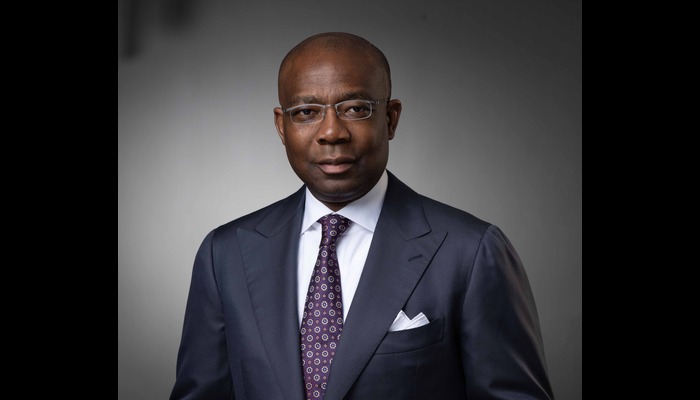
Blog Category: Academics
Africa’s next phase of growth will not be determined only by the scale of its opportunity, but by the terms on which it can finance that opportunity.
Across the continent, governments and businesses are working to build infrastructure, expand industry, create jobs, deepen digital systems, and serve a rapidly growing population. Too often, the capital required to fund this transformation is priced beyond the realities of African markets.
As a result, Africa pays more to finance its development, even where the underlying opportunities are substantial and the long-term fundamentals are strong.
This is why the question of Africa’s cost of capital must now be understood as a question of financial sovereignty.
Financial sovereignty does not mean turning away from global capital. It means ensuring that African economies, institutions, and markets have the credibility, depth and coordination required to mobilise capital on terms that reflect their real value and potential. It means reducing the extent to which Africa’s development is constrained by external risk assumptions, fragmented markets and financial architectures that do not always price the continent accurately.
This was the central message I delivered in my capacity as Chairman of Access Holdings PLC and President of the France Nigeria Business Council (FNBC) at the Africa Forward Summit 2026, held recently in Nairobi, Kenya. Convened by President William Ruto and attended by 18 African Heads of State, including President Bola Ahmed Tinubu, as well as French President Emmanuel Macron and leading global investors, the summit reflected a growing consensus: Africa is central to the future of the global economy.
The continent is no longer on the margins of global change; it is at the centre of it. With its demographic momentum, expanding markets, and increasing strategic relevance, Africa has the foundational ingredients to shape global growth over the coming decades. Despite this promise, one structural constraint continues to undermine its progress: the disproportionately high cost of capital.
This is a systemic challenge, not an abstract financial issue that acts, in effect, as a tax on Africa’s development.
Across the continent, sovereigns and corporates routinely borrow at rates between 4% and 15% above U.S. Treasury benchmarks, with stressed conditions driving that premium even higher. These are not marginal differences. They are penalties imposed on economies seeking to build infrastructure, industrialise, and create jobs.
As I noted at the summit, this premium is not a tax paid into African treasuries. It is a tax exported into global financial markets, a cost borne by African economies but captured elsewhere. Capital that should be building roads, power systems, factories, and digital infrastructure is instead consumed by the sheer cost of accessing finance, diluting the potential to advance Africa’s development.
No region can achieve sustained economic transformation when a significant share of its resources is diverted into servicing expensive capital.
For Africa, the challenge is particularly acute. The continent requires substantial long-term investment to close infrastructure gaps, accelerate industrialisation, and support its rapidly growing population. Still, the very capital needed to finance this transformation is constrained by the way Africa is priced.
This distortion creates a structural disadvantage. It weakens competitiveness, discourages investment, and raises the threshold for viable economic activity. While large corporations may be able to absorb these costs, small and medium-sized enterprises, the backbone of African economies, cannot.
The consequence is a cycle that limits entrepreneurship, constrains innovation, and slows growth.
While African ambition remains high, the financial terms available to governments, businesses and entrepreneurs limit the speed and scale at which that ambition can be converted into growth.
At the heart of this issue lies a fundamental misalignment between perception and reality.
Africa is often treated as a homogeneous high-risk environment, despite vast differences in economic fundamentals across countries and sectors. This broad-brush approach results in an aggregated risk premium that does not always reflect actual performance or resilience.\
More striking still is that this perception is internalised within the continent itself. African institutions, including pension funds and investors, often price domestic opportunities through the same lens, reinforcing the very constraints that limit growth.
Addressing the risk premium, therefore, is not simply about reducing interest rates. It is about reshaping the frameworks through which Africa is assessed, financed, and evaluated. Reclaiming financial sovereignty therefore begins with reclaiming the way African risk is understood. It requires better data, stronger institutions, deeper domestic markets and a more disciplined investment narrative that reflects performance rather than prejudice.
Reducing Africa’s risk premium must be treated as one of the continent’s most urgent economic priorities.



0 comment(s)
Leave a Comment