
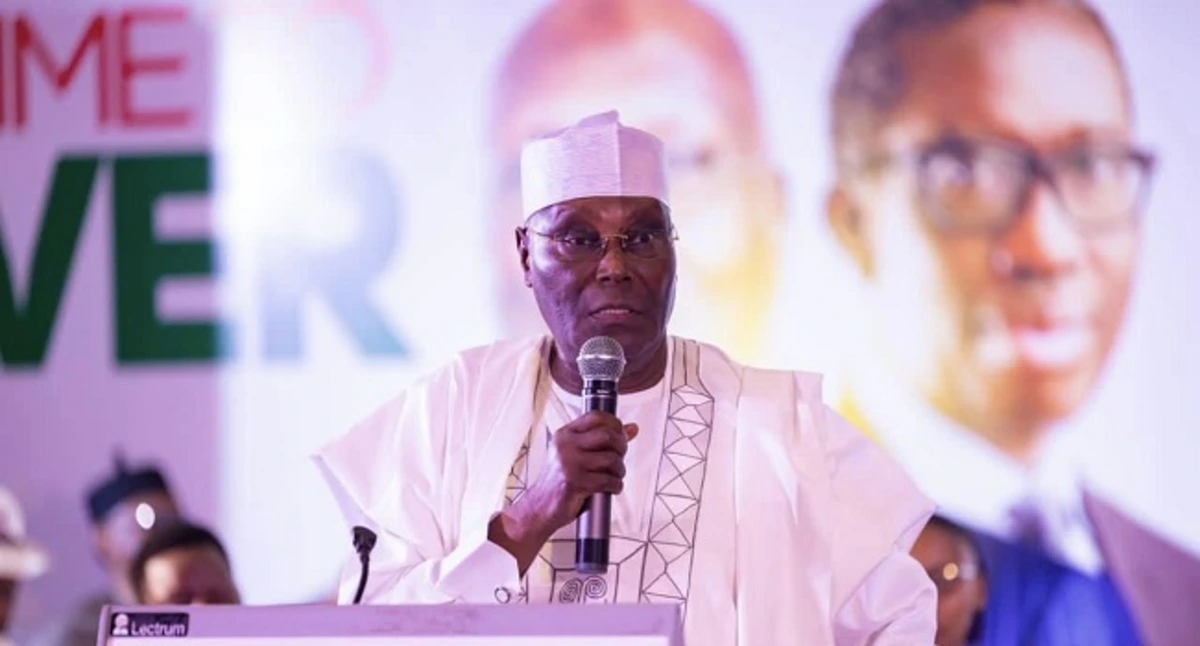
Presidential candidate of the African Democratic Congress (ADC), Atiku Abubakar, has insisted that he will restore petrol subsidy if elected president in 2027, despite comments by one of his media aides suggesting that the intervention would eventually be phased out.
Atiku made the clarification on Tuesday while receiving the Osun State leadership of the ADC in Abuja, where he disowned comments by his aide, Paul Ibe, on the party’s proposed subsidy policy.
The former vice president said any intervention under his administration would be targeted at domestic refining and production rather than a return to the former petrol import subsidy regime.
What Atiku is saying
Atiku said his position on subsidy had remained unchanged and that his proposed intervention was aimed at reducing living costs and restoring Nigerians’ purchasing power.
Also Read
- “On the question of subsidy, my position has not changed and will not change: I will restore it!”
- “A nation as blessed as ours has no business abandoning its citizens to hardship. Nigeria is rich enough to look after her own.”
- “I want wages to have value again. I want farmers to move produce without transport swallowing their profits. I want families to fill their baskets without emptying their pockets. I want businesses to produce, employ and prosper.”
Atiku said the intervention would support Nigerian production, reduce energy and transportation costs and make wages more valuable to households.
His comments followed an interview by Ibe on AIT in which the aide said Atiku would restore petrol subsidy if elected but gradually withdraw it as the economy recovered. Atiku subsequently made clear that Ibe was not speaking with his authority.
Backstory
The subsidy debate has returned to the centre of the 2027 presidential contest over three years after President Bola Tinubu removed the petrol subsidy at his inauguration on May 29, 2023.
- The decision triggered a sharp increase in petrol prices and contributed to higher transportation and living costs, while the Federal Government has defended the reform as necessary to improve public finances and attract investment.
- Atiku’s camp says his proposed intervention would differ from the former system that subsidised imported petrol.
- Senior Special Assistant on Public Communication, Phrank Shaibu, said the proposal would be targeted, capped, transparently budgeted and independently audited.
The intervention would support domestic refining and production and would be reduced as refining capacity expands, supply stabilises, and competition improves.
Shaibu likened the policy to temporary scaffolding that would be removed once the domestic market could sustain affordable prices without government support.
The former vice president’s camp said the objective would therefore be to reduce the cost of energy and production while preventing the leakages associated with the previous subsidy regime.
Shaibu’s comments provided further details on how the proposed intervention could work, although Atiku’s subsequent clarification established that the policy position should be understood as coming from the candidate.
What you should know
Earlier this year, President Bola Tinubu said the removal of fuel subsidy by his administration saved Nigeria from imminent bankruptcy and helped lay the foundation for the country’s economic recovery.
Federal Government saidit borrowed N11.9 trillion between June 2023 and December 2025, but says the amount would have been significantly higher without the fiscal space created by its economic reforms.
Nairametrics also reported thatNigeria incurred N10.61 trillion in additional debt-service costs between June 2023 and December 2025, about N4.14 trillion more than the N6.47 trillion spent on strategic infrastructure development over the same period.


0 comment(s)
Leave a Comment