
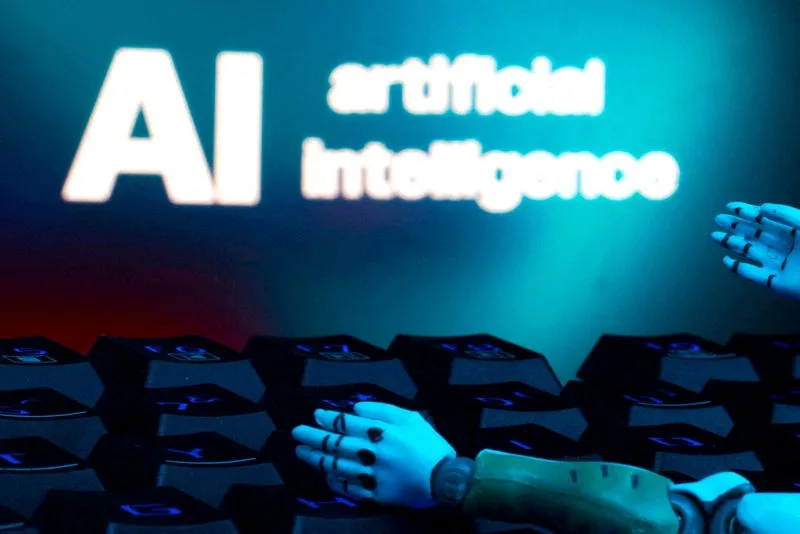
The Chief Executive Officer and co-founder of Bluechip Technologies, Kazeem Tewogbade, has identified the possibility of potentially destructive consequences from artificial intelligence as the risk in AI development that still bothers him.
Tewogbade made the remarks on Wednesday during an interview with Nairametrics at the Bluechip Data and AI Summit in Lagos.
He explained that while businesses and technology leaders remain excited about AI’s transformative potential, the scale and nature of risks that could emerge as increasingly powerful systems are deployed across industries remains deeply uncertain.
He warned that the pace of AI development makes it difficult to fully predict how the technology will evolve or what damage it could cause. His comments come amid growing global debate over AI safety, regulation, and the long-term implications of advanced AI on economies, jobs, security, and society.
Other News
What he is saying
Tewogbade explained the most unsettling aspect of AI risk is not what is already known but what cannot yet be imagined, and that even the most sophisticated actors in the AI industry share that uncertainty.
- “There is the potential of deeper destructions. That potential is there, really. And you don’t even know how it’s going to come or what shape or form it will take,” he told Nairametrics.
He pointed specifically to calls from within the AI industry itself for caution, referencing Anthropic’s co-founder urging a slowdown in AI development.
- “I look back to the statement by the co-founder of Anthropic, that they have to slow down. So it’s there,” he said.
- “Nobody actually can fully comprehend the capabilities of the future,” he added. “We just have a few viewpoints here and there.”
On managing those risks, Tewogbade argued that organisations can reduce their exposure by building AI systems on strong ethical foundations and embedding clear values into the technology from the ground up.
- “If you build your enterprise value-driven, grounds-up, that’s the best risk mitigation effort you can actually make,” he said.
- “If the layers that you build for your system have proper value levels embedded, and with a lot of integration and cohesiveness, you wouldn’t be too worried. Not that you won’t be worried, but you won’t be too worried,” he added.
More insights
Despite his concerns, Tewogbade expressed confidence in humanity’s ability to navigate AI-related disruptions, drawing on the COVID-19 pandemic as evidence of how individuals and institutions can adapt to unprecedented change.
- “Look at the way we adapted to COVID. Look at all the protocols that people had to observe, look at how the world changed, and look at what adaptations came,” he said.
- “I won’t say I’m not worried, but I’m not too worried, because, one, I bank on how we’ve erected the structures that support Bluechip, and I also bank on humanity at large. Humanity is very resilient. We’ve always adapted,” he added.
He argued that a combination of responsible development practices, strong organisational values, and human adaptability will be critical in managing AI’s risks while capturing its benefits.
The Bluechip Data and AI Summit in Lagos brought together technology leaders, founders, policymakers, and young professionals from across Africa’s technology ecosystem to discuss the growing role of data and artificial intelligence in driving economic growth and innovation.
What you should know
Tewogbade’s reference to Anthropic’s co-founder is well-timed. Earlier this month, Nairametrics reported that Anthropic called on leading artificial intelligence developers to establish a coordinated and verifiable mechanism for slowing down or temporarily pausing AI development if advanced systems begin improving themselves faster than society can safely manage.
In a detailed policy statement published on its website, Anthropic warned that AI systems capable of creating more advanced versions of themselves could eventually outpace human oversight, raising the risk of people losing meaningful control over the technology.
The company argued that the industry must agree on clear safeguards and intervention measures before reaching such a critical threshold.








0 comment(s)
Leave a Comment