
Blog Category: Academics
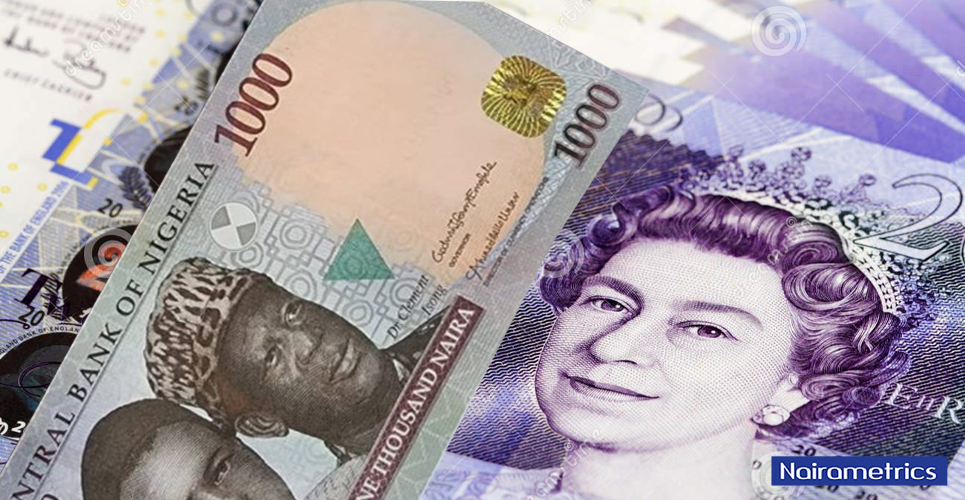
The Nigerian naira strengthened against the British pound sterling in the most recent price action on the Nigerian foreign exchange market, despite a rebound in the British pound sterling in the global foreign exchange market.
The British pound sterling is currently trading at N1,856/£1, according to CBN’s most recent data.
Fundamental action highlighted that even when the cable is rising against the greenback in the global foreign exchange market, the local appreciation of the Naira pulls the Pound down on the domestic board because local market makers price GBP/NGN synthetic crosses primarily through the lens of local US dollar supply rather than perfect real-time synchronization with global spot desks.
The average daily FX turnover has increased due to Nigeria’s Apex Bank market interventions and structural changes, such as the publication of the revised Foreign Exchange Manual.
Consequently, average daily volumes have increased from historical lows of $100 million to steady bands of $400 million to $600 million (occasionally surpassing $1 billion),
The Naira recovered from its April lows and showed resilience in the first half of May, while the British pound hit monthly lows amid a crisis in the UK ruling party.
The naira has benefited from that sterling weakness. According to CBN data, the naira closed near N1,850/£1 by mid-May after trading as wide as N1,883/£1 early this month.
This significant intraweek recovery reflects both the political vulnerability of the British pound and the CBN’s ongoing liquidity management.
The Bank of England (BoE) remains wary of lowering its policy rates too soon. The asset class remains attractive to yield-seeking investors because of strong service-sector activity and persistent domestic wage pressures that have kept UK interest rates restrictive for longer. These fundamentals point to a prolonged period of pair consolidation in Nigerian foreign exchange market.
Recent technical action suggests a structural floor beneath the Nigerian naira has been established by the CBN’s aggressive high-yield environment, reducing the likelihood of another abrupt, disorganized devaluation.
However, GBP/NGN is currently finding a natural equilibrium in the N1,830–N1,860 band because the BoE maintained the pound’s structural strength on the international scene.
The British pound traded higher at around 1.348 against the greenback during the midweek trading session in London. This upward trajectory indicates that Cable has significant momentum against the US dollar in the London session
The safe-haven US dollar may continue to benefit from this and hawkish US Federal Reserve (Fed) expectations, keeping the GBP/USD pair under control. Investors are optimistic about tentative progress in US-Iran diplomatic talks despite the standoff.
This helps maintain a positive risk tone while reducing concerns about serious disruptions to the energy supply. Additionally, a slight decline in crude oil prices, reduced concerns over inflation, and limited gains for the US dollar thus support the British pound sterling.
However, some factors could prevent traders from making large, bullish bets on the British pound (GBP) and act as a headwind for the currency pair.
Currency traders lowered their expectations for the likely timing of the Bank of England’s (BoE) next interest rate hike after the UK Consumer Price Inflation (CPI) unexpectedly slowed to 2.8 percent YoY in April from 3.3 percent the month before.






0 comment(s)
Leave a Comment