
The conversation about compressed natural gas is not new in Nigeria. For years, governments and private operators explored its potential. We knew the technology, possessed the gas and understood that it offered a cheaper and cleaner alternative to petrol and diesel. What was missing was the political will to make CNG a serious national priority. That changed with President Bola Ahmed Tinubu.
Following the removal of the petrol subsidy in 2023, the president could have treated rising transportation costs as a problem requiring temporary relief. Instead, he confronted a deeper contradiction: a country rich in gas remained overwhelmingly dependent on petrol and diesel to move its people and goods.
The president gave CNG what it had lacked: presidential backing, national urgency, and clear policy direction. His proposition was straightforward. Nigeria needed a cheaper and more sustainable energy option for transportation, one that would make better use of the resources we already possess, reduce exposure to petrol prices, and create genuine choice.
CNG therefore became more than a response to subsidy removal. It became a national economic proposition. The Presidential Initiative on Compressed Natural Gas and Electric Vehicles (PiCNG & EV) was established to turn that proposition into a functioning market. Our role is not simply to convert vehicles or distribute assets. It is to build and coordinate an industry around alternative energy for mobility, bringing together the infrastructure, vehicles, investors, financiers, technicians, operators and consumers required to make CNG and electric mobility work at scale.
Also Read
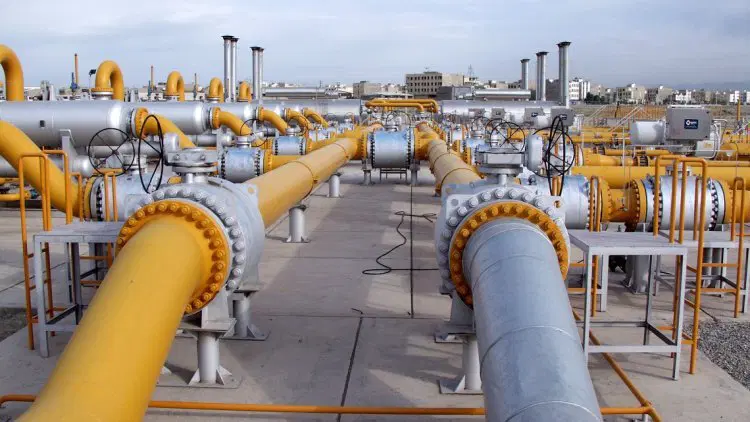
That distinction is important because building an industry requires far more than running a government programme. Gas must reach the vehicles through a network of mother stations, where it is compressed and loaded for distribution, and daughter stations, where it is dispensed. Conversion centres need trained technicians, certified kits and cylinders. Vehicles must be available, safety standards enforced and financing made accessible. Investors need confidence that customers will come, while customers need confidence that fuel will be available. Other countries, including India, Pakistan and Egypt, have shown that CNG can move beyond pilot projects and reduce transportation costs when vehicles, stations and demand develop together. Nigeria cannot simply copy their models, but their experience demonstrates what is possible when the full ecosystem is built.
Supply needs demand. Demand needs supply. That is the space PiCNG & EV occupies: connecting the two. We stimulate demand so that investment makes sense, while working with the market to expand supply so that growing demand can be served. We engage investors to build stations, support the development of conversion capacity, train technicians, work with vehicle manufacturers and assemblers, bring financial institutions into the ecosystem and collaborate with regulators and other government institutions to create the conditions in which the market can grow safely and sustainably. Government had to provide the initial push through support for conversions, kits, technician training, vehicles and infrastructure. But the purpose was never for government to become the CNG industry. The purpose was to create one.
That industry is now taking shape. More than 120,000 vehicles have been converted to CNG, with over 400 certified conversion centres and more than 90 CNG refuelling stations now and around 180 in different stages of development across the country. Private capital is building refuelling infrastructure. Conversion centres are expanding.
Nigerians are gaining technical skills and livelihoods; 52 in Kano within 3 months and 100’s more across the country. Commercial operators are converting because the savings make economic sense. For us, this movement from governmentsupported adoption to commercially driven adoption is one of the clearest signs that the market we set out to catalyse is beginning to stand on its own.
That progress is also reflected in the scale of capital entering the ecosystem. PiCNG & EV has helped catalyse approximately $2.5 billion in private-sector investment, alongside about ₦250 billion in public-sector funding and commitments, and counting. Financial institutions are also entering the market. In April, PiCNG & EV launched Buy Now, Pay Small Small with Moniepoint, CREDICORP and other partners, enabling eligible vehicle owners to convert without paying the full cost upfront.
When an operator converts because the economics work, a bank finances him because it sees a viable customer and an investor builds a station because demand is growing, you are building a market. CNG is working. The model is proven: adoption is real, the savings are real, the industry around it is real. The challenge now is scale, making it work at the size of Nigeria.
That means confronting the questions Nigerians are asking: Where are the stations? Why are there queues? Why is conversion still expensive? If CNG is cheaper, why have fares not fallen everywhere? These questions identify the work ahead. Adoption is growing faster than dispensing capacity in some locations. Queues demonstrate demand, but a cheaper fuel that takes hours to obtain is not sufficiently available. Some of this is a station problem.
Some of it sits further upstream, in ensuring gas reaches processing and compression points reliably and consistently. Both must be solved together. Our immediate priority at PiCNG & EV is therefore availability: working with private investors and other partners to accelerate mother and daughter stations across cities and major transportation corridors, alongside mobile refuelling solutions where appropriate.
Conversion also has a real cost. Kits, cylinders, installation and safety requirements cannot be ignored, and they should not be. Certified kits, trained technicians and enforced safety standards are not optional extras. They are what make public trust in this fuel possible, and that trust is not something we can afford to spend carelessly. This is why we are opening up financing, encouraging competition, developing local capacity and supporting greater volume so that the barrier to entry continues to fall, without cutting corners on safety to get there.
This is where the president’s persistence matters. CNG could have been treated as a temporary response to subsidy removal. Instead, the President has continued to support an ecosystem in which investors invest, banks finance, Nigerian companies assemble vehicles, technicians build careers and consumers choose alternative energy because it makes economic sense.
Our responsibility is to translate that presidential vision into an ecosystem that works beyond government. Government must lead through public fleets, mass transit, procurement, standards and sound policy, but the strongest argument is increasingly being made by the economics themselves. A commercial driver knows what he spends on petrol. If he converts to CNG and sees the savings, the case is clear. Now comes the most consequential phase: ensuring that Nigerians feel the benefits faster and more directly.
The president has renewed that directive, while governors across the federation have committed to working with the federal government, the private sector, transport operators and other stakeholders to deepen adoption. That collaboration has already begun. On Thursday, 10 September, PiCNG & EV brought together state commissioners responsible for transport, energy, and environment to begin translating this national ambition into coordinated action at the state level. The conversation was practical: how do we expand infrastructure, stimulate adoption, deploy vehicles and, most importantly, ensure that the savings from cheaper alternative energy reach the people who use public transportation every day?
This federal-state partnership is critical because transport is experienced locally. States understand their routes, transport operators, urban centres and commercial corridors. PiCNG & EV can help connect those realities
with federal policy, infrastructure development, financing and private investment. That is how national policy becomes local impact. This alignment matters because transportation happens on the road, not in policy documents. It is the Keke taking a trader to market, the taxi taking a worker home, the bus carrying students and the truck moving food and goods between states.
Our work with the states is therefore already moving forward around that reality: more refuelling and charging infrastructure, greater conversion capacity and financing, more CNG and electric buses, taxis and tricycles, increased local assembly and expanded transportation corridors. But one person must remain at the centre of all this: the passenger. A driver who reduces his fuel bill has benefited. So has an investor who builds a viable station and a technician who earns a livelihood. But if the passenger continues to pay the same fare, our work is incomplete.
This is why, at PiCNG & EV, we cannot measure ourselves only by vehicles converted, stations commissioned, investment attracted or technicians trained. These are important indicators of an industry being built, but they are not the final measure of its success. The passenger is the end. The real test is whether cheaper energy produces cheaper mobility, whether savings at the pump reach the Nigerian sitting in the vehicle. Our Three A’s remain Availability, Affordability and Acceptability. They define the work before us. We must make alternative energy available enough to be dependable, affordable enough to make economic sense and accepted enough to become part of everyday Nigerian mobility. But Nigerians can judge us more simply: Can they find it? Can they afford it?
Can they feel it? Nigeria has lived too long with the contradiction of being energy-rich while its people struggle with the cost of energy. President Tinubu has given us an opportunity to change that story by putting political will behind resources we already possess and building an industry around them.
At PiCNG & EV, our job is to build the bridge between that vision and the Nigerian on the road. We are creating choices, catalysing investment, building capacity, connecting demand with supply and putting Nigerian
energy to work for Nigerians.
When a passenger steps into a bus and discovers that the journey costs less because it runs on cheaper energy, we will know that the industry we are building has reached the person for whom it was built.
That is the destination. That is what success looks like.
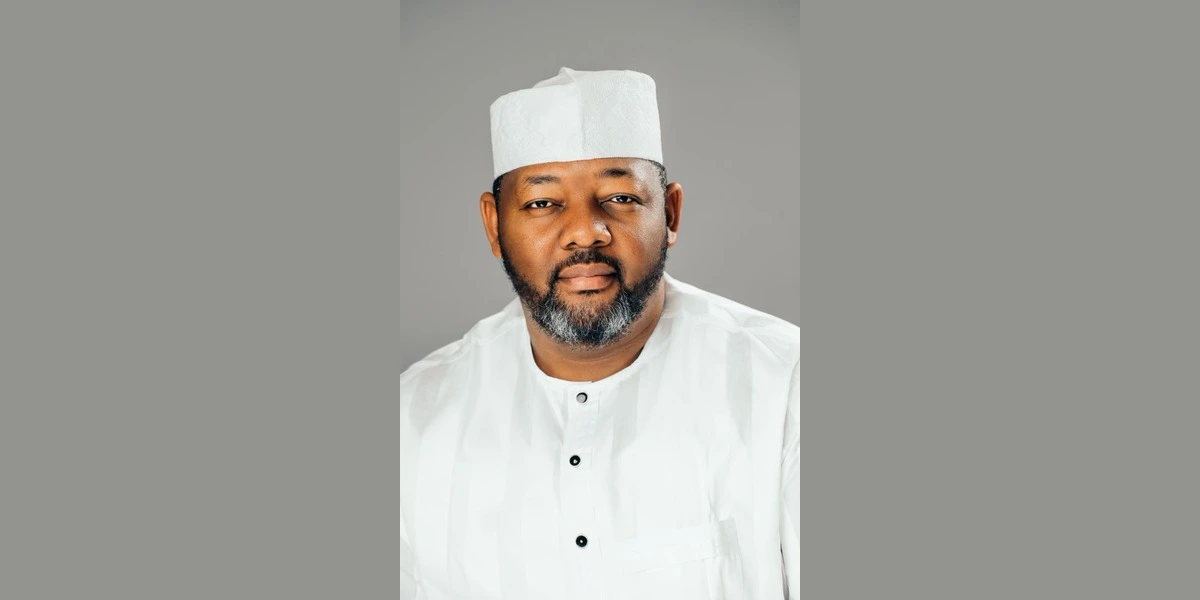
Ahmed, OON, is the executive chairman of PiCNG & EV.


0 comment(s)
Leave a Comment