
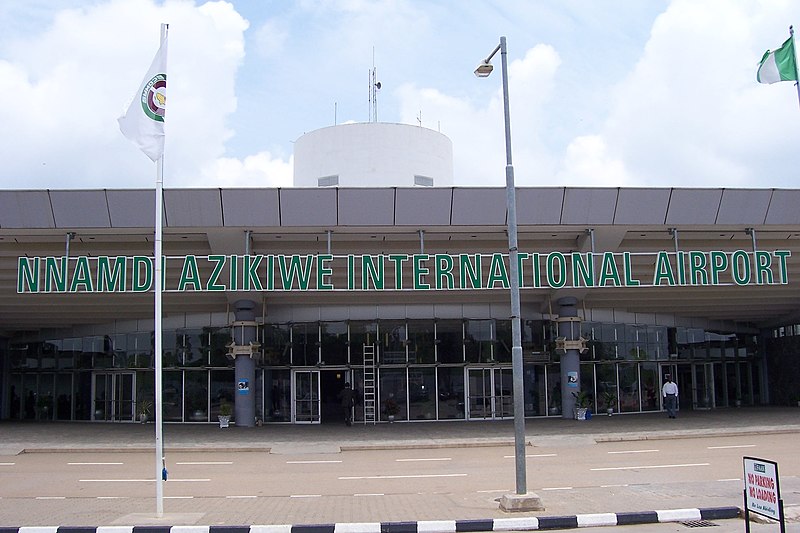
The Nigeria Customs Service (NCS) is set to launch cargo scanners at the Nnamdi Azikiwe International Airport, Abuja, to streamline cargo inspections, with the project awaiting final regulatory approval before becoming operational.
The Acting Comptroller, Non-Intrusive Inspection, Deputy Comptroller of Customs (DC) Umar Madugu, disclosed this on Wednesday, July 15, 2026, according to a statement released by the service on Thursday.
The planned deployment will introduce non-intrusive inspection technology to cargo operations at the airport, allowing Customs officers to inspect shipments using scanners instead of relying primarily on physical examinations.
According to the service, the technology is expected to reduce inspection times, improve operational efficiency and strengthen border security.
Also Read
What they are saying
Madugu disclosed the development after conducting a comprehensive readiness assessment of the newly installed cargo scanning facilities at the Nnamdi Azikiwe International Airport. As part of the assessment, he inspected the newly installed CX180 180DH pallet cargo scanners located at the Skyway Aviation Handling Company (SAHCO) and Nigerian Aviation Handling Company (NAHCO) warehouses within the airport.
- “The Nigeria Customs Service (NCS) is on the verge of deploying non-intrusive inspection technology (cargo scanners) at the Nnamdi Azikiwe International Airport, with the project awaiting final regulatory approval for full takeoff.”
Madugu said Customs officers had already completed specialised image analysis training last month to prepare them for the deployment of the technology.
According to him, the training has equipped officers with the skills required to accurately interpret scanner images, a capability expected to significantly reduce cargo inspection times while improving the detection of prohibited and undeclared goods.
The service said the deployment marks a major step in its efforts to modernise cargo inspection and improve trade facilitation through technology-driven border management.

More insights
To ensure seamless operations once the scanners become operational, Madugu recommended immediate security and infrastructure upgrades around the scanning areas. These include deploying traffic assessment officers to manage cargo movement and installing CCTV cameras to coordinate the flow of inbound and outbound cargo within the scanning zones.
- “Traffic assessment officers will be positioned strategically and CCTV cameras in place to coordinate the movement of inbound and outbound cargo within the scanning area, to ensure seamless operations, and improve efficiency,” Madugu said.
The readiness assessment was conducted alongside representatives of the Trade Modernization Project Limited and the Quality Assurance Unit, who jointly evaluated the operational preparedness of the facilities.
Before commencing the inspection, Madugu paid a courtesy visit to the Customs Area Controller of the FCT Area Command, Comptroller Victoria Aliboh, to obtain formal clearance for the assessment exercise.
The Customs Service said the successful assessment marked another milestone in its efforts to modernise cargo inspection through technology, with the Abuja airport scanners now awaiting final regulatory approval before becoming operational.
Get up to speed
The deployment of cargo scanners forms part of the Nigeria Customs Service’s broader drive to modernise customs operations, improve trade facilitation and strengthen revenue generation through technology and more efficient border management.
- The Nigeria Customs Service generated a record N7.281 trillion in revenue in 2025, marking its highest annual collection to date.
- Between January and May 2026, the service generated N3.35 trillion in revenue, processed nearly 700,000 import declarations and issued more than 112,000 Pre-Arrival Assessment Reports (PAARs).
- During the same five-month period, the service facilitated exports valued at $1.218 billion through 21,376 export containers, reflecting continued improvements in Nigeria’s export trade.
The service also disclosed that Import Duty Exemption Certificate approvals for imported goods and equipment rose to N34 trillion in 2025, with about 60 per cent of the waivers granted for military hardware procurement.
What you should know
Nigeria’s air freight logistics market is estimated to be worth more than $8 billion, with Lagos, Abuja, Port Harcourt and Kano serving as the country’s major cargo hubs.
- In an earlier interview with Nairametrics, Managing Director of Aramex Nigeria, Faisal Jarmakani, identified airport cargo processing as the biggest operational bottleneck to the sector’s growth.
- According to him, multiple clearance procedures, overlapping regulatory agencies, documentation issues, physical inspections and limited technology integration continue to slow cargo movement at Nigerian airports.
- He said deeper digitisation and better integration among agencies would reduce processing delays, lower logistics costs and support faster, more reliable air freight operations.
The planned deployment of cargo scanners at the Nnamdi Azikiwe International Airport is expected to contribute to that broader modernisation effort by introducing non-intrusive inspection technology aimed at making cargo inspections more efficient once it receives final regulatory approval.





0 comment(s)
Leave a Comment