
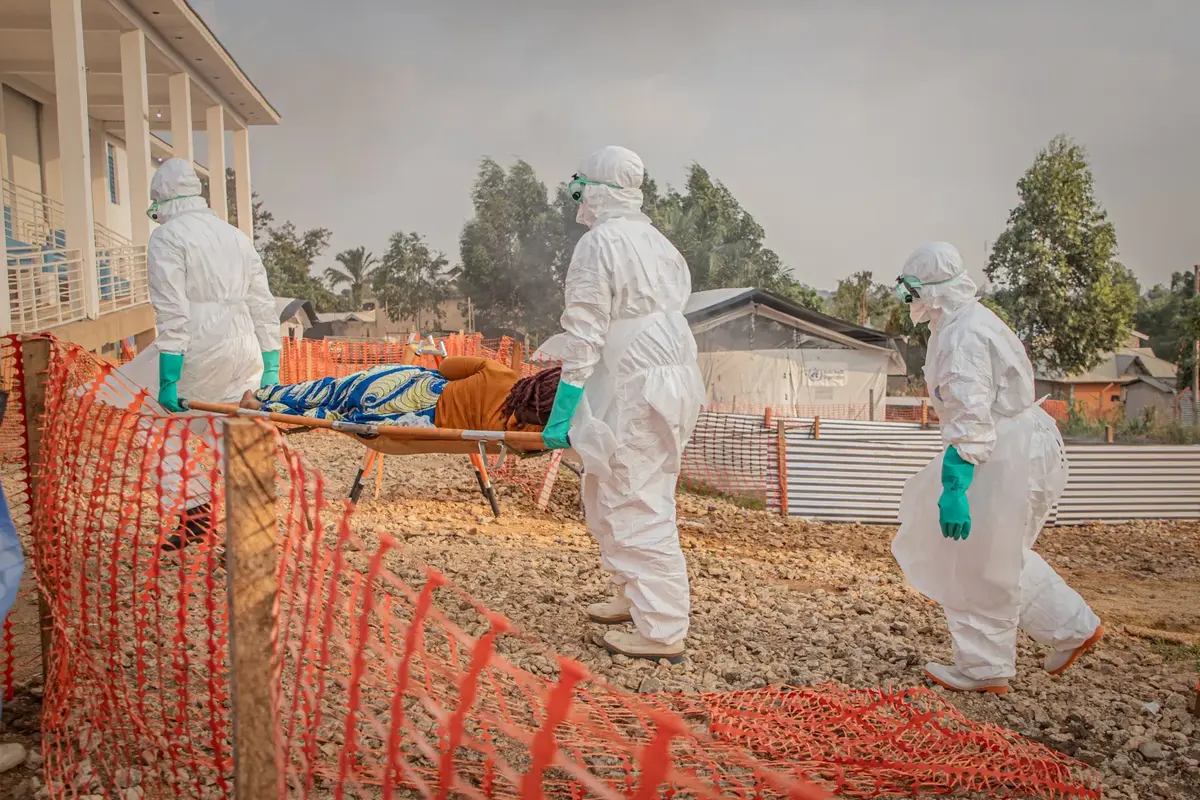
Research into the spread of the Bundibugyo Ebola virus and the development of vaccines against the strain in the Democratic Republic of the Congo (DRC) has received $3.9 million in funding.
The funding will support three research projects focused on using disease surveillance, laboratory, genomic and population-movement data to track how the virus is spreading and generate evidence to guide vaccine trials and other interventions.
The Coalition for Epidemic Preparedness Innovations (CEPI) disclosed the investment to the News Agency of Nigeria (NAN) on Wednesday, September 16.
The funding comes as the DRC’s Ebola outbreak continues to worsen, with more than 3,500 deaths recorded. WHO Director-General Tedros Adhanom Ghebreyesus said in a media briefing on Wednesday that weekly cases in North Kivu had nearly doubled over the past two weeks, rising from about 100 to more than 200. The briefing was monitored by Nairametrics.
Also Read
What they are saying
CEPI said the new investment is intended to make outbreak data more useful to decision-makers, particularly as the virus continues to spread across different parts of the DRC.
Dr Arminder Deol, Head of Data Science and Advanced Analysis at CEPI, said faster and better evidence is essential to making effective decisions during an outbreak.
- “Led by the Institut National de Recherche Biomédicale (INRB), the project will combine surveillance, laboratory, genomic and population-movement data into a real-time epidemic intelligence platform. Good outbreak decisions depend on good evidence generated quickly,” Deol said.
Deol added that the investment would also leave affected countries with stronger analytical capabilities that could continue to be used after the current outbreak.
The largest of the three projects, the Real-Time Epidemic Intelligence and Trial Readiness for the Bundibugyo Virus Response in the DRC (B-REACT), will receive $2.5 million over 12 months.
A second project, led by Imperial College London, will receive $1.1 million to use mathematical modelling to assess possible outbreak scenarios, simulate vaccine trials and evaluate vaccine investment options.
The third, led by Makerere University School of Public Health in Uganda, will receive $300,000 to model ring-vaccination strategies, estimate vaccine requirements and support the design of vaccine trials.
Get up to speed
The latest funding is not CEPI’s first major investment in efforts to develop tools against the Bundibugyo strain.
In late July, the organisation committed up to $8.5 million to Hilleman Laboratories to advance the development and manufacture of a Bundibugyo Ebola vaccine candidate for clinical trials. The funding is intended to help produce clinical supplies and, if early trials succeed, facilitate technology transfer for larger-scale production.
The investment comes as the DRC faces an Ebola outbreak for which there is currently no licensed vaccine specifically approved against the Bundibugyo virus.
Tedros said on Wednesday that transmission remains particularly concerning in North Kivu, where weekly cases have nearly doubled over the past two weeks.
- “Over the past two weeks, the number of weekly Ebola cases has nearly doubled, increasing from about 100 to more than 200.”
Tedros said more than 7,200 confirmed cases and over 3,500 deaths had been reported across the DRC, making the current outbreak the deadliest Ebola outbreak in the country’s history.
What you should know
Beyond the health crisis, the Ebola outbreak is creating an economic risk for the DRC and the wider African economy.
- The United Nations warned in June that an uncontrolled spread of the outbreak could cost Africa up to $3.6 billion in economic output and put more than 328,000 jobs at risk. The assessment also estimated that even if the outbreak were contained, the DRC could lose more than $1 billion and about 55,000 jobs.
- The potential economic impact adds urgency to the race to develop vaccines and other tools that can contain the virus, reduce disruption to businesses and protect communities.
- In early July, patients infected with Bundibugyo virus began receiving experimental treatments through the PARTNERS clinical trial, which is evaluating potential treatments for the disease.
WHO has also maintained that there is insufficient evidence to support the programmatic rollout of Ervebo against Bundibugyo virus. Its guidance recommends that the vaccine be used against the strain within research protocols while studies generate evidence on whether it provides meaningful protection.




0 comment(s)
Leave a Comment