

Blog Category: News
Recently, the hullabaloo about the Strait of Hormuz is too much to ignore, and it has immediately led to a boost in oil revenue for Nigeria and an increase in cost for Nigerians.
However, most times, the first sign that something has changed in the global oil market seldom arrives as a news headline in Nigeria.
It arrives as a price on a shelf.
The groundnut oil seller in Oyingbo notices it in her cost price before she adjusts her own. The bread seller at the Berger roundabout notices it when his regular customers, artisans who buy three loaves on Fridays, start buying one.
The petrol station attendant in Enugu notices it when the queue that usually forms by 6a.m. disappears entirely. By the time any economist publishes a paper on what the UAE’s departure from OPEC means for Nigeria, the market has already written the abstract.
When two elephants fight, it is the grass that suffers. In Nigeria, that grass is tallied on a monthly budget spreadsheet civil servants call the pain sheet: green above benchmark, red below it, with the same sequence every time prices fall: capital suspended, overhead cut, salaries late, then stopped.
The UAE’s departure from OPEC is a pain sheet story. UAE’s ADNOC’s current production capacity stands at approximately 4.85 million barrels per day (mbpd) against an OPEC quota of 3.2 mbpd, with its 5 mbpd target expected ahead of the 2027 deadline.
Free of quota constraints, the UAE can add well over 1 million additional barrels to the pre-Iran war global oil production of around 105 mbpd daily within twelve to eighteen months, pointing to a sustained price fall of between eight and fifteen dollars per barrel.
Nigeria’s exposure is structural, not cyclical. Oil and gas account for approximately 90 percent of export earnings and between 50 and 60 percent of federal government revenue, according to the Central Bank of Nigeria and the Nigerian Upstream Petroleum Regulatory Commission (NUPRC).
The 2026 Appropriation Act is benchmarked at 64.85 dollars per barrel with a production assumption of 1.84 million barrels per day. Actual production reached 1.84 million barrels per day in March 2026 per NUPRC data. A price fall of $10 per barrel costs the federation account approximately 2 to 3 billion dollars annually at current production levels.
Also, a pessimistic fall of fifteen dollars costs between 3 and 4.5 billion dollars, an equivalent of nearly one-fifth of the entire federal capital budget, which in 2026 was equivalent to approximately $23 billion, lost before a single road is contracted or a single school rehabilitated. The arithmetic is not abstract.
The mechanism by which a lower oil price becomes a teacher’s unpaid salary or an unstocked health clinic runs through the Federation Account. Thirty of Nigeria’s thirty-six states depend on FAAC allocations for more than 70% of their total revenue, according to the Nigerian Governors Forum, with several northern states relying on federal transfers for over 90%.
When allocations fall, states without meaningful fiscal buffers adjust by cutting the services that touch ordinary Nigerians directly: primary schools, rural health centres, community water projects, and feeding programmes that represent the most reliable meal of the day for millions of Nigerian children. The federal government’s own position was already strained before the UAE’s departure.
Nigeria spent N16 trillion servicing its debt in 2025, a 22.9% increase from N13.02 trillion in 2024, according to Debt Management Office data, while total public debt stood at $103.94 billion as at September 2025.
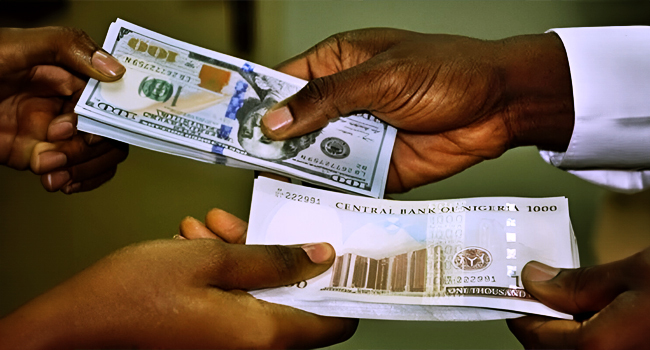
The exchange rate transmits the shock faster than any budget cycle responds. Lower oil prices reduce the dollar inflows the CBN relies on to manage the Naira, depreciation follows, and since Nigeria imports substantial portions of its food, virtually all fuel-related inputs, and most industrial raw materials, price increases reach the shops before most Nigerians have finished reading about the OPEC news.
Nigeria’s annual inflation stood at 15.38% in March 2026 (even though rebased in 2025 with 2024 prices) per the NBS’ CPI, down from the peaks of 2023 and 2024 but still elevated. External reserves stood at $48.37 billion as of April 29, 2026 per CBN data.
The structural drivers of Nigerian inflation, a weak currency, high energy costs, and supply chain fragility, remain intact. A fresh wave of Naira depreciation from declining oil revenues would ultimately arrive at an environment that has not fully recovered from the last shock, ceteris paribus.
The poverty implications are direct and severe. The World Bank’s April 2026 Poverty and Equity Brief places Nigeria’s poverty headcount at 63% in 2025, which is approximately 140 million people below the national poverty line, rising from 56% in 2023 and 61% in 2024.
Nigerian households spend an average of approximately 56 percent of consumption on food, rising above 70 percent for lower-income quintiles, and the World Bank’s Nigeria Development Updates show that a 10% Naira depreciation is associated with a 0.8 to 1.2 percentage point rise in the headcount poverty rate.
Public service deterioration accumulates more slowly but just as surely into child malnutrition and declining vaccination coverage. The informal economy, which looks autonomous, is not as it is a downstream of the civil service payroll, which is a downstream of the FAAC allocation.





0 comment(s)
Leave a Comment