
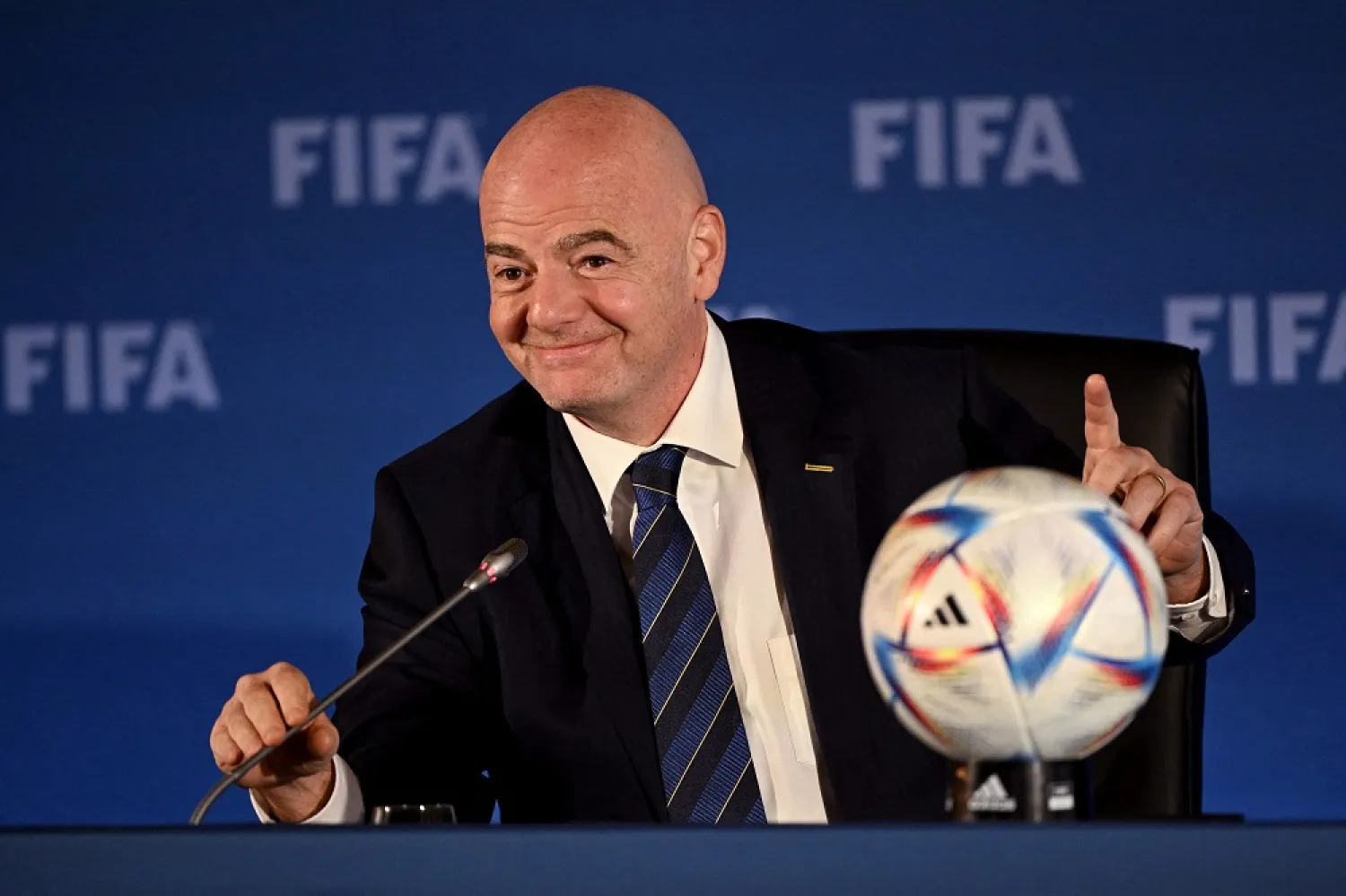
FIFA is planning to establish a new commercial subsidiary valued at $20 billion as the global football governing body seeks to increase earnings from its competitions and expand financial support for football federations worldwide.
The proposed entity, FIFA Forward Enterprise (FFE), will bring together FIFA’s commercial operations, including broadcast rights, sponsorship, ticketing and licensing, alongside the operational delivery of its tournaments.
The proposal, which is subject to approval from a majority of FIFA’s 211 Member Associations (MAs) and the FIFA Council, comes after FIFA reported record commercial returns from the 2026 World Cup cycle.
Also Read
FIFA estimates that it generated about $15 billion from the latest World Cup cycle, compared with approximately $7.6 billion from the previous cycle.
FIFA’s plan to increase football development funding
A major part of the proposal is the expansion of FIFA’s flagship development programme, FIFA Forward.
FIFA said the new structure could increase funding available to each Member Association from the current $8 million allocation to $20 million for the 2027-2030 cycle.
- The governing body added that funding could rise further to $22 million per association between 2031 and 2034 and $24 million between 2035 and 2038.
- In addition, FIFA is proposing the FIFA Fast Forward Programme (FFFP), which would allow each of its 211 Member Associations to access up to $20 million in one-off funding for major projects.
According to FIFA, the additional funding could support projects such as stadiums, national training centres, grassroots football programmes, coaching development, competitions and the growth of women’s football.
FIFA said the proposed programmes, alongside existing initiatives, could take total planned football development investment beyond $10 billion over the next four years.
How FIFA Forward Enterprise will be funded
To finance the new structure, FIFA said FIFA Forward Enterprise would raise up to $4.2 billion through external investors based on an initial valuation of $20 billion.
However, FIFA stressed that investors would only hold minority, non-controlling interests in the subsidiary.
The organisation said outside investors would not have any operational role, with FIFA retaining full control over football governance, competitions, the international match calendar and regulatory decisions.
- “Equally, they are investing in a subsidiary of FIFA, and not in FIFA itself. For FIFA, nothing changes,” the organisation said in its statement.
FIFA added that all net benefits generated by FFE would be reinvested into football worldwide.
The proposed investor group is expected to include long-term partners from different regions, with FIFA saying it wants a geographically diverse group that reflects the global nature of the sport.
The governing body has engaged financial advisers, including J.P. Morgan, as part of the process.
Infantino says move will democratise football funding
FIFA President Gianni Infantino said the proposed commercial structure is aimed at ensuring that the financial growth of football benefits all Member Associations.
- “Football is the world’s most popular sport and an extraordinary engine of human and social development,” Infantino said.
He added that FIFA’s next stage of growth required a structure where the commercial side of football operates as a dedicated business while ensuring its value is shared more widely.
- “Every FIFA Member Association should have an opportunity to seek a fair share of the available funding to shape its own future,” Infantino said, describing the initiative as the “democratisation of football worldwide.”
FIFA pointed to the recent World Cup participation of nations such as Cabo Verde and Curaçao as examples of how long-term investment through FIFA Forward has helped smaller football nations improve their competitiveness.
UEFA questions FIFA’s commercial direction
The proposal has, however, attracted criticism from European football’s governing body.
UEFA argued that football’s governing institutions should not move towards treating the sport’s governance structures as commercial assets.
In its response, UEFA said the proposed entity raised concerns about transparency and questioned who would ultimately benefit financially from the arrangement.
- “The soul and governance of football are not assets to trade,” UEFA said, adding that football should not be viewed as something that can be sold.
The criticism reflects wider disagreements between FIFA and UEFA over the direction of global football, particularly around how the sport’s growing commercial value should be managed.
What the proposal means for global football
If approved, FIFA Forward Enterprise could mark one of the biggest commercial shifts in the history of sports governance.
The move does not change FIFA’s status as a not-for-profit organisation under Swiss law, but it highlights the governing body’s growing focus on building a more commercial model around its global football assets.
By creating a dedicated commercial subsidiary and bringing in minority investors, FIFA is attempting to capture more value from broadcasting rights, sponsorship, licensing and tournament operations while maintaining control over football governance.
For developing football markets, particularly across Africa and other regions where national federations depend heavily on FIFA funding, increased investment could provide more resources for infrastructure, grassroots programmes, coaching and professional development.
However, the proposal also raises questions about the balance between commercial growth and football governance. UEFA has already expressed concerns over the involvement of external investors and the potential impact of expanding FIFA’s commercial influence.
The response from other continental football bodies will also be closely watched, as confederations assess how the new structure could affect the distribution of football’s growing commercial revenues.
The final decision will depend on whether FIFA secures approval from a majority of its 211 Member Associations and receives the necessary backing from the FIFA Council.





0 comment(s)
Leave a Comment