
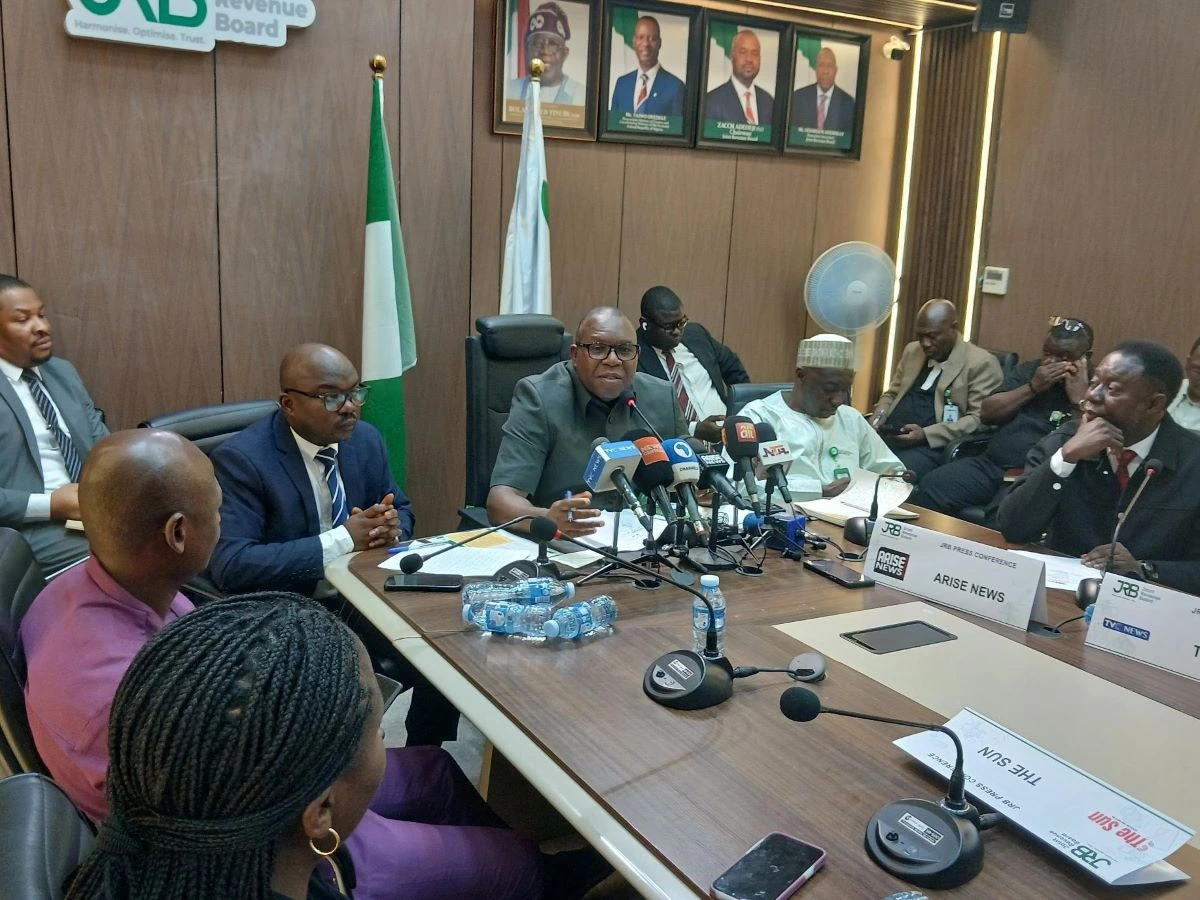
The Joint Revenue Board (JRB) has announced that 21 states have passed the Model Harmonised Taxes and Levies Law.
The Executive Secretary of the board, Mr Olusegun Adesokan, disclosed this on Wednesday during a press conference attended by Nairametrics.
The development comes months after the Federal Government issued implementation guidelines for the transition from the repealed tax laws to the new Tax Acts 2025, which took effect on January 1, 2026.
What the board is saying
Adesokan highlighted that the government’s tax harmonisation efforts are gaining ground across the states, with 21 states now on board.
Also Read
He listed the following states as having passed the law:
- Kebbi
- Kaduna
- Zamfara
- Ekiti
- Enugu
- Abia
- Anambra
- Gombe
- Adamawa
- Yobe
- Borno
- Niger
- Plateau
- Benue
- Kogi
- Kwara
- Nasarawa
- Akwa Ibom
- Bayelsa
- Delta
- Ondo
Furthermore, he added that the harmonised tax and levy heads are replacing more than 100 fragmented taxes and levies at the subnational level.
He said the new tax heads include income tax, stamp duties, property tax, road tax, haulage levy, economic development levy, harmonised levy, user charge and daily ticket.
He disclosed that states are embracing technology for seamless revenue administration, with several already benefiting from JRB-supported technology interventions.
Zero tolerance for cash collection on roads
Adesokan, in response to a question from the press, further maintained that the board has zero tolerance for roadblocks erected to facilitate cash collection.
- “This(ban) is supported by the Model Harmonised Taxes and Levies Law and the Presumptive Tax Regulations, 2026,” he said.
He stressed that the board would strengthen its ongoing collaboration with the Nigeria Police Force to apprehend defaulters, adding that enforcement would commence soon.
What you should know
Nigeria’s tax reform programme, launched in 2025, represented one of the country’s most ambitious fiscal overhauls in decades.
- The reforms introduced the Nigeria Tax Act, Nigeria Tax Administration Act, Nigeria Revenue Service (Establishment) Act and Joint Revenue Board (Establishment) Act. Their objectives include eliminating duplicate taxes, harmonising tax administration, improving compliance, expanding the tax base and reducing the burden on small businesses.
- As part of the reform, the Joint Revenue Board also prohibited the collection of road taxes and levies through checkpoints and banned the use of road stickers by state and non-state actors.
- The Minister of Finance and Coordinating Minister of the Economy, Taiwo Oyedele, had said the tax reform guidelines provide a framework for managing transitional issues while ensuring fairness and administrative certainty.
Oyedele described the Tax Acts 2025 as a significant milestone in Nigeria’s tax reform programme.
He said the guidelines are built around three principles: clarity, fairness and administrative certainty.





0 comment(s)
Leave a Comment