
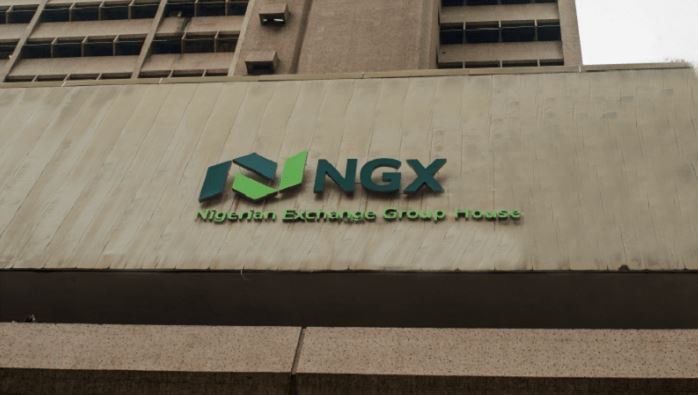
The Nigerian stock market is having a remarkable run this year.
The NGX All-Share Index closed May at a record 61% year-to-date gain, a performance that turned heads locally and attracted significant foreign portfolio interest.
Then in the first week of June, the market shed over N4 trillion in a single week, pulling the index back to 55% before a partial recovery brought it to 57.27% by the second week.
That kind of volatility; a record high followed immediately by a sharp correction: requires careful watching, not limited to some of the most watched sectors.
Other News
The banking sector is one of the most watched on the NGX, and yet some of its best opportunities are hiding in plain sight. But finding them requires discipline.
Not every cheap stock is an opportunity. Not every laggard deserves a second look. The difference between a genuine contrarian idea and a value trap often comes down to how carefully you ask the right questions.
We asked five.
- Is the stock trading below what the bank is actually worth on its books? This is the Price-to-Book ratio. A reading below 1.0x means the market is valuing the bank at less than its net assets; you are essentially buying N1 of the bank’s net worth for less than N1. It is the starting point for identifying potential mispricing.
- Is the bank generating strong returns on shareholders’ money? This is Return on Equity, and it is the most important question of the five. Bank trading cheaply but earning poorly is not an opportunity. It is a warning. ROE separates the genuinely mispriced from the correctly discounted. A bank with strong ROE trading below book value is where the contrarian case begins to build.
- How cheap are the market pricing current earnings? This is the Price-to-Earnings ratio. A bank at 3x earnings means you are paying N3 for every N1 of annual profit it generates. The lower this number relative to sector peers, the more earnings you are acquiring per naira invested.
- Where is the stock relative to the broader market rally? This is the year-to-date price performance. In a market that gained over 57%, a stock that barely moved or declined tells you something important: the crowd went elsewhere. That selective neglect is often where contrarian opportunities are born.
- How far is the stock from its own recent peak? This is 52-week high proximity. Stock trading significantly below its annual high has a measurable price recovery room. Combined with strong fundamentals, it adds a fifth layer of confirmation to the contrarian case.
Running all twelve listed banking stocks through this framework, a clear picture emerged, and it told two very different stories.
FCMB
Every bank on this list gained something in 2026. FCMB is the only one that did not. While the NGX banking sector was staging one of its strongest rallies in years, FCMB ended the period down 1.24%.
That would make sense if the business was struggling. But it is not. FCMB is generating a 22.8% return on equity. It trades at 2.91 times earnings; the cheapest earnings multiple in the entire banking sector.
For every N3 you invest, you are buying N1 of annual profit. At 0.61 times book value, you are purchasing the bank’s net assets at a 39% discount to what they are worth on paper.
The stock is also sitting at just 82% of its 52-week high. The market has made a clear judgment about FCMB. The numbers suggest that judgment is wrong.
Fidelity Bank
Fidelity did not fall. It just went nowhere. A 5% gain in a market that averaged over ten times that return across the banking sector is the financial equivalent of standing still while everyone else ran.
The business did not stand still, though. Fidelity is earning a 19.5% return on equity. It trades at 0.87 times book, below the value of its own net assets and at just 4.17 times earnings. Its lending is heavily focused on SMEs and export-oriented businesses; two segments sitting directly in the path of CBN policy support right now.
There is no drama here. There is no obvious reason for the discount. Fidelity is simply a bank the market stopped paying attention to. In contrarian investing, that is often the most interesting place to look.
Sterling Bank
Sterling is the pick that requires the most patience but makes the most interesting argument.
A few years ago, Sterling rebuilt its entire lending book around five specific sectors it calls HEART; Health, Education, Agriculture, Renewable Energy, and Transportation.
Every loan Sterling writes today sits inside one of those five categories.
The market has not been rewarded with that decision yet. Sterling gained just 8.65% year-to-date, trades at 0.93 times book, 4.88 times earnings, with a 19.1% return on equity. It is sitting at 81.93% of its 52-week high.
But the thesis is straightforward. While generalist banks absorb the full shock of naira volatility and commodity swings, Sterling’s HEART loan book is structurally insulated from those pressures. That advantage will show up in earnings. When it does, the valuation follows.
The market is pricing Sterling as if the strategy does not exist. That is the bet
The other banks
But before we land on those three, it is worth briefly accounting for the rest of the sector.
- Zenith Bank, GTCO, and StanbicIBTC are well-run institutions with strong fundamentals. Nobody is arguing otherwise.
But with year-to-date gains of 103.88%, 49.89%, and 65% respectively, the market already knows.
ETI is the most interesting edge case. A 132.46% year-to-date gain sounds like the opportunity is gone, but at 0.27 times book and 3.81 times earnings with a 25.7% ROE, the valuation has still not fully normalized even after the rally. It remains worth watching, though the momentum risk is real for new positions at current levels.
- Wema Bank deserves a mention. Its 44.4% ROE is the highest in the sector, and the ALAT digital banking platform is a genuine long-term growth story. But a 51.96% year-to-date gain and a valuation now sits at 86% of its 52-week high.
- Access Holdings is the most debated name in the sector. A 19.9% ROE, 0.32 times book, and the lowest P/E outside of FCMB makes a compelling valuation case.
But the post-acquisition integration across multiple African markets remains an overhang that will take time to resolve. The numbers say watch it closely, but sentiment says be patient.
- FirstHoldCo and UBA are the clearest value traps in the group. Both trade below book, both lagged the rally, and both look cheap on the surface.
But ROE of 7.9% and 8.5% respectively tell the real story. These banks are not earning enough to justify higher valuations.
Overall, in volatile markets, the crowd chases what has already moved. The contrarian investor asks what the crowd missed. On this analysis, the answer is FCMB, Fidelity, and Sterling.
Subscribe to Nairametrics exclusive stock-picking service via www.ftm.ng.






0 comment(s)
Leave a Comment