
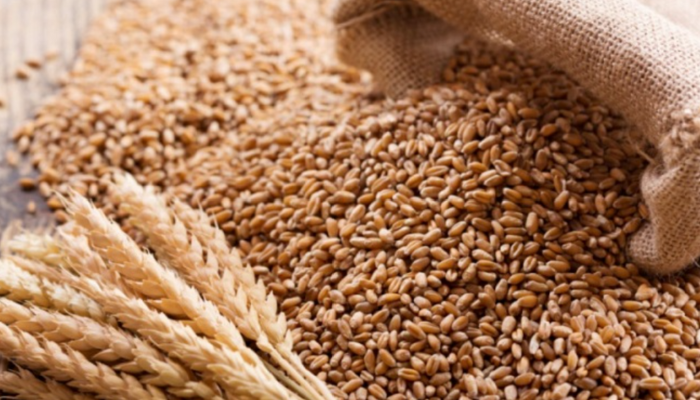
Nigeria’s annual wheat production has increased from about 120,000 metric tonnes to 420,000 metric tonnes following the implementation of the National Agricultural Growth Scheme and Agro-Pocket (NAGS-AP), the Federal Government has said.
The increase represents a 250% rise in output from the reported baseline, according to Prof. Ademola Adenle, Senior Special Adviser on Agriculture and Innovation to the Minister of Agriculture and Food Security.
Adenle disclosed this in an interview with the News Agency of Nigeria (NAN) in Abuja.
NAGS-AP is a flagship Federal Government programme designed to improve food production by providing subsidised agricultural inputs to smallholder farmers through agro-dealers.
What the government is saying
Adenle said access to critical farm inputs, including fertilisers, improved seeds, chemicals and extension services, had been central to efforts to increase agricultural productivity.
- “The whole idea is to provide inputs to farmers, such as fertilisers, chemicals and good essential services, through agro-dealers,” he said.
He said the programme had contributed to significant increases in the output of several crops, with wheat recording one of the most notable improvements.
According to him, annual wheat production has risen from the previous baseline of 120,000 tonnes to about 420,000 tonnes.
- “Before, we were producing around 120,000 metric tonnes annually, which was the baseline.
- “But with the introduction of inputs provided under the Renewed Hope Agenda, wheat farmers have enjoyed a 300 per cent increase in production.
- “So, that is massive, from 120,000 tonnes to 420,000 tonnes annually.”
However, the movement from 120,000 tonnes to 420,000 tonnes represents a 250% increase, although 420,000 tonnes is 3.5 times the previous production level. A 300% increase would imply production of about 480,000 tonnes.
Land access remains a challenge
Despite the improvement in output, Adenle said low agricultural productivity remained a major challenge, pointing to Nigeria’s land administration system as one of the structural constraints facing farmers.
He said the government planned to address issues associated with the Land Use Act, which dates back to 1978 and gives state governments significant control over land.
According to him, the existing framework has contributed to difficulties in accessing farmland, particularly for smallholder farmers.
- “The Land Use Act is quite old. We are currently using the 1978 Land Use Act which, obviously, vests power in the hands of state governments and has an inefficient traditional system of accessing land.”
He said many smallholder farmers cultivate between 0.5 and two hectares, limiting their ability to expand production and benefit from economies of scale.
The planned reforms, he added, would seek to address these constraints and improve farmers’ access to productive land.
Government targets higher agricultural output
Adenle said the planned reforms would cover different parts of the agricultural value chain, including production, processing, distribution and marketing.
He said the objective was to improve productivity while increasing farmers’ incomes.
- The latest wheat production increase comes after the Federal Government launched its 2025/2026 dry-season wheat farming programme under NAGS-AP in November 2025.
- The programme targeted 80,000 registered farmers nationwide, with the government projecting approximately N160 billion in output value from the initiative.
- The wheat programme forms part of broader government efforts to increase domestic food production and reduce Nigeria’s dependence on imports.
- In September 2025, the Federal Government also announced a $3.14 billion agricultural investment plan in partnership with the Food and Agriculture Organization under the Hand-in-Hand Initiative, aimed at expanding investment and productivity across the agricultural sector.
- For wheat, the increase from 120,000 tonnes to 420,000 tonnes represents a significant expansion of domestic production, but sustaining the gains will depend on continued access to improved inputs, irrigation, farmland, financing and markets.
The government’s planned agricultural reforms will therefore be critical to determining whether the recent increase in wheat output can be sustained and extended to other crops.





0 comment(s)
Leave a Comment