
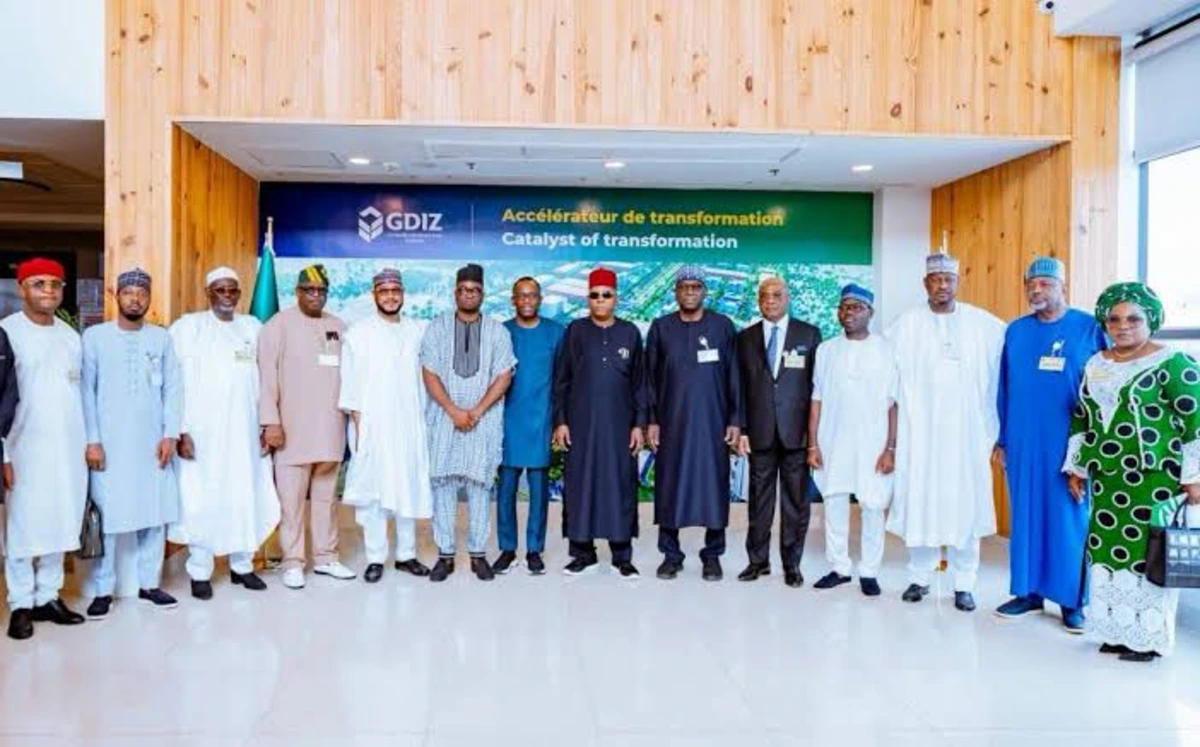
Six Nigerian governors are studying industrial development models in Ethiopia and Benin Republic as they seek to establish agro-processing hubs and expand manufacturing in their states.
The peer-learning mission, undertaken alongside Vice President Kashim Shettima, is aimed at helping participating states understand how infrastructure, private investment and agricultural value chains can drive industrial growth.
According to a statement issued by the State House on Saturday, the governors believe the lessons from both countries will support efforts to move Nigeria from exporting raw agricultural commodities to processing and manufacturing finished products.
What they are saying
The governors’ visit to the Glo-Djigbé Industrial Zone (GDIZ), an integrated industrial hub near Cotonou, forms part of Nigeria’s broader efforts to develop Special Agro-Industrial Processing Zones (SAPZs) across the country. The delegation had earlier visited Ethiopia before travelling to Benin Republic to study how both countries built industrial ecosystems around agriculture.
Also Read
- “We previously visited Ethiopia to study what they had done, and we are now in Benin Republic to learn from both the challenges and the successes of this industrial zone.
- “We have examined the cotton, cashew and soybean value chains. What we have seen has been a tremendous success, and we will take these lessons back to Nigeria as we implement our own projects,” Kwara State Governor AbdulRahman AbdulRazaq said.
AbdulRazaq added that participating states are working with the Federal Government and development partners, including the African Development Bank (AfDB), the Islamic Development Bank and the International Fund for Agricultural Development (IFAD), to provide infrastructure for agro-industrial processing zones.
- “What we have seen here is very encouraging, both for us as a country and as a state. We have learnt many things that will help us industrialise Jigawa and create sustainable jobs for our young people,” Jigawa State Governor Umar Namadi said.
The governors said the experience gained from the study tour would help shape the implementation of agro-industrial projects in their respective states, the statement noted.
More insights
The study visit reinforced the governors’ plans to strengthen agricultural value addition, revive manufacturing and create jobs by processing more commodities locally. Several governors said the lessons from GDIZ would influence their industrial development strategies, the statement noted.
- Zamfara State Governor Dauda Lawal said the visit had provided a clear pathway for reviving cotton production and textile manufacturing, recalling the role of textile factories, ginneries and oil mills in the state’s economy. He described the initiative as one of the legacies he hopes to leave behind.
- Katsina State Governor Dikko Umar Radda said the GDIZ model could be replicated in states with strong agricultural value chains, particularly those producing cotton and soybeans.
- Plateau State Governor Caleb Mutfwang said the industrial zone showed that successful industrialisation requires planning, political commitment and effective management.
- Imo State Governor Hope Uzodimma said African countries should learn from one another and build industries around their comparative advantages to expand production and employment.
The GDIZ processes commodities such as cotton, cashew nuts and soybeans into finished and semi-finished products, providing a model that participating Nigerian states are considering as they pursue greater value addition.

Get up to speed
The visit comes as Nigeria continues the rollout of the Special Agro-Industrial Processing Zones programme, which is designed to establish processing centres close to farming communities and strengthen links between farmers and manufacturers. The programme is expected to increase value addition, reduce post-harvest losses and promote rural industrialisation.
- The first phase of the programme covers seven states and the Federal Capital Territory, with support from the AfDB, the Islamic Development Bank and IFAD.
- In June,Nairametrics reported that the AfDB had committed $86 million to the SAPZ programme as of March 31, with disbursements reaching $25 million.
The programme is built around agricultural production clusters where farming, aggregation, processing and distribution activities are concentrated within designated zones supported by critical infrastructure.
The Federal Government expects the initiative to strengthen agricultural productivity while accelerating industrial development across participating states.
What you should know
IFAD has also increased its financial support for the SAPZ programme, bringing its total commitment to $100 million. The additional funding is expected to support more farmers and expand agro-processing infrastructure across participating states.
- IFAD’s total commitment to the SAPZ programme now stands at $100 million.
- The organisation said its interventions in Kano and Ogun states have supported thousands of smallholder farmers through agricultural services, improved inputs and climate information.
- The second phase of the SAPZ programme is expected to expand implementation beyond the initial seven states and the Federal Capital Territory.
The expansion aims to increase Nigeria’s agro-processing capacity, reduce raw commodity exports and create more jobs across the agricultural value chain.
The study tour reflects growing efforts by Nigerian states to adopt proven African industrial models as they seek to strengthen agro-processing, expand manufacturing and accelerate economic diversification.





0 comment(s)
Leave a Comment