

Blog Category: Academics
Twelve market women in Oshodi run an ajo, the rotating savings scheme that has functioned as an informal bank for generations of Nigerian traders.
Each contributes N50,000 every month.
In January 2022, when Mama Aisha collected her N600,000, she bought a second-hand chest freezer for N570,000 and had N30,000 left.
When Mama Chioma’s turn arrived eleven months later, food inflation had pushed the same freezer to N980,000.
Her N600,000 fell short by N380,000. Nobody stole from the ajo, and nobody changed the rules. Inflation had quietly transferred roughly N380,000 in real purchasing power from the later recipient to the earlier one, without either signing a document or knowing a transaction had taken place.
Multiplied across hundreds of thousands of ajo and esusu groups running across Nigeria, what looks like macroeconomic abstraction is a concrete redistribution between Nigerians who believed they were playing on equal terms.
The 2022 to 2024 inflation episode, in which headline inflation peaked at 34.80% in December 2024 and food inflation ran above 40% through much of that year, was not merely a price-stability failure. It was a large-scale, non-legislated transfer of real wealth.
The moderation since early 2025, with headline at 15.38% (even though largely from rebasing on 2024 prices) and food at 14.31% as of March 2026, does not reverse that redistribution. The cumulative price level has not retreated.
With 63% of Nigerians below the national poverty line in 2025 according to the World Bank, the damage of the preceding episode continues to accumulate in households that never held the assets that would have protected them. Four distinct mechanisms drove the redistribution.
Of the four, the sharpest divide runs between asset holders and cash holders. Households with wealth in land, real estate, dollar holdings, or imported goods inventory lose nothing in real terms when prices rise; their assets reprice with the general price level.
Households holding Naira-denominated savings at below-inflation deposit rates absorb the entire real loss silently. A household with N1.6 million in a savings account earning 8% per annum, the upper band of what Nigerian commercial banks offered in early 2026 per CBN data, lost approximately 27 percentage points of real purchasing power during 2024 alone.
The household that did everything the financial literacy manuals recommend, saving regularly, staying liquid, avoiding debt, was the one that lost.
The debtor-creditor flip works through the same logic in reverse. Inflation erodes fixed-rate nominal debt, benefiting borrowers at the expense of lenders. The largest borrower in the Nigerian system is the federal government itself, whose Naira-denominated obligations are progressively eroded by every uptick in prices.
The largest creditors in real terms are pension funds, long-tenure depositors, and holders of Naira fixed income, populations that skew toward the working poor and the retired middle class. When the federal government’s real debt burden lightens, the offsetting loss is not absorbed by any financial institution. It is absorbed by the pensioner whose monthly draw buys less rice this year than last.
The headline inflation figure also conceals a basket problem. A household in the lowest income decile spends 60 to 70 per cent of its budget on food; a top-decile household spends closer to 25 per cent. When food prices outrun the headline rate, as they did throughout the recent episode, the effective inflation experienced by the poor is materially higher than the published number.
A pot of jollof rice that cost roughly N8,000 to prepare in 2021 costs N30,435 according to NBS data in early 2026. A 50kg bag of local short-grain rice hit N112,000 in March 2026. The regressivity lives in the cumulative price level, not the current rate, and that level has not retreated.
Wages are the fourth lever. Nigeria’s mid-2024 adjustment of the national minimum wage to N70,000, roughly $51 per month at the prevailing exchange rate, was widely celebrated. Within twelve months, the Nigeria Labour Congress had declared it unsustainable.
Imo State raised its own floor to N104,000 in August 2025, an implicit admission that the federal figure is already below the realistic cost of survival in many parts of the country. The minimum wage has not been indexed to inflation, and unless it is, it will erode in real terms between each round of political negotiation. The minimum wage tells you what the law says a worker is worth. Inflation tells you what the economy actually paid them. The gap between those two numbers is the tax.
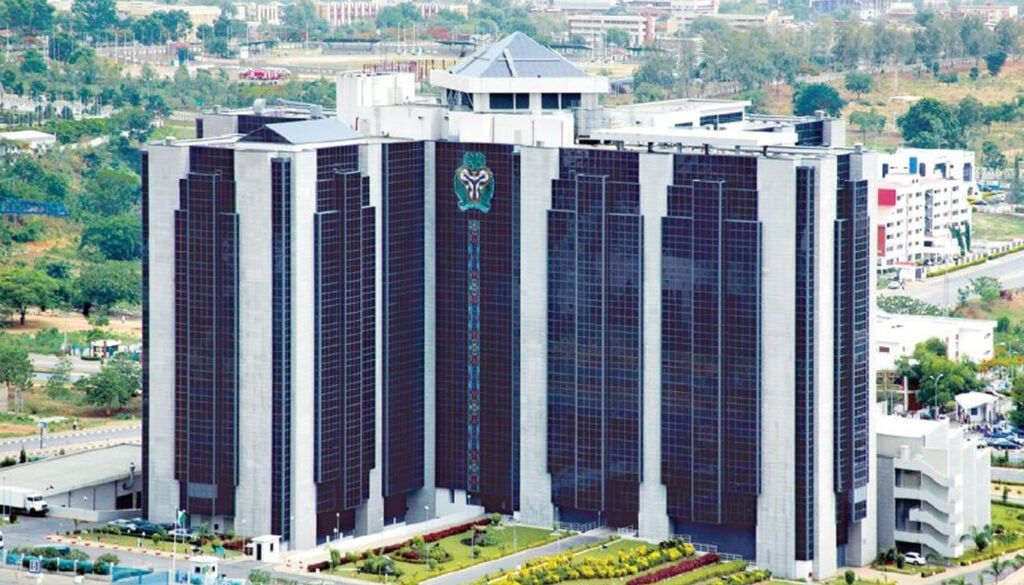
Behind all four channels sat a single cause: the extraordinary scale of monetary financing of the federal deficit through Ways and Means advances at the Central Bank of Nigeria, peaked at N26.95 trillion in May 2023 even though was reported to have reduced to N2.84 trillion as of January 2026.
This had already contributed to a reported jump in total public debt from N49.8 trillion in March 2023 to N159.3 trillion by December 2025. The money entered the economy through government salaries and contractor payments, bidding up prices before ordinary savers felt the full impact.





0 comment(s)
Leave a Comment