
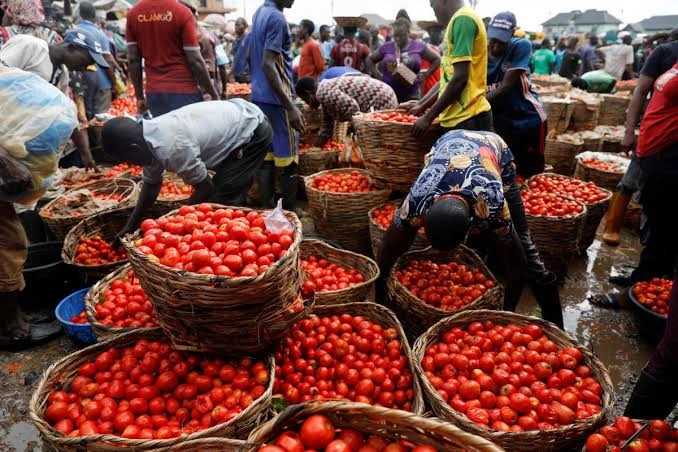
Nigeria’s headline inflation rate declined to 15.43% in July 2026, representing a 0.48 percentage-point decrease from the 15.91% recorded in June.
The latest figure was contained in the Consumer Price Index (CPI) report released by the National Bureau of Statistics (NBS), which showed that inflationary pressures varied significantly across the states.
Despite the national moderation, Adamawa recorded the highest state-level inflation rate in July at 33.0%, significantly above the national average.
Yobe ranked second with an inflation rate of 25.2%, followed by Anambra at 24.0%, Delta at 22.6%, and Abia at 20.9%.
Also Read
The state-level figures highlight the wide disparity in the cost of living across Nigeria, with some states recording inflation rates more than twice the national average.
10. Bauchi — 17.7%
Bauchi recorded the 10th-highest inflation rate at 17.7% in July. The figure declined from 19.2% in June.
Food inflation, however, increased slightly from 21.6% to 22.0%. Despite recording the lowest inflation rate among the 10 states in this ranking, Bauchi remained above the national average of 15.43%.
Bauchi’s economy is strongly connected to agriculture, livestock, commerce and services.
The state’s location in the Northeast makes transportation and distribution costs important to the prices of both food and manufactured goods.
Agricultural production is also sensitive to rainfall, seasonal patterns and access to inputs.
Where transport costs increase, the impact can spread through the supply chain from farmers and wholesalers to retailers and consumers.
9. Katsina — 18.1%
Katsina ranked ninth, with headline inflation declining to 18.1% in July from 19.4% in June.
Food inflation, however, increased to 30.8% from 26.4%. The state’s food inflation rate was therefore considerably higher than its overall inflation rate, suggesting that food remained a major source of household price pressure.
Katsina is an important agricultural state, with large rural populations dependent on farming and livestock.
Consequently, changes in agricultural production, food availability and seasonal market conditions can have a substantial impact on household expenses.
The state’s location in the far Northwest also makes transportation and cross-border trade important to its price structure.
Security challenges affecting parts of the Northwest can disrupt farming and movement between rural production areas and major markets.
Higher transport and distribution costs can subsequently feed into retail food prices. The contrast between falling headline inflation and rising food inflation in July suggests that food remained a significant source of pressure for households even as broader price growth moderated.
8. Zamfara — 19.8%
Zamfara ranked eighth with an inflation rate of 19.8%.
Unlike most of the states in the ranking, Zamfara recorded a substantial decline in headline inflation, falling from 28.7% in June.
The 8.9 percentage-point decline was accompanied by a sharp increase in food inflation. Food inflation jumped from 16.7% in June to 30.7% in July.
This divergence means that the overall moderation in inflation did not necessarily translate into relief for consumers purchasing food in the state.
Zamfara’s economy is heavily linked to agriculture and livestock, making food supply conditions particularly important to household costs.
The state has also faced significant security challenges, which can affect farming activity, access to farmland, transportation and the movement of agricultural products. When farmers are unable to cultivate or harvest normally, local food supplies can be affected.
Security concerns can also increase the cost and difficulty of transporting goods between rural communities and urban markets.
7. Akwa Ibom — 19.9%
Akwa Ibom recorded 19.9% inflation in July, compared with 14.6% in June.
The increase of 5.3 percentage points pushed the state into seventh position. Food inflation rose moderately from 15.3% in June to 17.1% in July.
Although its food inflation rate remained below the headline rate, the overall inflation figure was still 4.47 percentage points higher than the national average.
Akwa Ibom combines oil and gas activity with agriculture, fishing, commerce and services. The state’s coastal location and dependence on road transportation for the movement of goods mean fuel and logistics costs remain important components of the consumer-price environment.
Agriculture and fishing also make food prices sensitive to seasonal supply and transportation. The state has major urban centres such as Uyo, where demand for goods and services can influence prices.
Oil-sector activity contributes to incomes and economic activity but can also increase demand for housing, transport and other services in areas where petroleum-related activities are concentrated.
6. Bayelsa — 20.3%
Bayelsa ranked sixth with headline inflation of 20.3%.
The figure was significantly higher than the 12.3% recorded in June, representing an increase of 8 percentage points. Food inflation also increased sharply from 11.7% in June to 21.9% in July.
The increase in Bayelsa’s inflation rate highlights the uneven nature of the national inflation trend, as the state recorded one of the largest month-to-month increases among the 10 highest-inflation states.
Much of the state consists of riverine and wetland areas, making transportation and distribution more dependent on waterways and specialised logistics in many communities.
The difficulty of moving goods across waterways and remote areas can increase distribution costs. Bayelsa is also an oil-producing state, meaning petroleum-sector activity is an important part of the economy.
However, oil production does not necessarily translate into low consumer prices because many goods consumed in the state still have to be transported from other parts of Nigeria.
5. Abia — 20.9%
Abia recorded the fifth-highest inflation rate at 20.9% in July. The state’s headline inflation increased from 19.8% in June, representing a 1.1 percentage-point increase.
Food inflation recorded a more substantial increase, rising to 19.8% from 14.8%. Abia therefore recorded inflation above the national average for both its overall consumer basket and food prices.
Abia’s economy is strongly influenced by trade, manufacturing and small and medium-sized enterprises.
Aba, one of the country’s major commercial and manufacturing centres, is particularly important to the state’s economic structure. Businesses in the state depend heavily on transportation, electricity, imported raw materials and other production inputs.
When the cost of energy, logistics or imported materials rises, manufacturers and traders can pass some of those costs through to consumers.
4. Delta — 22.6%
Delta ranked fourth after its headline inflation rate increased sharply to 22.6% in July from 14.0% in June.
This represents an increase of 8.6 percentage points. Food inflation also accelerated significantly, rising from 17.0% in June to 28.1% in July.
The increase places Delta among the states where both general consumer prices and food prices recorded substantial upward pressure during the month. Delta has one of Nigeria’s most important oil-producing economies, but its consumers are also exposed to the cost of transporting goods across a geographically dispersed state.
The state’s riverine terrain and large number of communities can make logistics and distribution more complicated and expensive.
Urban centres such as Warri, Asaba and Sapele also serve as important commercial markets, with prices influenced by transportation, energy and supply-chain costs. The petroleum industry can provide significant economic activity, but petroleum-sector costs can also influence the wider economy through transportation and energy prices.
The sharp increase in food inflation suggests that food supply and distribution costs were particularly important in July.
3. Anambra — 24.0%
Anambra ranked third, with inflation rising to 24.0% in July from 13.2% in June.
The 10.8 percentage-point increase was one of the sharpest increases among the states in the top 10. Food inflation also increased from 12.4% in June to 16.8% in July.
The combination of higher headline and food inflation suggests that households in the state experienced a broad increase in the cost of consumer goods and services during the month. Anambra’s inflation dynamics are shaped by its highly commercialised economy.
The state is home to major trading and manufacturing centres, including Onitsha and Nnewi, giving it significant exposure to the cost of goods moving through national and international supply chains.
A large volume of consumer and manufactured goods sold in the state is linked to regional trade, making transportation costs, exchange-rate movements, import costs and energy prices important factors.
Manufacturers and traders face additional costs when diesel, electricity, transportation, warehousing and imported inputs become more expensive.
2. Yobe — 25.2%
Yobe recorded the second-highest inflation rate at 25.2% in July.
Unlike Adamawa, however, the state recorded a slight moderation from the 25.3% reported in June. Food inflation also declined marginally from 21.4% in June to 20.8% in July.
Despite the moderation, Yobe remained among the states with the highest inflation rates in the country, with headline inflation about 10 percentage points above the national average.
Yobe’s economy is strongly connected to agriculture, livestock and regional trade.
As with other states in the Northeast, agricultural output and food prices can be affected by rainfall patterns, seasonal production, access to farmland and security conditions.
Transportation is another important factor because Yobe is relatively distant from Nigeria’s major coastal commercial centres.
The cost of moving food, fuel and manufactured products across long distances can increase the final prices paid by consumers.
Security concerns can also disrupt movement between rural production areas and urban markets, potentially creating localised shortages or increasing distribution costs.
1. Adamawa — 33.0%
Adamawa emerged as the state with the highest inflation rate in July, recording 33.0%.
The figure represents a sharp increase from 18.8% in June, meaning the state’s annual inflation rate rose by 14.2 percentage points within one month. The state’s food inflation rate was even higher, reaching 51.4% in July compared with 29.2% in June.
This means food prices were rising at more than three times the national headline inflation rate and remained the biggest source of price pressure for households in the state.
The sharp increase in Adamawa’s inflation rate also means residents experienced significantly faster increases in the prices of goods and services compared with the national trend.
Adamawa’s position is closely linked to its food-producing and largely agrarian economy. Agriculture is a major source of household income and food supply in the state, making prices particularly sensitive to changes in harvest conditions, transportation costs, seasonal supply and disruptions to agricultural activity.
The state’s location in northeastern Nigeria also makes logistics important. Goods moving into and out of Adamawa can face higher transportation costs because of long distances from major southern commercial centres.
Security challenges in parts of the Northeast can also affect agricultural production, movement of farmers and traders, and access to markets. The July figures show that the moderation in Nigeria’s national inflation rate did not translate into lower inflation across all states.
Adamawa stood out in particular, with headline inflation jumping from 18.8% to 33.0% and food inflation reaching 51.4%.
Several other states, including Anambra, Delta and Bayelsa, also recorded double-digit increases in their headline inflation rates compared with June.
The divergence highlights the importance of looking beyond the national inflation figure when assessing the cost-of-living pressures facing Nigerian households, as prices can vary considerably depending on location, food supply conditions, transportation costs and local market dynamics.





0 comment(s)
Leave a Comment