 Author: Why Lagos real estate no longer rewards patience by Olabisi Odusanya. Posted On: 9 hours ago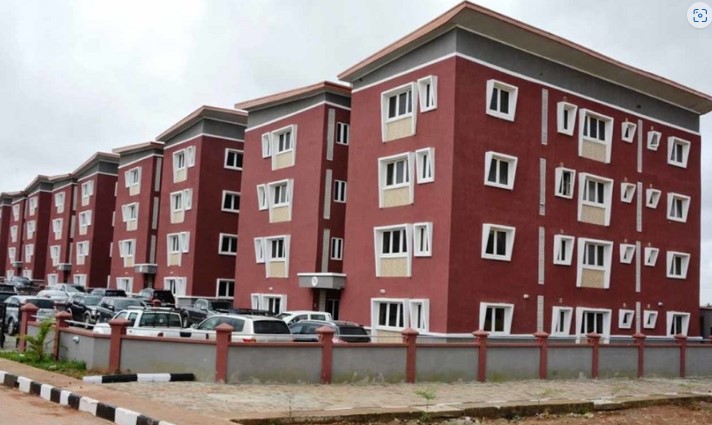
Blog Category: Academics
“Markets can remain irrational longer than you can remain solvent.” John Maynard Keynes
Investors commonly quote this to support their theories and results online.
The quote has a different meaning in Nigerian real estate, where “irrational” pricing is the norm.
Markets aren’t crazy. This is structural. Waiting for it to be rectified is the most costly investment option.
The assumption that didn’t hold
In 2023, I analyzed Pinnock Beach Estate’s N1.1 billion duplex, analyzing developers’ use of greater plot sizes to justify premium pricing. Adjusting for inflation, these properties’ dollar-equivalent values remained relatively unchanged.
But what stayed with me were talks with prospective purchasers who believed the pricing couldn’t last, that a correction was inevitable, and patience would pay off.
It wasn’t. Prices keep rising. Waiters were priced out.
The pattern goes beyond Lagos real estate. After the 2022 dip, an investor who waited for additional decreases missed cumulative gains of 53% through early 2026 (S&P 500 Historical Annual Gains, Macrotrends).
In Lagos, the cost of waiting has been even steeper: land prices across prime corridors appreciated by 50% in 2023 alone, with locations like Ogudu and Abraham Adesanya recording cumulative growth of 275% and 254% respectively between 2018 and 2023 (NIESV Lagos Land Price Appreciation Index, 2024).
Four structural forces conspire to make waiting costly:
1. Inflation’s silent capital tax
In December 2023, Nigeria’s inflation rose to 28.92% from 21.34% (National Bureau of Statistics, CPI Reports 2022–2023). Naira-denominated savings accounts, which earn 4–6%, lost over 20% of their real purchasing power annually.
After two years of “waiting for the right time,” an investor’s cash fell 40% before investing. The naira worsened this, as the exchange rate depreciated about 300% from N420/$1 in early 2022 to N1,800/$1 by late 2023.
2. Land scarcity, concentrated development
Lagos is not making more land. The development pipeline is mostly in Lekki-Epe, Victoria Island, and Ikoyi, where plots are few and diminishing. The Estate Intel Lagos Real Estate Development Pipeline Report (2025/2026) lists 34,800 active units in development, but 1.8 million units are insufficient to meet a 2.7 million-unit gap.
Land reclamation, daily JV signings, and construction activity intensity, mostly along the same routes. Ikorodu, Badagry etc., which may absorb demand, is underdeveloped because of infrastructure deficiencies and institutional neglect.
3. The invisible markup: Landowners and JVs
Landowners’ structural advantage in Lagos real estate pricing is rarely considered in public investment analysis. Developers must form joint ventures to build flats in Ikoyi or Victoria Island, where undeveloped land is ‘finished”
The conventional structure involves a 50/50 split between landowner and developer, with upfront “premium” payments up to N800 million before laying a single block. The final unit price includes these costs, which the buyer cannot see.




0 comment(s)
Leave a Comment