

 Follow Us on Google
ByFred Itua,Abuja
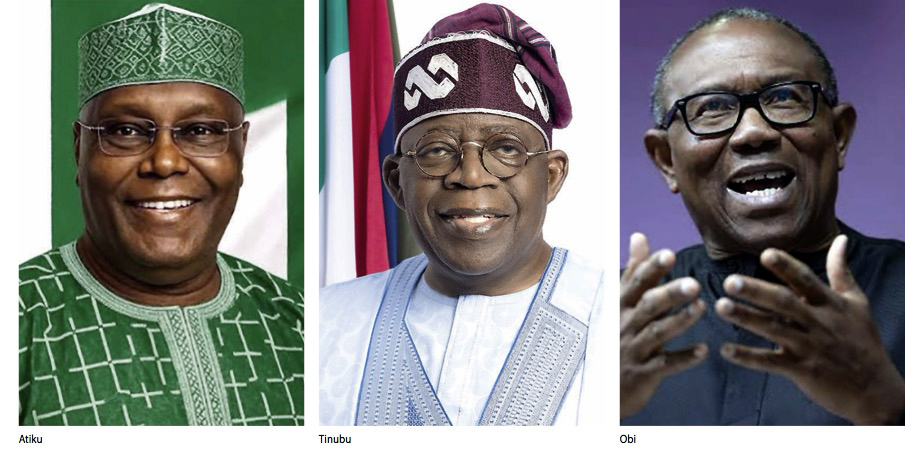
Nigeria’s opposition has grown more vocal in recent months. Atiku Abubakar of the African Democratic Congress (ADC) and Peter Obi of the Nigeria Democratic Congress (NDC) have sharpened their criticism of President Bola Ahmed Tinubu’s economic and security record. However, the new vigor from the opposition calls for scrutiny.
President Tinubu moved quickly after taking office in May 2023. He ended the fuel subsidy and floated the naira within weeks of his inauguration. Both measures had long been recommended by economists and avoided by the previous administration of late President Muhammadu Buhari. Unlike Tinubu, Buhari considered the political cost of reform. For him, the consequences were too high to bear. Tinubu accepted that cost. The country absorbed the consequences in full.
Inflation was at 22.41 per cent when Tinubu took office. It climbed past 34 per cent by December 2024. Food inflation touched almost 40 per cent, its highest level in 18 years. The naira fell from around N460 to the dollar to past N1,500 before recovering some ground. Petrol prices more than quadrupled, from roughly N185 a litre to well above N800 in some parts of the country. Today, it hovers around N1,300. Transport costs rose in step, feeding into the price of almost everything else moved by road, from foodstuffs to construction materials.
Through that period, the opposition’s public presence was limited. Atiku spent much of it contesting the outcome of the 2023 election through the courts, a process that ran well into 2024 and absorbed a significant share of his political attention and resources. He also spent time managing disputes within his own camp, as factions within the old Peoples Democratic Party (PDP) structure argued over direction following his defeat.
Obi, for his part, watched the Labour Party, which had carried him to national prominence in 2023 on the strength of a youth-driven movement that became known as the Obidient Movement, fractured internally. Disputes over the party’s leadership and direction dragged on for more than a year, a process that eventually led to his move to the newly formed NDC in search of a more stable platform.
Neither figure mounted sustained public pressure on government policy while its effects on households were most severe. Party gatherings during this period tended to focus on internal positioning rather than coordinated criticism of the administration’s economic programme. Analysts who track opposition politics in Abuja say this was, in part, a function of resources. Sustained public criticism requires organisation, funding and message discipline, all of which were in short supply while both men were consumed by disputes closer to home.
That gap has shaped how the current criticism is being received.
Government loyalists argue that opposition figures who stayed largely silent through the hardest years of adjustment have limited standing to now speak for suffering Nigerians. They point out that the worst of the inflationary shock, in 2023 and 2024, passed with comparatively little organised opposition pressure, and ask why the criticism has intensified only as the 2027 campaign approaches.
Opposition figures reject the framing. They say internal party disputes, not indifference to public hardship, kept them occupied, and that their present focus reflects the scale of a record that has become clearer with time, as multi-year data on poverty, debt and unemployment has accumulated.
The government’s record on the numbers is mixed, and both sides can point to figures that support their case. Growth has risen from 2.74 per cent in 2023 to an estimated 3.89 per cent in early 2026, according to official data, with some projections placing full-year growth higher still. External reserves have grown to close to $50 billion, from a much lower and heavily encumbered position when Tinubu took office. Headline inflation has eased to around 15 per cent, a decline the government attributes partly to tighter monetary policy and partly to a rebasing of the consumer price index carried out by the National Bureau of Statistics, a change opposition figures have questioned as flattering to the government’s record.
The Central Bank of Nigeria (CBN) cut its benchmark interest rate in 2026 for the first time in five years, a move officials describe as evidence that inflationary pressure has genuinely eased rather than merely been recalculated. Nigeria was also readmitted to a major frontier market index during the period, a development reported to have added over N1 trillion in market value within 22 hours of the announcement. Tax revenue rose 49 per cent in the first half of 2026 compared with the same period the previous year, according to the Finance Ministry, a figure officials cite as evidence of a widening tax base rather than simply higher rates on the same narrow pool of payers.
Debt has become a particular flashpoint in the exchanges between government and opposition. Opposition figures have circulated estimates of between N75 trillion and N80 trillion in new borrowing since 2023, figures drawn from the Debt Management Office data and used to argue that the administration has mortgaged the country’s future to fund short-term stability.
Finance Minister Taiwo Oyedele disputes this characterisation. He argues that much of the apparent increase reflects currency devaluation, which mechanically inflates the naira value of dollar-denominated debt without any new borrowing having taken place, alongside the reclassification of inherited CBN liabilities that were not previously captured in headline debt figures, and the refinancing of existing obligations on new terms. Neither side has resolved the dispute to the other’s satisfaction, and the argument has become a recurring feature of opposition messaging, repeated in slightly different form at almost every public appearance by Atiku or Obi in recent months.
Independent data gives a clearer picture of the human cost of the adjustment, one less contested by either side. The World Bank estimates that Nigeria’s poverty rate rose from around 46 per cent in 2023, roughly 104 million people, to an estimated 139 million by 2025. That is an increase of some 35 million people crossing into poverty within two years, concentrated disproportionately in rural areas and among households dependent on transport-intensive trade. Youth unemployment remains above 40 per cent in a country with a median age of 18, meaning the burden of joblessness falls heaviest on the section of the population least equipped, politically or economically, to absorb it.
The government does not contest these figures directly, choosing instead to argue that the macroeconomic indicators moving in the opposite direction, growth, reserves, tax revenue, represent the foundation on which future improvement in living standards will eventually be built.
On insecurity, the record is also uneven, and here the opposition’s criticism draws support from beyond its usual base. Government officials point to the rescue of kidnapped school children in Oyo State and subsequent prosecutions as evidence of progress against banditry and kidnapping for ransom, offences that have plagued large parts of the North West and North Central regions for years.
Other News
These successes have been publicised by the government as proof that its security architecture, including reforms to the police and expanded military deployments in affected states, is beginning to produce results.
Attacks on schools, churches, farms and rural communities have nonetheless continued across large parts of the country, from the North East, where insurgent activity persists in Borno and Yobe states, to the North West and parts of the Middle Belt, where farmer-herder clashes and banditry remain frequent.
The Catholic Bishops’ Conference of Nigeria, in a recent address to the president, described a country in which armed criminality operates with little restraint, language close to that now used by opposition politicians in their own public statements. The bishops raised their concerns independently of any electoral calculation, a point opposition figures have been quick to highlight as evidence that their own criticism reflects a genuine and widely shared assessment rather than campaign positioning.
Analysts tracking the government’s response say it has changed in one respect since the opposition sharpened its attacks. Officials, including the Finance Minister, have engaged more directly with criticism of the debt figures than was typical in the administration’s earlier years, when such claims were more often left unanswered or dismissed in general terms rather than addressed with specific counter-figures.
Whether this reflects a lasting change in how the government communicates with the public, or a response specific to the current political moment ahead of 2027, is not yet clear. Some officials within the ruling party privately concede that the sharper opposition criticism has forced a more disciplined communications approach across several ministries, not only finance, though none would be drawn on the record.
The opposition’s own cohesion remains an open question, and this has shaped how seriously its criticism is being taken within political circles in Abuja. Atiku and Obi are competing for an overlapping pool of voters, particularly among Nigerians dissatisfied with the ruling party but divided along regional and religious lines that have long structured Nigerian politics. The coalition that briefly united both men, along with several smaller parties and factions, under the ADC banner has since split, producing rival conventions and competing claims to party leadership.
A court ruling affirming David Mark’s leadership of the party did not fully settle the underlying tensions, and factions loyal to different camps within the coalition continue to dispute its direction.
Obi’s move to the NDC removed any near-term prospect of a joint opposition ticket for 2027, a development that political analysts describe as significantly complicating the arithmetic facing anyone hoping to unseat Tinubu. Nigeria’s electoral system rewards whichever candidate can consolidate the largest single bloc of votes across the country’s diverse regions, rather than whoever can claim the loudest criticism of the incumbent. A divided opposition, however energetic its individual components, risks splitting the anti-incumbent vote in a manner that has favoured sitting governments in previous election cycles.
A member of the House of Representatives, defending the ruling party’s position, said the APC remains far more organised than its rivals and asked what concrete steps either opposition figure had taken beyond public criticism to build the kind of grassroots structure needed to contest a national election. Opposition figures reject the comment as self-serving, coming as it does from a lawmaker with an obvious stake in the outcome.
It nonetheless points to a real structural question about the opposition’s readiness, one that has been raised by independent analysts as well as by government loyalists.
Voter turnout has declined across successive election cycles in Nigeria, a trend that predates the current administration but has continued under it. Concerns about the independence and funding of the Independent National Electoral Commission (INEC) have been raised by civic and religious groups as well as by opposition politicians, focusing in particular on the commission’s capacity to conduct a credible and adequately resourced election in 2027 given the scale of the country’s electorate and the logistical challenges of previous cycles. Officials at the commission have said preparations for 2027 are underway, though critics argue that funding commitments from the National Assembly have not matched the scale of the task.
Whether sharper opposition criticism leads to higher turnout, or to a single credible challenge to the ruling party, remains to be tested in the coming months. Much will depend on whether Atiku and Obi, or the parties around them, can translate public criticism of government policy into the kind of sustained organisational work, registering voters, building structures in states beyond their traditional strongholds, securing funding, that has often been the more decisive factor in Nigerian elections than the sharpness of any individual politician’s rhetoric.
There is also a regional dimension to the contest that will shape its outcome as much as any economic statistic. Atiku draws much of his political strength from the north, a region with a large share of the national electorate and a long history of determining the outcome of presidential contests. Obi’s support is concentrated more heavily in the South East and among younger, urban voters across several regions, a coalition that proved potent in 2023 but has not yet been tested at the same scale in a contest where he faces Atiku as a rival rather than an ally.
Zoning conventions within Nigerian politics, informal but influential, continue to shape which candidates different constituencies feel entitled to support, a factor that will interact with, and in some cases override, the substance of either man’s criticism of the government.
For the government, the calculation is different but no less significant. Officials close to the presidency say Tinubu’s team is aware that a divided opposition has, until now, allowed it to avoid the kind of sustained public accounting that a more unified challenge would have forced. Whether the sharper criticism now coming from Atiku and Obi changes that calculus, pushing the government toward more frequent and direct engagement with the concerns of citizens affected by its reforms, or whether it is absorbed and managed in much the way earlier criticism was, will only become clear as the 2027 campaign develops in earnest.
Nigeria’s opposition, after a prolonged period of internal preoccupation, is now engaging more directly with the government’s record on debt, poverty, unemployment and insecurity. Whether that engagement holds through the campaign, and whether it produces a coherent alternative rather than a divided challenge split along personal and regional lines, will shape how the 2027 contest unfolds, and how Nigerians ultimately judge both the government they have lived under for the past three years and the opposition that took most of that time to organise a response to it.






0 comment(s)
Leave a Comment