
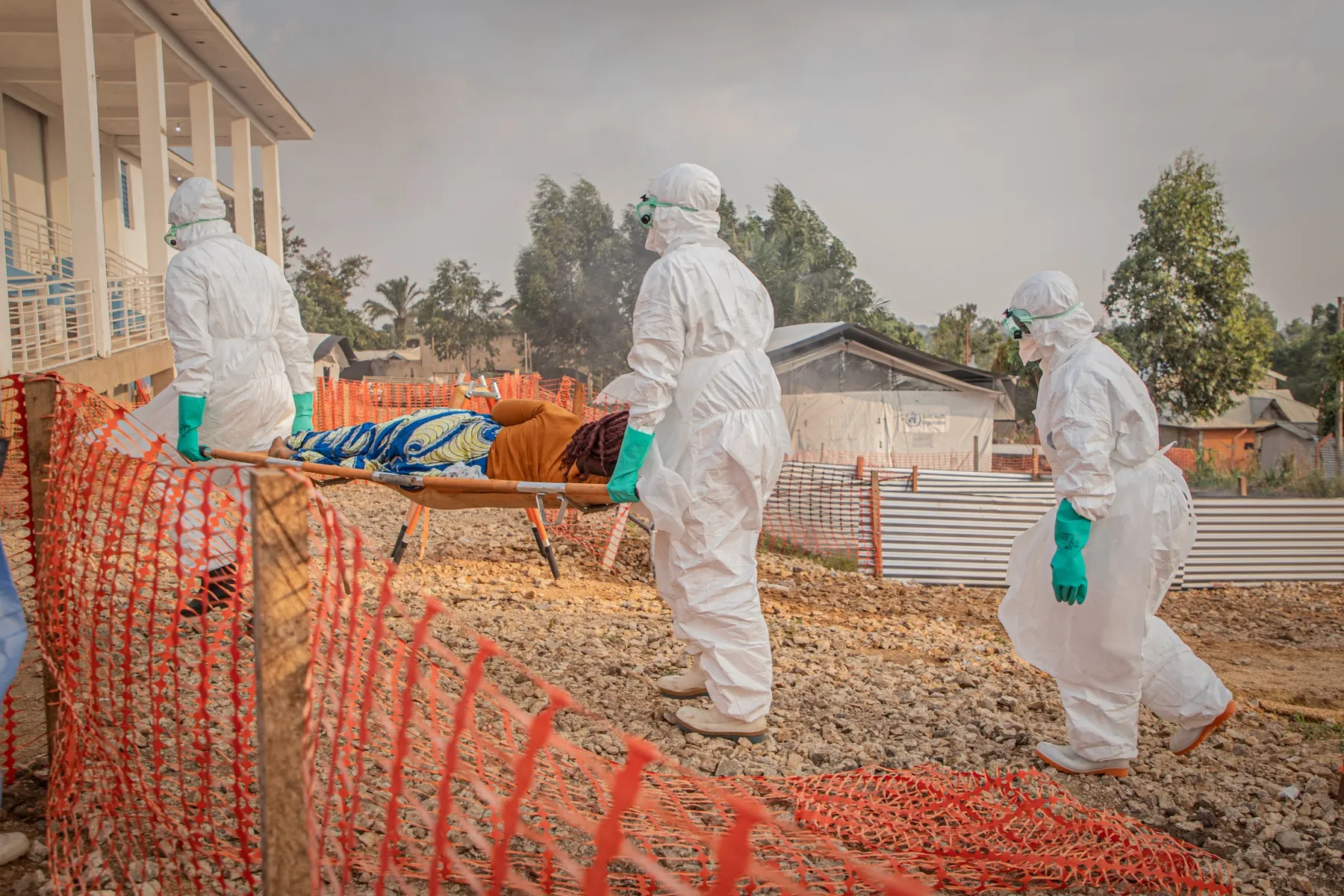
The Coalition for Epidemic Preparedness Innovations (CEPI) has committed up to $8.5 million to accelerate the manufacturing of a vaccine candidate against the Bundibugyo strain of Ebola, as the outbreak in the Democratic Republic of the Congo (DRC) has become the second-deadliest Ebola outbreak ever recorded.
CEPI disclosed the funding on 30 July 2026 in a press statement announcing a collaboration with Hilleman Laboratories, a Singapore-based joint venture of biopharmaceutical company MSD and charitable foundation Wellcome, to advance the development and manufacturing of Bundibugyo Ebola vaccine candidate doses for clinical trials using the recombinant vesicular stomatitis virus (rVSV) platform.
According to the latest update from the Africa Centres for Disease Control and Prevention (Africa CDC), the death toll from the Bundibugyo strain has risen to 1,521, indicating that the virus has killed more than five times as many people as previous Bundibugyo outbreaks did over the same period, underscoring the urgency of developing an effective vaccine.
What they are saying
CEPI said the new funding will enable Hilleman Laboratories to produce clinical trial doses of the investigational vaccine as efforts intensify to respond to one of the largest Ebola outbreaks on record, which is predominantly affecting the DRC.
Also Read
- “With up to US$8.5 million in CEPI funding, Hilleman Laboratories will advance development and manufacture clinical supply of the investigational vaccine at the organisation’s vaccine production facility as scientists ramp up efforts to respond to one of the largest Ebola outbreaks on record, which is predominantly affecting the Democratic Republic of the Congo,” CEPI said.
Dr Richard Hatchett, Chief Executive Officer of CEPI, said the rapid rise in Bundibugyo cases has made the epidemic increasingly dangerous, with no approved vaccine currently available against the virus.
- “No vaccine is currently approved against the virus, so we are urgently advancing vaccine candidates into testing. Built on the rVSV platform used in the licensed Zaire ebolavirus vaccine and supported by established manufacturing expertise from Hilleman and MSD, this vaccine candidate could become an important tool for Bundibugyo outbreak control and response,” Hatchett said.
Dr Raman Rao, Chief Executive Officer of Hilleman Laboratories, said the collaboration is focused on accelerating vaccine development and manufacturing for clinical trials, adding that the new $8.5 million commitment builds on the up to $30 million in CEPI funding announced earlier this year to improve manufacturing for MSD’s Zaire Ebola vaccine.
Get up to speed
The Bundibugyo strain of Ebola remains one of the few Ebola virus species without an approved vaccine or specific treatment, making the current outbreak particularly concerning for global health authorities.
The outbreak, which was officially declared in mid-May, was designated a Public Health Emergency of International Concern (PHEIC) by the World Health Organization (WHO) on May 17.
- At the time, the WHO said in a statement that “unlike Zaire ebolavirus strains, there are currently no approved therapeutics or vaccines specifically for the Bundibugyo virus.”
- However, Health officials have begun testing experimental therapies in the DRC as part of a clinical trial sponsored by the World Health Organization (WHO) and conducted in collaboration with national authorities and international research partners.
The study is evaluating two experimental treatments alongside enhanced supportive care for patients in Ituri Province, the epicentre of the outbreak, as researchers seek more effective options against the rare but deadly virus.
The urgency of the vaccine effort has increased sharply because the current outbreak has spread much faster than previous Bundibugyo outbreaks. The last major Ebola outbreak in the DRC, which began in 2018 and was declared over in 2020, took more than 10 months to reach a comparable death toll.
What you should know
Although the virus continues to spread in the DRC, with 3,442 confirmed cases, the regional situation has shown mixed developments. As of Wednesday, Congolese authorities had 797 people in hospital or isolation, while treatment centres remain under severe pressure with more than 80% of available beds occupied.
- Uganda, however, has declared itself Ebola-free after successfully containing a recent imported case linked to the DRC outbreak.
- The declaration comes after Uganda closed parts of its border with the DRC in late May following the death of a Congolese patient who had crossed into Uganda seeking medical treatment and later died in intensive care in Kampala.
- International support for the outbreak response has also expanded. In May 2026, the World Health Organization unveiled a $518 million six-month emergency response plan aimed at containing Ebola outbreaks in both the DRC and Uganda, as African and global health agencies step up efforts to prevent further regional spread.
If early-stage clinical trials for the Bundibugyo vaccine candidate are successful, CEPI and Hilleman Laboratories said they plan to transfer the technology to a large-scale vaccine manufacturer to rapidly produce additional doses for later-stage trials and potential deployment in outbreak-affected countries.





0 comment(s)
Leave a Comment