
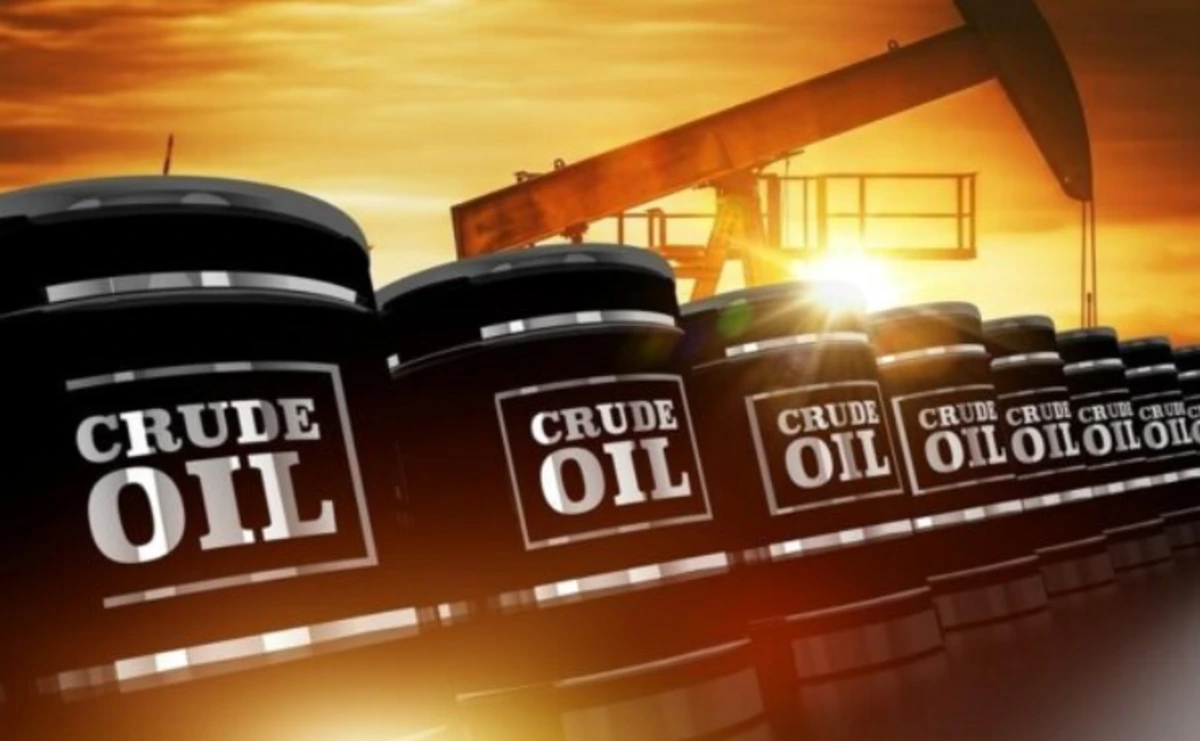
Brent crude has fallen by more than $16 per barrel in eight trading sessions, retreating sharply from the $100 level reached during the height of the latest Middle East conflict as signs of renewed peace talks between the United States and Iran eased fears of a prolonged disruption to global oil supplies through the Strait of Hormuz.
Checks by Nairametrics show that West Texas Intermediate (WTI) crude opened lower on Monday, slumping 5.24% to $80.23 per barrel, while Brent crude fell to $83.86 per barrel, extending a selloff that has wiped out most of the conflict-driven rally recorded in late July.
The sharp reversal comes after Brent traded at $100.30 per barrel on July 23, while WTI reached $91.70 per barrel, their highest levels since May after the United States and Iran resumed military strikes that heightened concerns over supply disruptions across the Middle East.
What Trump is saying
The latest drop in oil prices followed comments by U.S. President Donald Trump, who said new talks with Iran would begin on Monday afternoon after he called off a planned military strike that he described as potentially the largest U.S. attack since World War II.
Also Read
Speaking to reporters aboard Air Force One on Sunday, Trump said he was prioritising negotiations over military escalation.
- “We’re just going to see whether or not we can make a deal,” Trump said.
He added that he was not seeking further bloodshed and suggested that diplomacy offered a better path than military action.
According to Trump, Saudi Crown Prince Mohammed bin Salman urged him over the weekend to continue negotiations rather than proceed with the planned strikes.
- Trump said regional allies feared that a broader conflict could destabilise the Middle East, trigger humanitarian fallout, and create wider economic disruptions.
- The remarks reinforced market expectations that the U.S. and Iran may pursue a diplomatic settlement, reducing the likelihood of a prolonged closure or disruption of shipping through the Strait of Hormuz, the critical waterway through which roughly a fifth of global oil trade passes.
Iranian Foreign Minister Abbas Araghchi said on Sunday that negotiations involving Iran and Oman were in the final stages. While officials indicated that discussions were focused on maritime arrangements, they did not confirm whether the talks would directly determine the reopening of the strait.
Get up to speed
The latest selloff follows an earlier decline on July 27, when Brent crude dropped by as much as 5% after the United States and Iran paused attacks the previous weekend, raising hopes that diplomacy could help de-escalate the conflict and restore normal shipping operations through the Strait of Hormuz.
- Brent futures fell $4.89, or 5.05%, to $91.89 per barrel, while WTI declined $4.67, or 5.23%, to $84.64 per barrel, with Brent briefly falling below the key $90 support level during the session.
- The correction came only days after oil markets had surged toward $100 per barrel, when renewed fighting between Washington and Tehran triggered fears that exports from the Gulf could face significant disruptions.
As Nairametrics previously reported, the rally reflected concerns that any sustained closure or restriction of traffic through the Strait of Hormuz could remove substantial volumes of crude from global markets and tighten supply conditions.
What you should know
Despite the recent correction, global oil prices remain well above Nigeria’s 2026 budget benchmark of $64.85 per barrel, providing a potential boost to government oil revenues if prices remain elevated.
However, higher oil prices have also translated into increased costs for Nigerian consumers.
Since the escalation of the conflict, petrol prices have risen sharply across the country.
- Before the outbreak of hostilities, a litre of petrol sold for roughly N770–N800 in many filling stations. Prices have since climbed to as much as N1,300 per litre in some locations, pushing up transportation costs and contributing to broader inflationary pressures.
- The outlook for oil prices will also be influenced by supply decisions from major producers.
The Organization of the Petroleum Exporting Countries and its allies (OPEC+) has approved a 188,000 barrels per day increase in oil production quotas for September, marking the fourth consecutive monthly output increase as the producer group continues unwinding supply cuts introduced in 2023.
The additional supply could add further downward pressure on crude prices if geopolitical tensions continue to ease and diplomatic efforts between the United States and Iran gain traction.






0 comment(s)
Leave a Comment