
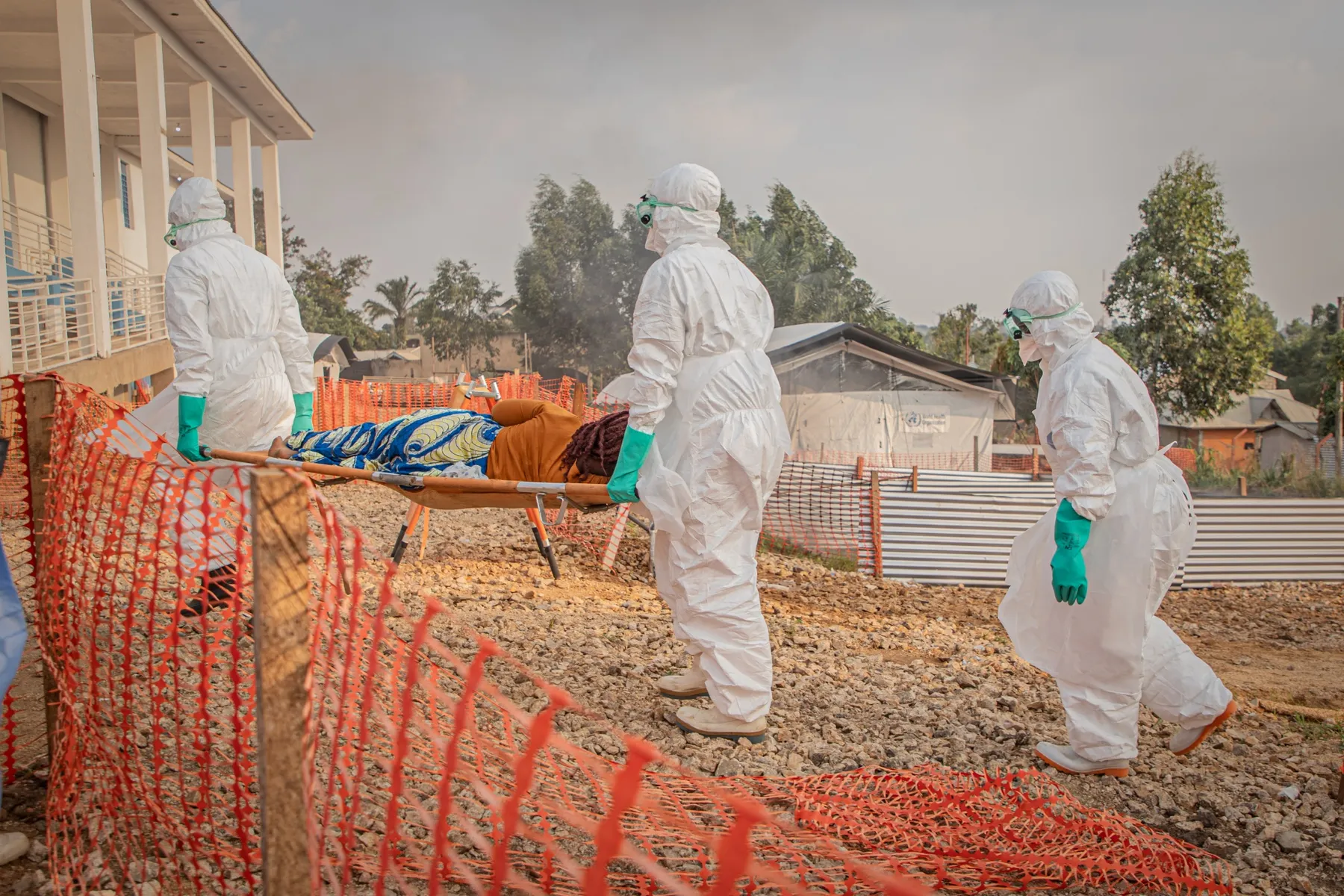
The death toll from the Ebola outbreak in the Democratic Republic of Congo (DRC) has surpassed 1,000, intensifying efforts by African and global health authorities to contain what has become the fastest-growing Ebola epidemic on record.
The latest figures were released by the Democratic Republic of Congo’s National Institute of Public Health on Thursday, showing that confirmed cases had risen to 2,536, with 1,033 deaths, as the outbreak continues to spread beyond its original epicentre in Ituri Province.
The development comes just a week after Nairametrics reported that the death toll from the outbreak had doubled within one week to 754 confirmed deaths, alongside 2,011 confirmed cases, highlighting the accelerating pace of infections across eastern Congo.
What they are saying
Africa’s top public health official has warned that the outbreak is rapidly escalating and could rank among the deadliest Ebola epidemics ever recorded if transmission is not urgently brought under control.
Also Read
- “If we do not stop this outbreak today, it could become one of the worst Ebola outbreaks the world has ever documented,” Jean Kaseya, Director General of the Africa Centres for Disease Control and Prevention (Africa CDC), said during a recent health summit in Accra, Ghana.
Health authorities said the outbreak continues to expose significant gaps in case detection, with 17 of the 34 newly confirmed deaths reported on Wednesday occurring in communities rather than treatment centres, indicating that many infected patients are still dying before they can be identified, isolated and treated.
The World Health Organization (WHO) also acknowledged that health workers remain behind the pace of transmission despite expanding treatment centres, referral systems and safe burial teams.
- “This outbreak remains ahead of us, and we are still in the phase of catching up,” Thierno Baldé, the WHO’s incident manager for the outbreak, told reporters from Bunia, the capital of Ituri Province.
More insights
Despite the sharp increase in reported infections and deaths, global health authorities believe the actual scale of the outbreak is significantly larger than official figures suggest.
According to Chikwe Ihekweazu, Executive Director of the WHO Health Emergencies Programme, the true number of Ebola infections could be between two and four times higher than reported because around 80% of newly identified cases are being detected outside the contact lists currently monitored by health officials.

This suggests that substantial community transmission is occurring beyond the reach of surveillance teams.
The WHO also warned that the outbreak is becoming increasingly deadly, with the case fatality rate rising to 37% from 32% a week earlier. The agency attributed the increase not to a more virulent strain of the virus, but to persistent delays in detecting infections, isolating patients and providing timely medical treatment.
What you should know
While researchers are racing to develop effective treatments for the Bundibugyo strain of Ebola, there is currently no approved vaccine specifically designed to protect against this variant, leaving health authorities to rely largely on surveillance, isolation, supportive care and public health interventions to contain the outbreak.
Beyond the immediate public health emergency, international organisations have warned that the outbreak could inflict severe economic damage if it expands beyond the Democratic Republic of Congo.
The United Nations estimates that if transmission remains largely confined to the DRC and neighbouring Uganda, the Congolese economy alone could lose about $1 billion in gross domestic product (GDP). However, the agency warns that the impact could rise substantially if the virus spreads to additional countries.
Under a worst-case scenario involving transmission into neighbouring countries such as Rwanda and Angola, combined with higher global fuel prices driven by ongoing geopolitical tensions in the Middle East, Africa could lose as much as $3.6 billion in economic output, while more than 328,000 jobs could be lost across the continent.






0 comment(s)
Leave a Comment