
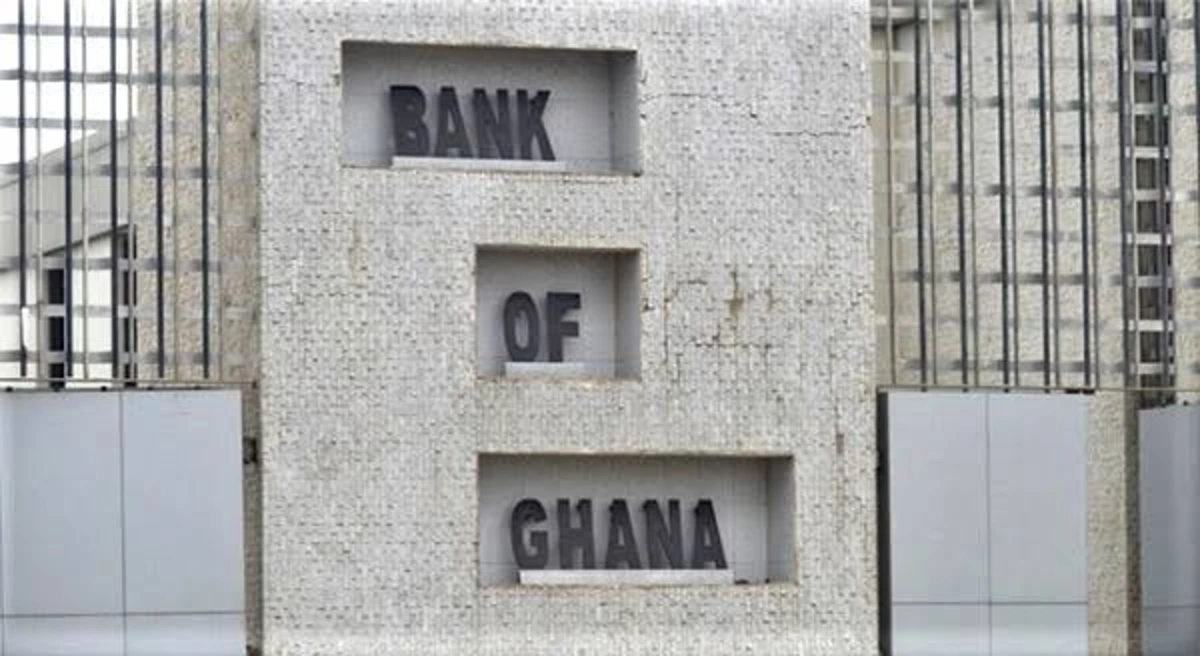
The Bank of Ghana has maintained its benchmark interest rate at 14%, opting to keep monetary policy unchanged as policymakers assess mounting inflation risks stemming from renewed geopolitical tensions in the Middle East.
The decision was announced by Governor Johnson Asiama after the Monetary Policy Committee (MPC) meeting in Accra on Wednesday, where members unanimously agreed to retain the policy rate despite expectations that inflation will edge higher in the coming months.
The move comes just two days after the Central Bank of Nigeria (CBN) retained its Monetary Policy Rate (MPR) at 26.5%, with Nigeria’s Monetary Policy Committee also choosing to maintain a tight monetary policy stance while monitoring domestic inflationary pressures and global economic uncertainties.
What they are saying
Asiama said the committee considered the current policy stance appropriate given emerging inflation risks and global uncertainties.
Also Read
- “The stance remains appropriate to guide inflation into the medium-term target band, while allowing time to assess the evolving geopolitical developments and their potential impact on the domestic economy,” Asiama said.
According to the governor, Ghana’s inflation is expected to rise gradually into the central bank’s 6% to 10% target range, with possible increases in utility tariffs, escalating tensions in the Middle East and higher oil prices posing significant upside risks.
- Annual inflation accelerated to 5.3% in June, up from 3.7% in May, marking the fastest pace of price growth this year.
- The renewed conflict involving Iran has disrupted global energy markets, pushing up crude oil and fertiliser prices after fresh blockades around the Strait of Hormuz, one of the world’s most strategic shipping routes. Those developments have increased imported inflation risks for economies including Ghana.
- Asiama also disclosed that Ghana’s international reserves declined to $12.9 billion at the end of June from $13.8 billion six months earlier, largely due to elevated energy-related payments linked to the conflict. The reserves, however, remain sufficient to cover about five months of imports.
Despite the external headwinds, the central bank expects Ghana’s economy to expand by around 6% this year, although it warned that prolonged instability in the Middle East could weigh on that outlook.
More insights
The latest decision marks the second consecutive meeting at which the Bank of Ghana has left its benchmark interest rate unchanged after an aggressive easing cycle.
The central bank had previously embarked on a series of rate cuts as inflation eased and macroeconomic conditions improved.

- In November 2025, it reduced the policy rate by 350 basis points to 18%, marking its third consecutive rate cut as inflation continued to decline and economic activity strengthened.
The easing cycle continued in March 2026, when policymakers lowered the benchmark rate again to 14%, bringing it to half the level it stood at when the central bank began cutting rates in July 2025.
What you should know
Ghana’s decision reflects a broader trend among central banks opting to keep borrowing costs elevated while evaluating the economic fallout from renewed tensions in the Middle East, particularly after hostilities involving Iran resumed despite an earlier truce.
Higher oil and fertiliser prices triggered by the conflict have raised concerns that inflationary pressures could return across both advanced and emerging economies, prompting policymakers to adopt a cautious approach before considering further monetary easing.
- Nigeria has taken a similar stance. Earlier this week, the Central Bank of Nigeria retained the Monetary Policy Rate at 26.5%, maintaining its tight monetary policy framework as it seeks to consolidate recent gains in price stability.
The CBN noted that Nigeria’s headline inflation eased marginally to 15.91% in June 2026 from 15.93% in May, suggesting a slight moderation in overall price pressures. However, food inflation accelerated on a monthly basis to 3.75% in June, up from 2.98% in May, indicating renewed pressure on food prices despite the broader slowdown in inflation.






0 comment(s)
Leave a Comment