
The Federal Government has sealed an illegal gold mining site in Osun State and says it is intensifying efforts to identify and prosecute the financiers behind illicit mining operations.
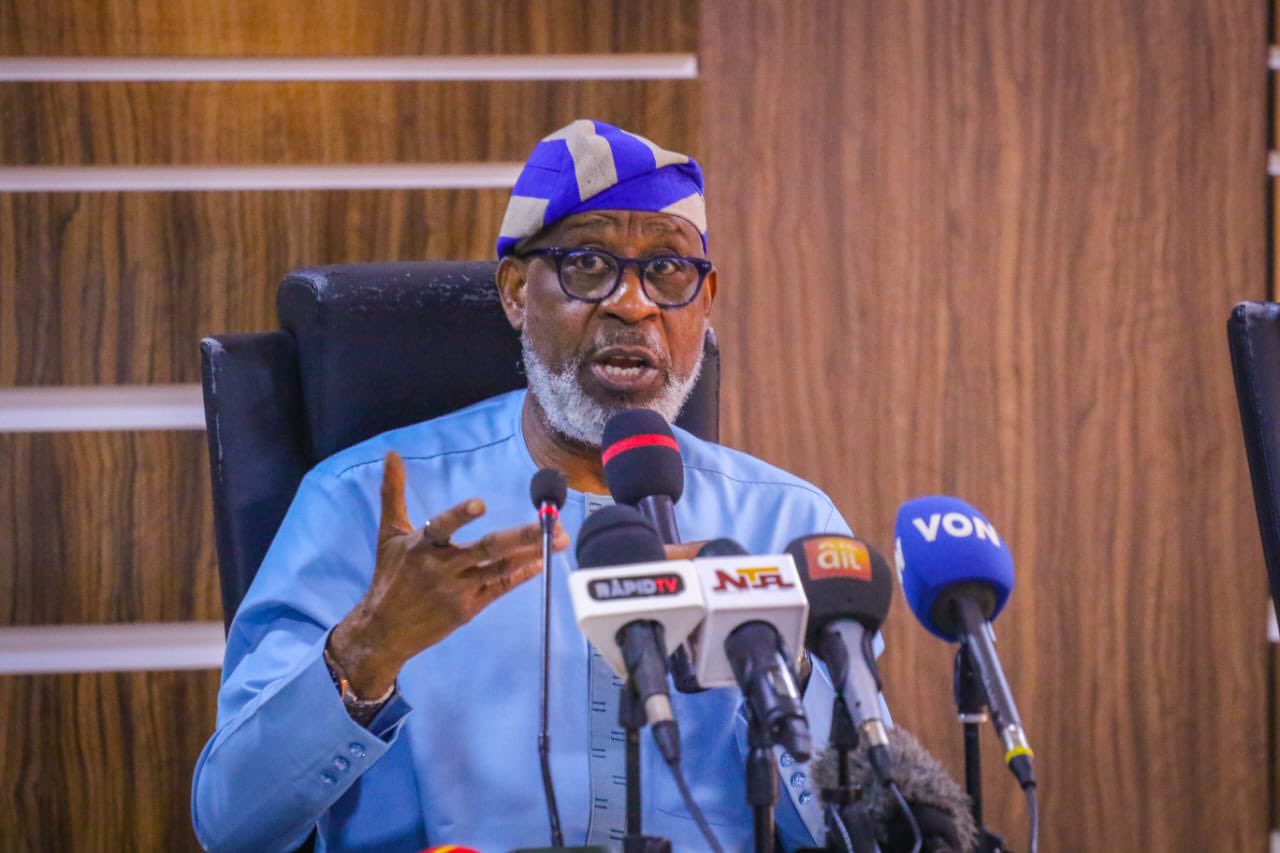
The Minister of Solid Minerals Development, Dele Alake, disclosed this via his official X account on Monday.
According to the minister, a joint task force working with security agencies shut down the illegal gold mining operation at Ileki Ijesa in Osun State, arrested two suspects, confiscated mining equipment, and sealed the site as part of the government’s ongoing crackdown on illegal mining.
What they are saying
Alake said the two suspects arrested during the operation are cooperating with investigators to help identify the financiers and sponsors behind the illegal mining activities. He stressed that the government’s focus extends beyond those caught at illegal mining sites, adding that authorities are determined to dismantle the criminal networks financing such operations.
Also Read
- “Our joint task force, working with security agencies, shut down an illegal gold mining operation at Ileki Ijesa in Osun State. We arrested two suspects on site, seized their equipment and sealed the area.
- “The suspects are currently cooperating with investigators to help us track down the financiers backing these operations. I want to be clear that our focus isn’t just on the casual workers on the ground. We are actively going after the sponsors and quiet backers of these illicit activities.”
Alake said the Mining Marshals have arrested more than 300 illegal miners and prosecuted over 150, including foreign nationals.
He added that illegal mining continues to destroy farmland, pollute water sources, and fuel insecurity, emphasizing the need for stronger enforcement. The minister urged residents of mining communities to report illegal mining activities, assuring that the government’s crackdown will continue until the sector is fully sanitised.
More insights
Illegal mining remains a major challenge in Nigeria’s solid minerals sector, undermining government revenue, damaging the environment, and fuelling insecurity. In response, authorities have intensified enforcement against unlicensed operators and their financiers.
- In May 2025, the Federal High Court in Jos ordered the deportation of four convicted Chinese nationals—Liang Quin Yong, Wang Huajie, Zhong Jiajing, and Long Kechong—for illegal mining in Plateau State.
- Justice Dorcas V. Agishi also ordered the forfeiture of N134 million recovered from the convicts to the Federal Government and barred them from re-entering Nigeria.
- In July 2025,the EFCC arrested seven Chinese nationals and four Nigerians for alleged illegal mining at Emem Asuk community in Akwa Ibom State.
- According to the National Bureau of Statistics (NBS), the mining and quarrying sector generated N686.96 billion in VAT and N723.33 billion in Company Income Tax in 2025, up from N556.19 billion and N520.34 billion, respectively, in 2024.
The figures highlight the sector’s growing contribution to public finances and the revenue potential of bringing more mining activities into the formal economy.
What you should know
The Federal Government has, in recent months, intensified efforts to formalise Nigeria’s mining industry by promoting local mineral processing, encouraging investment, and reducing reliance on the export of raw minerals.
- Zamfara State Governor Dauda Lawal recently commissioned a $200 million lithium mining and processing plant in Boko, Zurmi Local Government Area. The project is a joint investment involving Zam Mining Company Limited, Bima Mines Limited, Jinlide Mining Company Limited, and other partners.
- The commissioning followed the inauguration of a 6,000-metric-tonne-per-day lithium processing facility in Nasarawa State by the Federal Government. The facility, owned by Diamond New Energy Company Ltd., has an annual processing capacity of three million metric tonnes.
- The government’s push for domestic mineral processing also follows the discovery of a new polymetallic mineral province in Kaduna State. Announcing the discovery in June, Alake said the province contains platinum group metals, gold, nickel, copper, lithium, and rare earth elements.
According to the United Nations Conference on Trade and Development (UNCTAD), global lithium demand is projected to increase by 353% between 2024 and 2040, driven by the rapid adoption of electric vehicles, battery storage systems, and renewable energy technologies.
Against this backdrop, the Federal Government’s twin strategy of intensifying enforcement against illegal mining while expanding licensed mining and domestic mineral processing is aimed at increasing value addition, boosting public revenue, and positioning Nigeria to capture a larger share of the fast-growing global critical minerals market.





0 comment(s)
Leave a Comment