
Nigeria’s financial system is expected to receive an estimated N3.12 trillion in liquidity this week, driven largely by N2.97 trillion expected maturities in Open Market Operations (OMO) after last week’s sizeable liquidity injection.
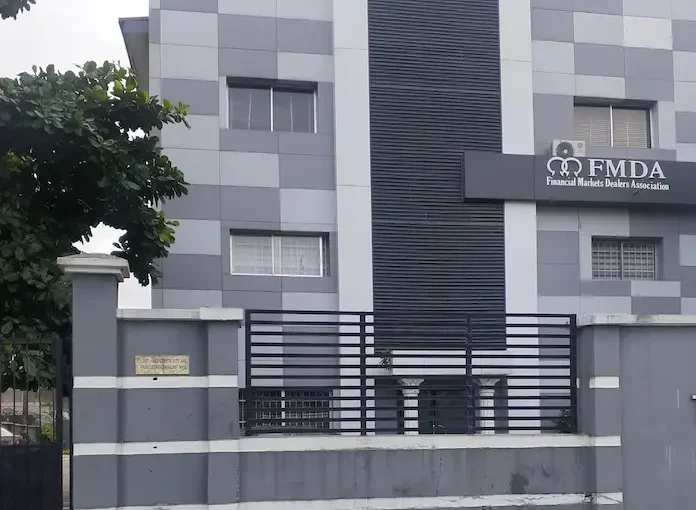
This is according to the weekly market review published by the Financial Market Dealers Association (FMDA) on Monday, July 13.
The projected inflows represent an increase of approximately N620 billion, or 24.8%, from the N2.50 trillion recorded in the previous week, according to market analysis obtained by Nairametrics.
The expected liquidity surge comes as activity in the secondary Treasury bills market strengthened sharply last week, with turnover rising 50.32% to N1.09 trillion from N726.87 billion, reflecting heightened investor demand following the Central Bank of Nigeria’s (CBN) Treasury bill auction.
Also Read
The increase in money market liquidity is expected to keep short-term funding conditions comfortable, although analysts say the CBN could deploy fresh OMO auctions to absorb part of the excess liquidity and maintain stability in short-term interest rates.
What the data is saying:
A comparison of expected liquidity inflows for this week with the previous week shows a significant improvement, driven almost entirely by maturing OMO instruments.
- Total expected inflows this week are estimated at N3.12 trillion, up from N2.50 trillion last week — an increase of N620 billion (24.8%).
- OMO maturities remain the dominant liquidity source, rising to N2.97 trillion from N2.21 trillion in the previous week.
- FGN bond maturities are expected to inject N10.56 billion, compared with no recorded maturities last week.
- Corporate bond coupon payments increased sharply to N47.27 billion, from N1.75 billion previously.
- Commercial paper maturities surged to N92.50 billion, compared with just N64.55 million last week.
No inflows are expected from FGN bond coupons, corporate bond maturities or FAAC allocations, similar to the previous week. In the secondary market, Treasury bill turnover climbed 50.32% to N1.09 trillion from N726.87 billion, while FGN bond trading declined 36.91% to N853.26 billion from N1.35 trillion.
More insights:
The projected liquidity injection follows a week in which system liquidity improved by 50.81% to N4.33 trillion, from N2.87 trillion, after repayments from maturing securities exceeded the CBN’s liquidity sterilisation activities.
During the week, the apex bank allotted approximately N1.06 trillion at its Treasury bill auction.
Repayments from maturing securities totalled about N2.50 trillion, resulting in a net liquidity injection of roughly N1.44 trillion into the financial system.
Analysts expect the apex bank to rely on OMO auctions if it seeks to moderate the impact of the anticipated liquidity surge, given the absence of any scheduled Treasury bill and FGN bond auctions this week.
What you should know:
Nigeria’s money market liquidity has remained heavily influenced by the timing of OMO maturities and CBN liquidity management operations, with large repayments often injecting significant cash into the banking system before being partially sterilised through fresh auctions.
- The Debt Management Office (DMO) allotted N1.06 trillion at last week’s Treasury bill auction—about 52% above its initial offer of N700 billion.
- Higher system liquidity generally eases interbank funding conditions and supports demand across the fixed-income market.
- However, excess liquidity could prompt the CBN to conduct additional OMO auctions to prevent downward pressure on short-term interest rates.
Analysts expect liquidity conditions to remain favourable in the near term, with the scale of the projected N3.12 trillion inflows likely to shape money market rates, Treasury bill demand, and the CBN’s next liquidity management decisions.






0 comment(s)
Leave a Comment