

 Follow Us on Google

•Gov Alia battling to restore hope–Ogwuche
FromScholastica Hir,Makurdi
From the shade of a mango tree at the Primary Healthcare Centre (PHC) in Yaikyo community, Makurdi Local Government Area (LGA) of Benue State, a heavily pregnant woman slowly paced back and forth. She paused every few minutes, pressed one hand against her waist and the other, under her belly, and waited for another wave of labour pain to subside before continuing her walk.

For Mrs Wuese Peter, as she later identified herself, it was a moment filled with anxiety and hope. It was her first pregnancy and the young woman was experiencing labour for the first time. She had arrived at the facility a day earlier and watched two other women successfully deliver their babies. Now it was her turn.
She looked very strong and courageous for a first timer. “This is my first pregnancy,” she said softly. “I have been coming to this hospital and I attend antenatal care here. I received all my drugs here.”
She explained to this reporter that health workers had encouraged her to remain active as labour progressed. “I was exercising because the labour pain was coming and going. I came to the hospital yesterday. Two women were with me and have all delivered. I don’t want today to pass me,” she added forcing a smile.
For Mrs Peter, who hails from Ayihe village of Yaikyo, in Makurdi, the health centre is her only option. But beyond the courage she displayed while awaiting childbirth is the troubling picture of the state of primary healthcare services in her and many other communities across Benue State.
At the time of visit at the healthcare centre, another pregnant mother, Mrs Doofan Akaaza, who has been pregnant since February, came to make inquiries about antenatal clinics.
Unlike Mrs Peter, she had not registered for antenatal care since she became pregnant. The mother of two said she delivered her previous children in other hospitals, though she still brings them to the centre whenever they fall ill.
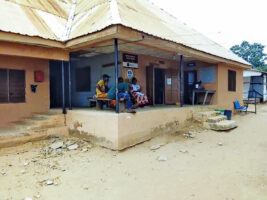
She said: “They render services well, patients usually get their medications and people still use the facility.”
However, she quickly expressed concerns over what she described as one of the centre’s biggest problems, naming inadequate infrastructural facilities and the dilapidation in the sector.
For Wuese, Doofan and thousands of residents in Makurdi, Guma and other LGAs in the state, the nearest primary healthcare centre is expected to be the first point of medical care.
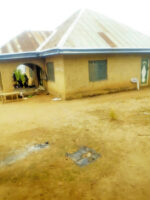
But a visit to selected primary healthcare centres across the two local governments, reveals that beyond the signposts announcing government-owned facilities are huge infrastructural decay of structures with leaking roofs, caved ceilings, inadequate staffing, low hospital facilities, poor supply of medicines which has diminished the quality of healthcare available to rural communities.
Hospital with two beds
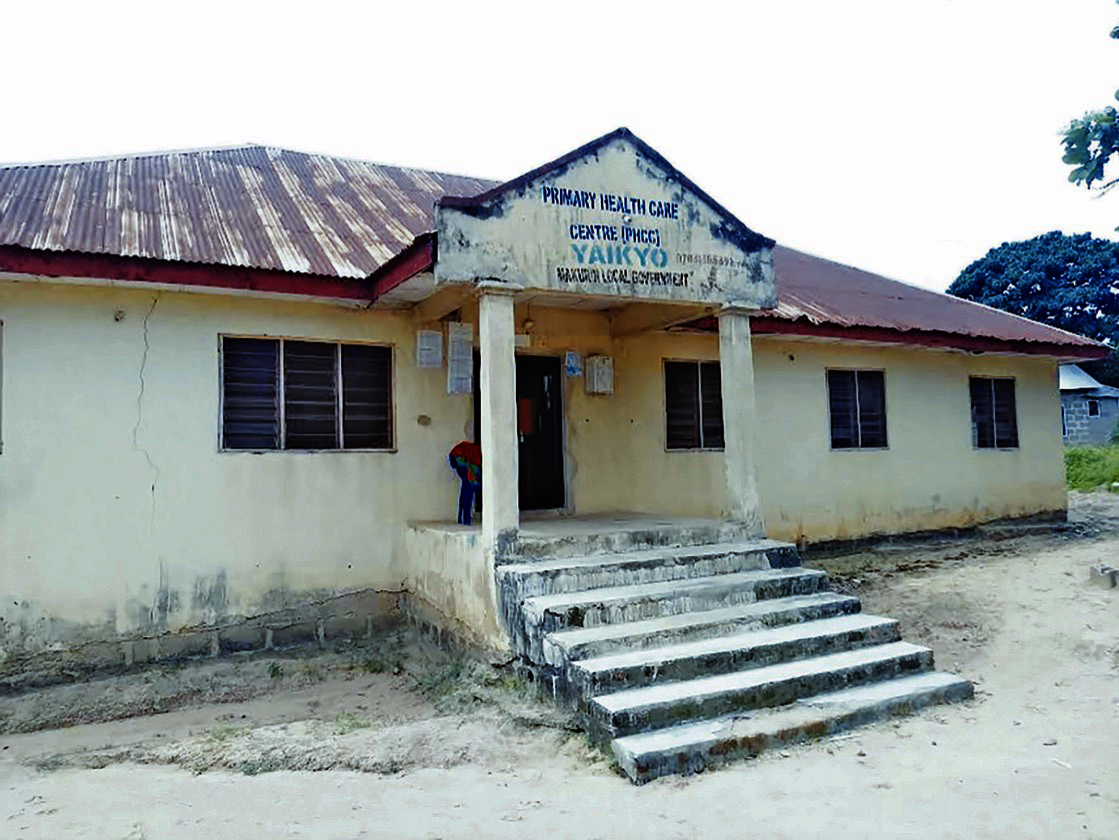
At Yaikyo PHC, information gathered during the visit showed that the entire facility has only two hospital beds; one in the maternity ward and another in the female ward. There is no bed in the male ward, which has now been converted into a storage room for Tuberculosis (TB) drugs. A cursory look at the hospital structure also reveals cracks that might expand and eventually collapse the building if nothing is done to control erosion eating deep into the foundation of one part of it.
“This is not right. Imagine having more than one patient that needs admission or more women in labour at the same time. In some hospitals, you see four or five women in the labour room giving birth simultaneously,” she lamented.
Akaaza believes the poor state of the facility is pushing many residents to seek healthcare elsewhere. According to her, “People around here are complaining. They don’t like patronising the hospital because of the environment and lack of facilities. Many people prefer going all the way to the Federal Medical Centre. Government should renovate this place, provide facilities and adequate staff so that people can access healthcare here,” she said.
Her concerns were echoed by health workers struggling daily to keep the facility running. A health worker who pleaded anonymity at the facility, said the health centre is operating far below acceptable standards.
“It is lacking many things. You can see the building and ceiling. The roof leaks during the rainy season. We do not have electricity, no water supply, the clinic is not fenced, we do not have a vaccine storage fridge and we don’t have enough staff,” the worker said.
“The hospital is in dire need of staff. The whole facility has only four government staff. One is a cleaner while three are Community Health Extension Workers (CHEWs). A lot of people have retired and they have not been replaced.
“To bridge the gap, volunteers assist in service delivery, earning only about N20,000 monthly. How can somebody survive on N20,000 and still work hard? If they are confirmed as permanent staff, they will be motivated to work harder,” the worker added.
It was discovered that the facility also has not been receiving government supply of drugs. “We buy drugs ourselves. We use what we generate from the facility to buy drugs and then sell to patients so that we can continue to restock.”
Electricity remains a luxury and another huge challenge. “When this building was constructed, there was no electricity in the community, so it was never connected. Today there is electricity in the community but the hospital has still not been connected. We do not have a generator either.”
Although some categories of patients including pregnant women, children under five years, widows and Persons With Disabilities (PWDs) receive free healthcare services, many residents still complain whenever they are required to pay for treatment or medication.
No hospital building, deliveries taken on the table
At the PHC Adorough, Makurdi LGA, the scenario is worse compared to others. Our correspondent gathered that there is no hospital building at all, rather, a community health extension worker (CHEW), on the employ of the state government, is operating from a two-room space donated by the leader of the community, Zaki Dzuaga Adorough, in his private residence.
At the time of visit at the Chief’s residence located at Mbaagi village, Adorough community in Makurdi LGA, there was no sign of patients or workers. The only staff who works there was said to be currently on transfer to another PHC in Makurdi town.
The community leader was also not at home at the time of visit. But it was gathered from community members that the staff, whom they described as dedicated, comes to attend to pregnant women and other patients on appointments.
The health worker, Hembafan Kura, who spoke to our correspondent on phone said: “We lack many things. Our major problem is building accommodation. We don’t have a structure of our own. We are using the Chief’s house. Zaki Dzuaga Adorough gave us two rooms in his house.
“Apart from the hospital building, we don’t have enough chairs. We don’t have a delivery couch. I take deliveries on a table. We have only two beds; one has a mattress and the other does not have a mattress. We don’t have children and adult weighing scales, no a drip stands
“We don’t have a good cupboard for storage of drugs. The only available cupboard is not good. There is electricity but no standby generator.”
Hembafan appealed to the state government to try and put up a structure on the hospital’s permanent site.
She said: “The community has already provided the land for a permanent site. They should build the health facility there for us and provide the necessary equipment we are lacking.”
She also called on the state government to employ and deploy adequate staff required to run a PHC, saying she was the only staff working in the place.
“Yes. I’m the only one. I do everything. I clean the hospital, I attend to patients, I work as the hospital attendant, the receptionist, I’m everything here. No doctors visits, no nurse.”
She lamented that the people in the community are not getting the desired attention and urged state government authorities through the Ministry of Health, to do the needful and urgently too to enable the people access adequate healthcare services at their doorsteps.
We use torchlight to take deliveries
The situation is not much different in Guma LGA. At the Primary Healthcare Centre in Hiinyan, a health worker who didn’t want to be named, further painted an equally disturbing picture.
She narrated that years of insecurity have taken a toll on most of the PHCs in the LG thereby stifling healthcare delivery in the area.
According to the health worker, “Our hospital building is good, but there is no equipment. We do not have beds and many of the necessary equipment to work. Because of the crisis, villagers ran away and it is only now that people are beginning to return.
“There are no drugs in the facility. Before, we used to have enough drugs, but now there is nothing to talk about.”
The absence of electricity has further compounded the problem. “There is no light there. No public power supply. Some hospitals are using solar power, but we do not have that in our own facility.”
For women arriving in labour at night, the situation can be frightening. “When we have deliveries or emergencies at night, we use torchlight or native lamps,” the worker continued. “Most women now go elsewhere for delivery. When they go into labour, their relatives find a motorcycle and take them far to Daudu. People no longer have confidence in the facility, so they stopped coming.”
The source said health workers themselves no longer sleep at the hospital because of security concerns and the deteriorating condition of the building.
“Some parts of the ceiling have fallen. Before, we used to sleep in the hospital, but now we don’t.”
Ironically, accessibility is not the problem. Located along the busy Makurdi-Lafia Road, the facility is close to the community and easy to reach. Yet the lack of equipment, drugs, electricity and personnel continues to drive patients elsewhere.
Shortage of health workers worse in Guma PHCs
In Daudu PHC called Family Support Clinic Daudu, also in Guma LGA, a retired health worker, now volunteering with one of the international partners, Mrs Agnes Guma, noted that while the facility remains functional and benefits from a solar power system installed by the Nigerian Red Cross, inadequate staffing remains a serious challenge across the local government.
According to her, many health workers have retired without replacement, forcing volunteers to support service delivery. Community members pay for some services, including registration cards, while IDPs are provided free access cards. She also noted that government drug supplies were previously available at the facility.
“The PHC environment is conducive. The facility is functioning, and the environment is suitable for healthcare services but we do not have enough staff. That is why volunteers are assisting. Most of the staff have retired, and new staff have not been employed. In our local government, Guma, there is a serious shortage of health workers. Almost all the health centres are understaffed, and volunteers help to fill the gap.”
“We have electricity from public supply but the lights are never there. We do not have a generator. However we have a solar system installed by the Nigerian Red Cross,” she said.
The assessment of the few facilities reveals a mixed picture of primary healthcare in Benue communities. While basic services such as antenatal care, immunization, treatment of common illnesses and drug dispensing are still being rendered, many centres are battling inadequate manpower, poor infrastructure, lack of essential equipment, unreliable electricity, insufficient beds, staff and inconsistent drug supplies.
Responding to the situation, the Commissioner for Health and Human Services, in the State, Dr Paul Ogwuche acknowledged the inadequacies of the PHC but disclosed that the state government is making efforts to revitalise the whole system.
“Like elsewhere, primary healthcare remains the foundation of our healthcare delivery system, and the administration of His Excellency, Rev. Fr. Hyacinth Alia, has made its revitalisation a top priority because quality healthcare begins at the community level,” Ogwuche said.
He noted that “for many years, a significant number of Primary Healthcare Centres (PHCs) across Benue State suffered from inadequate maintenance, aging infrastructure, and insufficient investment. While some facilities remained functional, many required extensive rehabilitation.
“Recognising this challenge, Ogwuche said the present administration has embarked on an aggressive programme to revitalise PHCs across the state through collaborations with the Federal Government, United Nations Children’s Fund (UNICEF), the Global Fund, the Basic Healthcare Provision Fund (BHCPF), and other development partners.
According to him, several facilities are currently undergoing rehabilitation, while many others have already been upgraded with improved infrastructure, water supply, sanitation facilities, equipment, and better working environments.
He said: “Our goal is to ensure that every ward has at least one functional PHC capable of delivering quality essential healthcare services.”
He said despite the situation, basic services are being rendered because Primary Healthcare Centres across Benue provide a wide range of essential services, including antenatal care, delivery services in many facilities, immunization, child welfare clinics, family planning, treatment of common illnesses, malaria diagnosis and treatment, HIV and tuberculosis services in designated facilities, nutrition services, disease surveillance, and health education.
“However, we acknowledge that the quality and scope of services vary depending on the level of infrastructure, staffing, and equipment available in individual facilities. This is exactly why the government is investing heavily in strengthening PHC services across the state.”
He noted that majority of the healthcare workers remain dedicated professionals who continue to serve communities despite challenging conditions. “We appreciate their sacrifice and commitment. Nonetheless, we do not tolerate unprofessional conduct.
“The Ministry has continued to emphasise patient-centred care, compassion, professionalism, and accountability. We encourage members of the public to report any cases of misconduct so that appropriate disciplinary measures can be taken. Our expectation is that every patient should be treated with dignity, respect, and empathy.”
The commissioner described power supply as one of the infrastructure challenges affecting many rural health facilities, not only in Benue but across the country.
“Some of our PHCs are connected to the national grid, while others rely on generators or solar power systems installed through government interventions and support from development partners.
According to him, “Under the ongoing revitalisation programme, the state government is prioritising sustainable energy solutions, particularly solar power, to improve service delivery, vaccine storage, maternal care, and emergency response.
On whether the centres are accessible to members of the community, Ogwuche said that varies from one community to another; Urban and semi-urban facilities are generally more accessible, while some rural communities still experience challenges due to poor road networks, especially during the rainy season.
He however noted that despite the challenges, “the administration of Governor Hyacinth Alia continues to invest in rural infrastructure, while the Ministry of Health is strategically strengthening healthcare delivery to ensure that quality health services are brought closer to the people.
He also disclosed that government policy does not support exploitation of patients. According to him, many preventive services, including routine childhood immunization and several public health interventions, are provided free of charge.
“However where payments are required, they are for approved services and medications in line with government regulations. Essential medicines supplied through government-approved channels are made available at affordable rates.
“We are also expanding health insurance coverage in the state so that more residents can access quality healthcare without suffering financial hardship.
The Ministry of Health and Human Services maintains a zero-tolerance policy against illegal charges or unauthorized fees, and we encourage members of the public to report any such practices for prompt investigation.
According to him also, insecurity has undoubtedly had a significant impact on healthcare delivery in some parts of Benue State. In communities affected by armed attacks and displacement, some primary healthcare centres have suffered damage, vandalism, looting or temporary disruption of services. In a few instances, healthcare workers have had to relocate for their own safety or even paid the supreme price, making it more difficult for vulnerable populations to access essential health services.
He said: “Despite these challenges, the Benue State Government has remained resolute in its commitment to ensuring that no community is permanently denied access to healthcare.
“Under the leadership of Rev. Fr. Hyacinth Alia, we have continued to rehabilitate and reconstruct health facilities, deploy health workers where security permits, and work with humanitarian and development partners to sustain healthcare services in affected communities.
Safeguarding these investments is a priority. Government is working closely with security agencies, local government authorities, traditional rulers, community leaders and facility management committees to strengthen the protection of healthcare facilities. We believe that security is most effective when communities take ownership of these facilities and see them as assets that belong to them.
“In addition, project supervision has been intensified to ensure that ongoing rehabilitation and reconstruction are completed on schedule and that the facilities are immediately put to use for the benefit of the people.
“We are also encouraging community participation in protecting public infrastructure and promptly reporting any threats or acts of vandalism to the appropriate authorities.
Healthcare facilities are places of hope and healing and should never become victims of conflict.
“The Benue State Government will continue to collaborate with all relevant stakeholders to improve security, protect our health infrastructure and ensure that every citizen, regardless of where they live, has access to safe, quality and uninterrupted primary healthcare services.
The Commissioner further stated that the transformation of primary healthcare in Benue is a journey that is already well underway. “While we acknowledge that challenges remain, substantial progress is being made through deliberate investments in infrastructure, human resources, equipment, medicines, and community-based healthcare programmes.
“The administration of Rev. Fr. Hyacinth Alia, remains fully committed to ensuring that every Benue citizen, regardless of where they live, has access to safe, affordable, and quality primary healthcare services. We will continue to work with our partners and communities to build a stronger, more resilient healthcare system for the people of Benue State.”
However, for rural dwellers, especially pregnant women like Wuese Peter, and Doofan Akaaza, waiting for a child to arrive under a leaking roof, without electricity, with one bed in the entire maternity ward, among other inadequacies, healthcare is more than a promise. As Benue State Government intensifies efforts to strengthen its primary healthcare system, there is need to treat all actions as an emergency. The experiences of mothers, patients and health workers in communities such as Yaikyo and Hiinyan, Daudu and other places across the state should be seen to reflect improvement in access to healthcare and all the resources needed to save lives.







0 comment(s)
Leave a Comment