

A new class of seasoned energy executives is steering Africa’s downstream transformation in 2026, bringing together decades of experience across global oil, gas, and petrochemicals.
Other News
- From the Boardroom to the Kitchen; Cooking with Gamechangers is Bringing Ghana’s Finest to the Fire
- Hallmark HMO to Convene Healthcare Leaders on Sustainable Healthcare Solutions at the 5th Stakeholders Engagement Forum
- Norwegian Deputy Minister Leads Innovation-Focused Visit to Lagos, Signalling Growing Confidence in Nigeria’s Entrepreneurial Ecosystem
Many have worked across major international operators, led refinery start-ups, and managed large-scale production and supply chain systems spanning Europe, Asia, the Middle East, and Africa.
Now leading some of the continent’s most strategic refining assets, they oversee operations ranging from Nigeria’s fast-scaling mega-refinery complex to South Africa’s established downstream infrastructure.
Their backgrounds typically blend engineering expertise with executive leadership training and deep exposure to capital-intensive, high-risk industrial environments.
Beyond day-to-day operations, these CEOs are driving expansion programmes, efficiency optimisation, and export positioning at a time when Africa is seeking to reduce fuel imports and strengthen energy security. They must also navigate crude price volatility, infrastructure constraints, and the global energy transition.
Collectively, they represent the leadership core shaping Africa’s shift from refining dependency to emerging industrial self-sufficiency.
7. Noureddine Daoudi – CEO Skikda refinery, Algeria
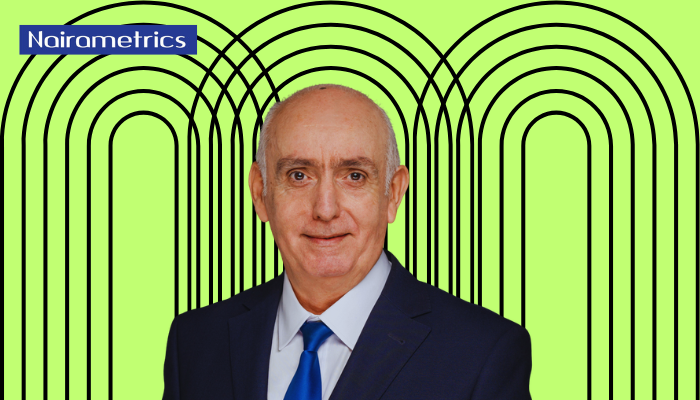
- Capacity-122,000bpd
Nour Eddine Daoudi, the Chairman and Chief Executive Officer of Sonatrach, has spent more than three decades at the center of Algeria’s hydrocarbons industry, building a career that mirrors the evolution of the country’s energy sector.
Daoudi was appointed Chairman and Chief Executive Officer of Sonatrach on Oct. 26, 2025.
A graduate of the Houari Boumediene University of Science and Technology in Algiers, Daoudi earned a State Engineer diploma in Geology in 1987 before joining Sonatrach a year later. He began his career within the company’s exploration division, rising steadily through the ranks as Algeria sought to expand and modernize its upstream operations.
His ascent culminated in 2018 when he was named Director of Exploration, overseeing efforts to strengthen geological assessment capabilities and introduce more advanced scientific and technical methodologies aimed at improving exploration performance. The role placed him at the forefront of Algeria’s drive to unlock new reserves and enhance resource development.
In April 2020, Daoudi was appointed chairman of the National Agency for the Valorization of Hydrocarbon Resources (ALNAFT), the regulator responsible for managing Algeria’s upstream licensing framework. During his three-year tenure, he led reforms focused on improving governance standards, increasing transparency and enhancing the country’s attractiveness to international energy investors.
Since January 2022, he has also served on the Executive Board of the International Energy Forum (IEF), one of the world’s largest energy dialogue platforms bringing together major producing and consuming nations.
Among Sonatrach’s most strategic assets is the Skikda refining and petrochemical hub on Algeria’s Mediterranean coastline. The complex includes the Skikda Condensate Refinery II, commissioned in 1980 and capable of processing about 122,000 barrels per day, providing additional condensate-processing capacity within Algeria’s downstream network.
6. Rashad Nazim Hassan- Chairman/CEO El Nasr Refinery, Egypt
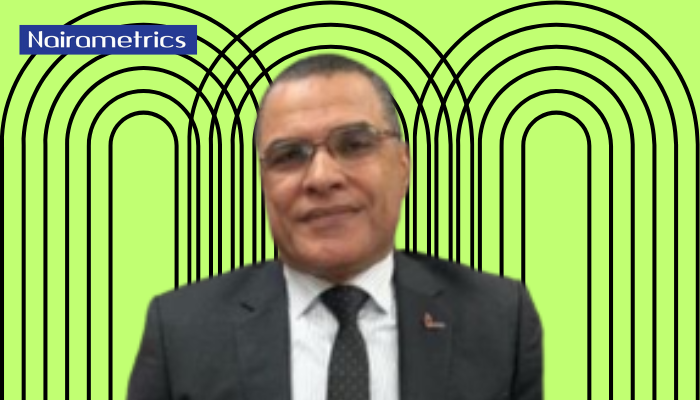
- Capacity-131,000BPD
Engineer Rashad Nazim Hassan Mohamed serves as Chairman and Managing Director of Nasr Petroleum Company (NPC), operator of the El Nasr Petroleum Refinery in Suez, one of Egypt’s key refining assets.
- His appointment was part of a targeted leadership reshuffle within Egypt’s petroleum sector aimed at strengthening operational efficiency and advancing the industry’s modernization and development agenda.
- Hassan has spent his entire professional career within Nasr Petroleum, joining the company’s Technology Sector in 1995 shortly after graduating from Suez Canal University with a bachelor’s degree in engineering in 1994.
- Over nearly three decades, he advanced through a series of technical and managerial roles, building a reputation for driving modernization initiatives and operational improvements.
In 2012, he was appointed Assistant General Manager for Development and Improvement, overseeing projects designed to enhance refinery performance and efficiency. His responsibilities expanded in 2017 when he became General Manager for Technology and Development and joined the company’s Board of Directors.
On the western shores of the Suez, the Nasr Petroleum Company stands as one of Egypt’s oldest refining assets, tracing its origins to 1911 under Shell before being nationalized in 1964 under the Egyptian General Petroleum Corporation.
Today, the refinery anchors a key part of Egypt’s downstream sector, producing fuels ranging from gasoline and diesel to kerosene, fuel oil and lubricants, with an estimated capacity of about 131,000 barrels per day.
5. Dr Mohamed Saad – CEO ERC (Mostorod Refinery, Egypt)
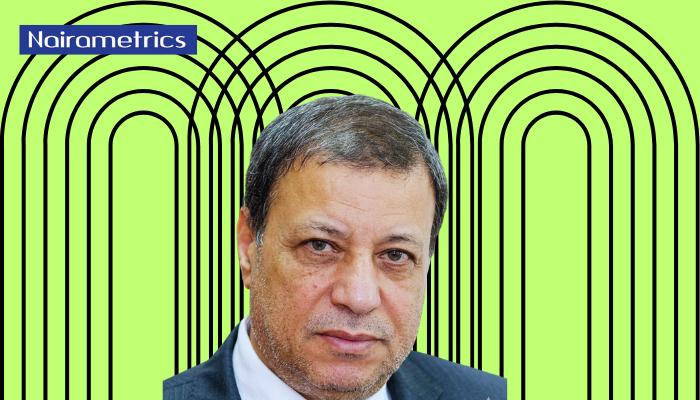
- Capacity-161,000bpd
Mohamed Saad Ibrahim, Managing Director of the Egyptian Refining Company (ERC), is one of Egypt’s most experienced petroleum executives.
- Ibrahim began his professional career in 1975 as an engineer at Nasr Petroleum before moving to Suez Petroleum Company in 1977. Over the next three decades, he held a succession of technical and executive leadership positions, culminating in his appointment as Chairman of the company. His tenure coincided with a period of significant development in Egypt’s petroleum industry.
- In 2009, Ibrahim was appointed Chairman of Al Nasr Petroleum Company, overseeing one of Egypt’s key refining assets. Following that role, he served as Vice Chairman of South Valley Egyptian Petroleum Holding Company (GANOPE) until 2012.
He has served on several industry committees and governing bodies, including the Geographical Committee for Suez and Sinai petroleum companies and the Governing Council of Sukhna Refining and Petrochemicals. He also chaired the Suez Institute for Management Information Systems and held academic appointments as Professor Emeritus at the Faculties of Petroleum and Mining Engineering and Science in Ismailia.
His academic credentials reflect a strong technical foundation. Ibrahim earned a bachelor’s degree in engineering from Suez Canal University in 1975, followed by a master’s degree in Chemical Engineering from the University of Oklahoma in the United States in 1985. He later obtained a doctorate in Chemical Engineering from Cairo University in 1995.
The Mostorod, Egypt is one of its most ambitious downstream upgrades around an aging refinery first commissioned in 1973.
What was once a conventional processing site has been transformed into a modern refining hub through a $4.3 billion redevelopment led by the Egyptian Refining Company in partnership with the Cairo Oil Refining Company.
At the heart of the project is a facility designed to process between 142,000 and 161,000 barrels a day, significantly above the original design capacity of 115,000 bpd.
4. Bayo Ojulari- CEO NNPC
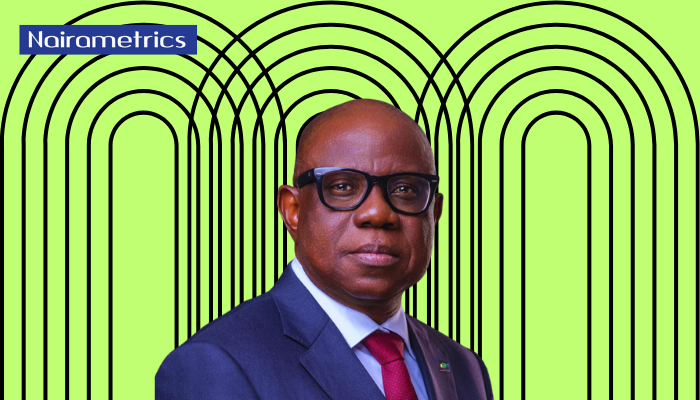
- Owners of Portharcourt, Kaduna Refinery, Nigeria
- Capacity-210,000BPD
The Port Harcourt Refining Company (PHRC), one of Nigeria’s largest refining assets, is currently overseen directly by the leadership of NNPC Limited, with ultimate responsibility resting with Group Chief Executive Officer Bashir Bayo Ojulari as the state-owned energy company pursues an extensive rehabilitation and operational recovery programme across its refining network.
Ojulari, a veteran petroleum engineer with more than three decades of experience in the global energy industry, was appointed Group Chief Executive Officer of NNPC Limited by President Bola Ahmed Tinubu on April 2, 2025.
- A graduate of Ahmadu Bello University, Zaria, where he earned a degree in Mechanical Engineering in 1989, Ojulari began his career the same year as a field and process engineer at Elf Petroleum Nigeria.
- He joined Shell in 1991 and built an international career spanning Nigeria, Europe and the Middle East, holding leadership roles across petroleum engineering, process engineering, production operations.
His career progression included serving as Head of Planning, Economics and Budgeting at Shell Petroleum Development Company (SPDC), Asset Leader in Oman, Regional Planner for Sub-Saharan Africa, and later Director of Petroleum Engineering at SPDC.
In 2015, Ojulari was appointed Managing Director of Shell Nigeria Exploration and Production Company (SNEPCo) and General Manager, Deepwater. During his tenure, he played a key role in advancing Nigeria’s deepwater operations, including the development and optimization of the Bonga field.
Following his retirement from Shell in 2021, he founded BAT Advisory & Energy, providing strategic advisory services across the upstream and midstream sectors. In 2024, he joined Renaissance Africa Energy Company as Executive Vice President and Chief Operating Officer, helping lead a consortium of indigenous energy firms in the landmark $2.4 billion acquisition of Shell Petroleum Development Company of Nigeria’s onshore business.
As Group CEO of NNPC Limited, he oversees Nigeria’s largest energy company and its portfolio of upstream, midstream and downstream assets, including the Port Harcourt, Kaduna Refining Company.
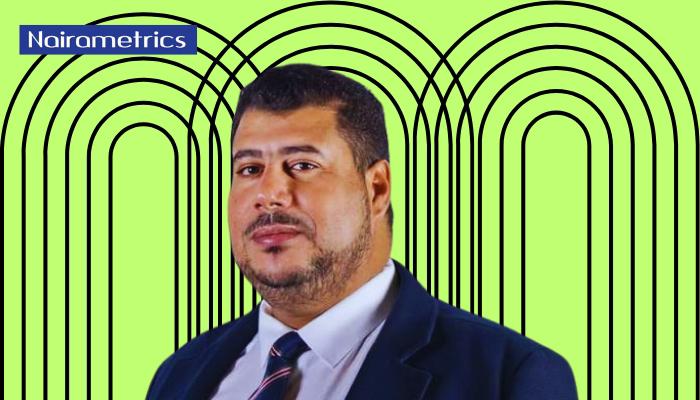
3. Masoud Mahmoud Suleman. -Chairman/CEO Ras Lanuf Refinery, Libya
- Capacity-220,000 bpd
The Ras Lanuf Refinery, one of Libya’s largest and most strategically important downstream assets, is wholly owned by the National Oil Corporation (NOC), led by Chairman Masoud Mahmoud Suleman.
Suleman’s career within Libya’s petroleum industry spans more than 22 years. Before becoming Chairman, he served as Deputy Chairman of NOC and led the corporation during several critical periods between 2022 and 2024.
His leadership portfolio includes chairing the Management Committee of Mellitah Oil & Gas, the joint venture between NOC and Italy’s energy major ENI, where he was instrumental in advancing strategic cooperation and project development. He has also served on the boards of several prominent energy-related entities, including AGESCO and Chempetrol Overseas.
Suleman began his career in technical and operational roles, including serving as Superintendent of Reservoir Engineering at Sirte Oil Company, where he gained extensive experience in reservoir management, production optimization and field development.
As Chairman of NOC, Suleman oversees Libya’s upstream and downstream operations, including the Ras Lanuf Refinery, which remains a critical component of the country’s refining and export infrastructure.
Located in the coastal town of Ras Lanuf, the facility is the country’s largest by nameplate capacity, processing up to 220,000 barrels of crude a day. Built in 1984 during Libya’s oil expansion era, it was designed as an export-oriented refinery integrated with petrochemical production.
2. Simon Baloyi – CEO/President Sasol Refinery, South Africa

- Capacity-250,000-300,000bpd
Simon Baloyi is president and chief executive officer of Sasol Limited, a role he assumed in April 2024. Formerly executive vice president at Sasol, he has held senior leadership roles across regional operations, asset services, and engineering.
- Earlier in his career, he worked in process engineering and research roles spanning Fischer-Tropsch development and plant optimisation. He holds advanced engineering and management qualifications from the University of Pretoria and completed executive education at INSEAD.
- Baloyi is widely focused on energy transition strategy, operational reliability, and sustainable growth across Sasol’s global footprint.
As Co-Chair of the B20 Energy Mix and Just Transition Task Force, he has contributed to policy discussions on inclusive energy transition and industrial competitiveness. He is regarded as part of a new generation of African energy executives steering decarbonisation while maintaining supply security and shareholder value creation. Based in Johannesburg, he joined Sasol in 2002 and rose internally there.
In South Africa, Sasol operates a unique dual refining system that combines conventional crude processing with coal-to-liquids technology, giving it a combined liquid fuel output capacity of over 250,000 barrels per day.
The Natref refinery, located in Sasolburg and partially owned by Sasol (63.64%), has a capacity of about 108,000 barrels per day.
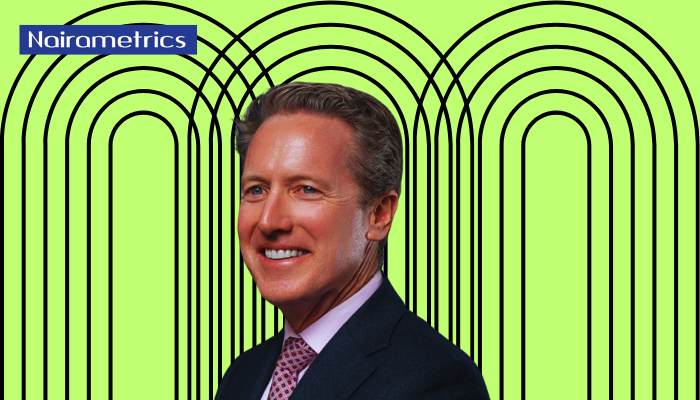
1. David Bird –CEO/MD Dangote Refinery, Nigeria
- Capacity-650,000BPD
David Bird is the Chief Executive Officer and Managing Director of the Dangote Petroleum Refinery and Petrochemicals, where he leads the ramp-up and global integration of Africa’s largest single-train refinery. He assumed the role in 2025, tasked with scaling output, strengthening export markets, and positioning Nigeria as a key player in global refined products supply.
Bird has more than 25 years of international experience across oil, gas, refining, and petrochemicals. He previously served as CEO of OQ8 in Oman, where he led a major downstream joint venture between Oman Oil Company and Kuwait Petroleum International, overseeing large-scale project delivery, financial restructuring, and operations transformation. Before that, he was Senior Vice President for Production Operations and Supply Chain at Santos Ltd, where he managed end-to-end hydrocarbon production, logistics, and asset integration across Australia’s energy portfolio.
Earlier, Bird spent over a decade at Shell plc in senior downstream roles, including refinery plant manager in South Africa, head of supply for Asia-Pacific and the Middle East, and Vice President of Prelude FLNG in Australia. He began his career in engineering roles at Hitachi in Japan. He holds an MBA from Stanford Graduate School of Business and completed executive education at INSEAD.
With a capacity of 650,000 barrels per day, the facility is located within the Lekki Free Trade Zone in Lagos, spanning about 2,635 hectares.




0 comment(s)
Leave a Comment